
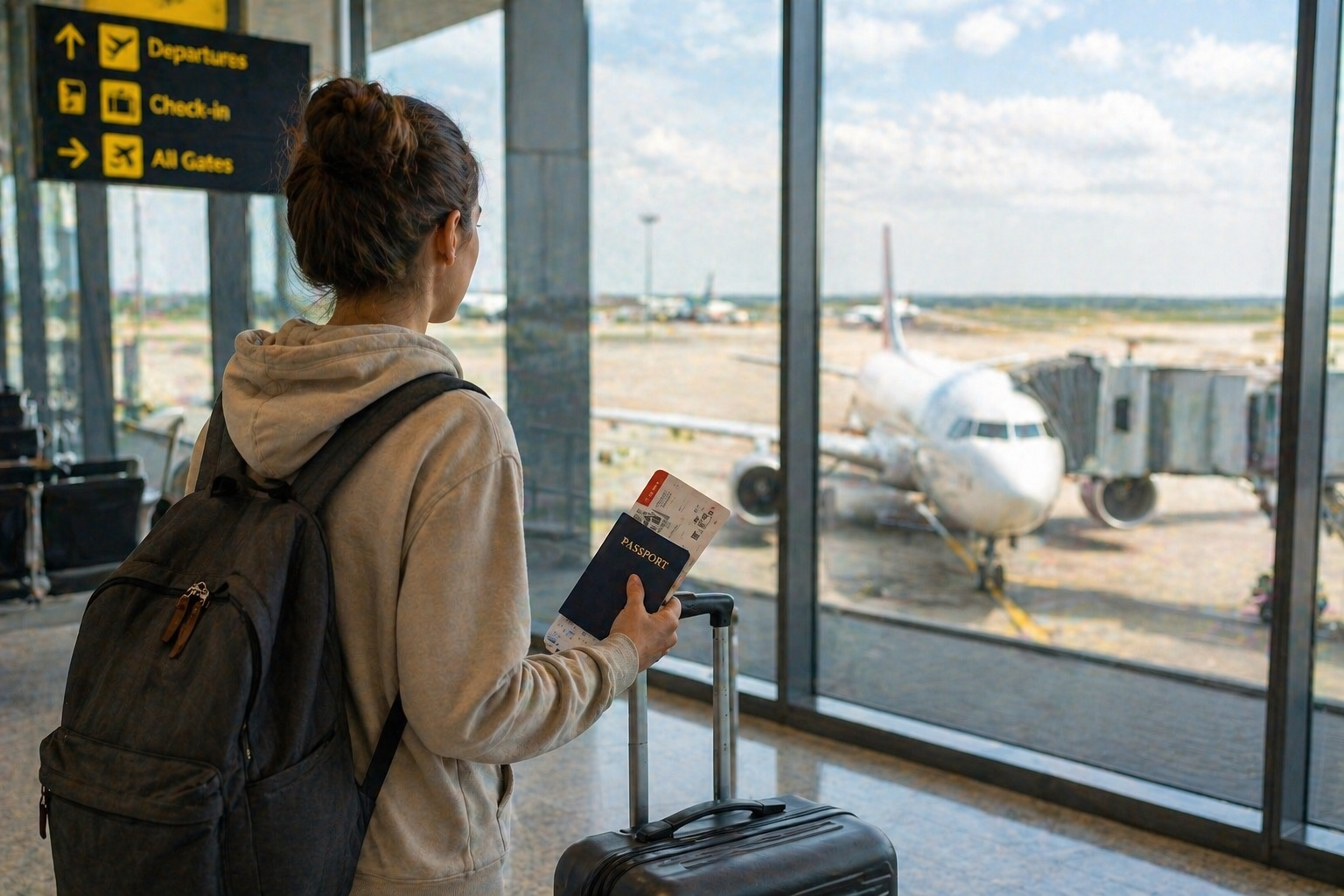
Taking your first airplane trip can feel exciting, emotional, and a little intimidating. Airports are busy, there are rules to follow, luggage limits to understand, documents to show, and several steps between arriving at the terminal and reaching your destination.
The good news is that flying becomes much easier when you know what to expect. Most of the process follows a simple order: prepare before leaving home, arrive at the airport, check in, pass through security, find your gate, board the plane, enjoy the flight, and collect your luggage after landing.
Your first flight does not need to be stressful. With practical preparation and a calm attitude, you can move through each step with more confidence.
Check Your Documents Before Leaving Home
Documents are the most important items for any flight. Before going to the airport, make sure you have the correct identification required for your trip.
For domestic flights, this may be a national identification document, driver’s license, or another accepted form of ID, depending on the country and airline rules. For international flights, you will usually need a valid passport, and possibly a visa or travel authorization.
Check document requirements in advance. Do not assume that every document will be accepted. If you are traveling internationally, also verify passport validity, entry rules, return ticket requirements, and any documents requested by the destination.
Keep your documents in an easy-to-access place. You may need to show them at check-in, security, boarding, immigration, and hotel arrival.
Understand Your Ticket and Flight Details
Before your first flight, take a few minutes to review your ticket carefully. Look at the airline, flight number, departure airport, arrival airport, date, time, terminal, baggage allowance, and seat information.
Some cities have more than one airport, so confirm exactly where your flight departs from. Also pay attention to the time format. International tickets often use the 24-hour clock, which can cause confusion if you are not used to it.
Check whether your flight is direct or has a connection. If there is a connection, understand where you will change planes and how much time you have between flights.
Saving your ticket and reservation confirmation on your phone is useful, but it is also smart to have offline access in case internet service is not available.
Learn the Baggage Rules
Baggage rules can vary depending on the airline, route, ticket type, and destination. Before packing, check what is included in your fare.
Most flights allow a personal item, such as a small backpack or handbag. Some tickets also include carry-on luggage. Checked luggage may be included or may require an extra fee.
Pay attention to size and weight limits. A bag that is too large or too heavy may result in additional charges at the airport.
Also check what items are not allowed in carry-on luggage. Liquids, sharp objects, tools, aerosols, and certain personal items may have restrictions. For international flights, liquids are often limited in carry-on bags and must follow specific container rules.
Packing according to airline rules helps avoid delays and unexpected costs.
Pack Essentials in Your Personal Bag
Your personal bag should contain the items you may need during the airport process and the flight. It should also include anything too important to place in checked luggage.
Useful items include:
Passport or identification
Boarding pass
Wallet and cards
Phone and charger
Medicine
Headphones
Snacks
A light jacket
Travel insurance details
Important reservations
Valuables
If you are checking luggage, keep a change of clothes and basic hygiene items in your carry-on or personal bag. This can help if your checked bag is delayed.
Keep your personal bag organized. You will need to access documents, phone, and wallet several times during the trip.
Arrive at the Airport Early
For your first flight, arriving early is one of the best ways to reduce stress. Airports can be confusing at first, and extra time helps you move calmly through each step.
Domestic flights usually require less time than international flights, but you should still arrive with enough time for check-in, baggage drop, security, and finding your gate.
International flights often require more time because of document checks, immigration procedures, and larger terminals.
Arriving early gives you space to solve small problems, ask for help, use the restroom, buy water, eat something, and find your way without rushing.
Being early is much better than arriving anxious and running through the airport.
Check In Before the Flight
Check-in is the process that confirms you will take the flight and provides your boarding pass. Many airlines allow online check-in through their website or app before departure.
Online check-in can save time at the airport. You may be able to choose your seat, confirm baggage, and receive a digital boarding pass.
If you have checked luggage, you will still need to go to the airline counter or baggage drop area. If you only have carry-on luggage and already have your boarding pass, you may be able to go directly to security.
At the airport, look for the airline signs and screens that show check-in counters. If you are unsure where to go, airport staff can help.
Understand Airport Security
Security screening is a standard part of flying. The goal is to check passengers and luggage before they enter the boarding area.
At security, you may need to place your bag, jacket, belt, electronics, and sometimes shoes into trays. Rules vary by airport, so pay attention to signs and instructions.
Keep liquids, laptops, and electronics easy to remove if required. Empty your pockets before passing through the scanner.
The process may feel rushed, but stay calm. Follow the instructions, collect your belongings after screening, and check that you did not leave anything behind.
Security is easier when your bag is organized and your documents are accessible.
Find Your Gate
After security, look for airport screens showing departures. Find your flight number and check the gate information.
The gate is where you will board the plane. Sometimes gates change, so check the screens occasionally, even after you find the first gate listed.
Airports can be large, and some gates require a long walk, train, or shuttle inside the terminal. Do not wait too long before heading to your gate.
Once you arrive, check that the screen near the gate shows your destination and flight number. Then you can sit nearby and wait for boarding announcements.
Listen for Boarding Instructions
Boarding usually happens in groups or zones. Your boarding pass may show your group, zone, or seat number.
Do not worry if other passengers board before you. Airlines often board passengers according to seat location, ticket type, families with small children, or loyalty status.
When your group is called, have your boarding pass and identification ready. After scanning your boarding pass, you will walk through the jet bridge or take a bus to the aircraft, depending on the airport.
Once inside the plane, find your seat number. Place larger carry-on luggage in the overhead bin and smaller personal items under the seat in front of you.
Know What to Expect During Takeoff
Takeoff can feel unusual the first time. The plane will move slowly at first, then speed up on the runway. You may feel pressure pushing you gently back into your seat as the aircraft lifts off.
This is normal. You may also hear engine noise, landing gear movement, and small sounds from the aircraft. These noises can seem strange at first, but they are part of normal flight operations.
During takeoff, keep your seatbelt fastened, seat upright, tray table closed, and electronic devices in the correct mode according to crew instructions.
If you feel nervous, focus on breathing slowly. Look out the window if it helps, or close your eyes and listen to music.
Stay Comfortable During the Flight
Comfort matters, especially if the flight is long. Wear clothes that allow you to sit comfortably. A light jacket or sweater is useful because airplanes can feel cold.
Drink water during the flight, especially on longer routes. Avoid relying only on coffee or soft drinks if they make you feel uncomfortable.
Bring something to pass the time, such as music, podcasts, books, downloaded movies, or games. Do not depend completely on in-flight entertainment, because it may not always be available.
If your ears feel pressure during takeoff or landing, swallowing, yawning, chewing gum, or drinking water may help.
For longer flights, move your feet and stretch gently when safe to do so.
Follow the Cabin Crew Instructions
Cabin crew members are there to help keep the flight safe and organized. Listen to their instructions before takeoff, during the flight, and before landing.
They will explain safety procedures, seatbelt rules, electronic device instructions, and service details. If you have a question or need help, ask politely.
If the seatbelt sign is on, stay seated with your belt fastened. Turbulence can happen during flights, and wearing your seatbelt while seated is a good habit.
Following instructions helps the flight go smoothly for everyone.
Prepare for Landing
Before landing, the crew will ask passengers to return seats to the upright position, close tray tables, secure bags, and fasten seatbelts.
Landing may include changes in engine sound, pressure in your ears, and a gentle or firm touch when the wheels meet the runway. These sensations are normal.
After the plane lands, remain seated until it reaches the gate and the seatbelt sign is turned off. Many passengers stand quickly, but it is better to wait calmly.
Check your seat area before leaving the plane. Make sure you have your phone, documents, wallet, headphones, and personal bag.
Collect Your Luggage
If you checked luggage, follow signs to baggage claim after leaving the plane. Airport screens will usually show which carousel is assigned to your flight.
Check the luggage tag or appearance of your bag before taking it. Many suitcases look similar, so using a ribbon, tag, or unique detail can help you identify yours.
If your bag does not appear, go to the airline’s baggage service desk before leaving the airport. They can help register the issue and explain the next steps.
If you only traveled with carry-on luggage, you can usually proceed directly to the exit, immigration, or customs, depending on the destination.
Keep Calm and Ask for Help When Needed
Airports may feel confusing the first time, but help is available. Airline staff, airport employees, information desks, and signs can guide you.
Do not be embarrassed to ask questions. Many travelers ask for directions, gate information, baggage help, or boarding clarification.
If you feel nervous, give yourself time. Walk slowly, check signs, and focus on one step at a time.
Most airport procedures are repetitive. After your first flight, the process will feel much more familiar.
Enjoy Your First Flight Experience
Your first airplane trip is an important travel milestone. It may feel unfamiliar at first, but preparation makes the experience much easier.
Check your documents, understand your ticket, follow baggage rules, pack your essentials, arrive early, complete check-in, pass through security, find your gate, and listen to crew instructions.
You do not need to know everything perfectly. You only need to stay organized, pay attention, and ask for help when necessary.
Flying opens the door to new destinations, cultures, landscapes, and experiences. Once you complete your first flight, future trips will feel simpler and more natural.