
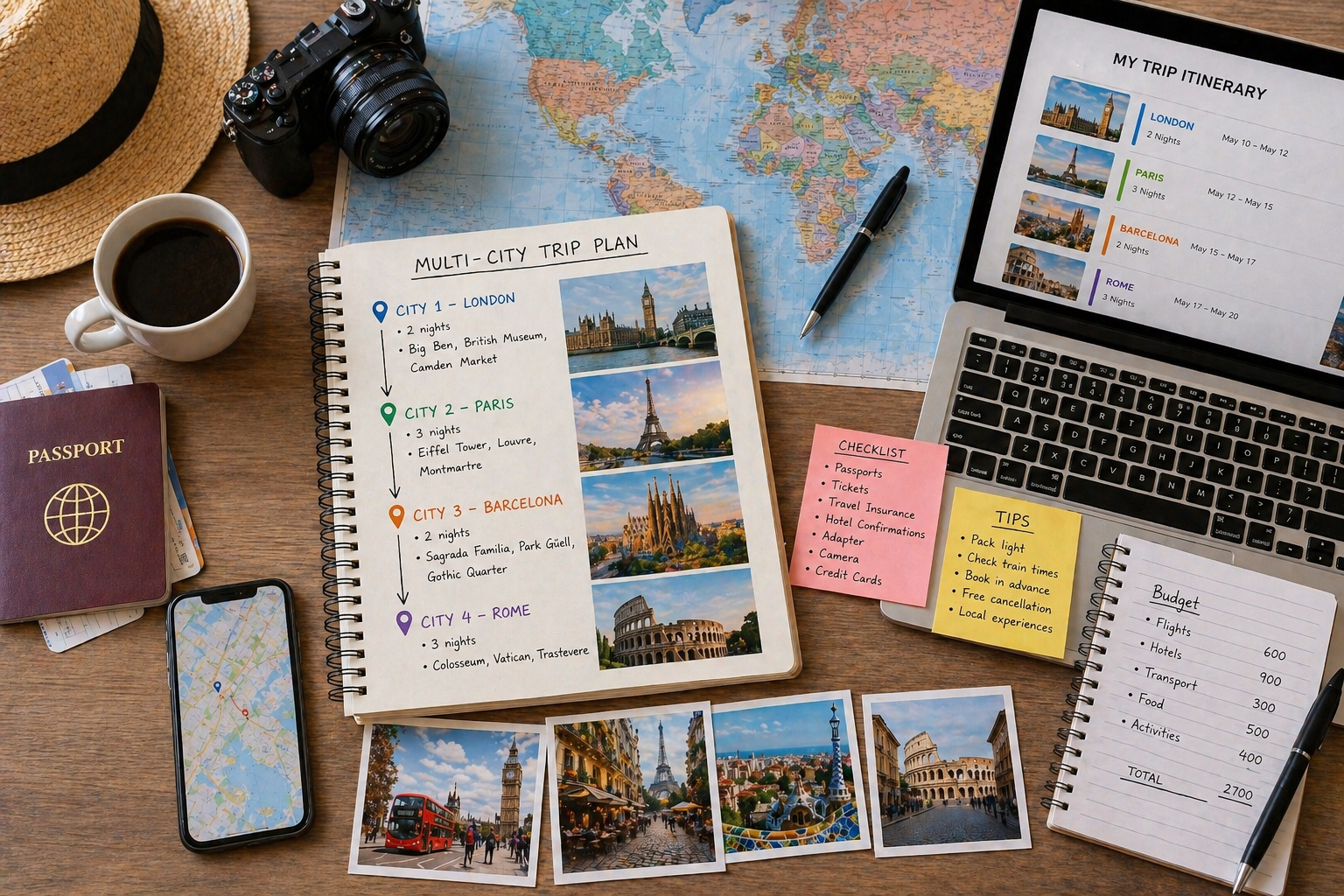
A multi-city trip can be one of the most exciting ways to travel. Instead of experiencing only one destination, you can discover different neighborhoods, landscapes, cultures, foods, and rhythms in the same journey. It can feel rich, dynamic, and full of variety.
However, visiting multiple cities also requires more organization than staying in one place. Transportation, accommodation, luggage, timing, check-ins, routes, budgets, and energy all need careful attention. Without planning, a multi-city trip can become rushed, tiring, and confusing.
The goal is not to visit as many cities as possible. The goal is to create a route that feels enjoyable, realistic, and meaningful.
Choose Cities That Make Sense Together
The first step is choosing cities that connect well. A multi-city trip works best when the destinations are logically connected by geography, transportation, theme, or travel purpose.
For example, you might visit several cities in the same region, combine a capital with nearby historic towns, follow a coastal route, explore wine regions, or create a cultural itinerary through places with shared history.
Avoid choosing cities only because they are famous. If they are too far apart or difficult to connect, you may spend too much time in transit.
Look at the map before deciding. A route that looks exciting in theory should also make sense in real travel time.
Do Not Add Too Many Cities
One of the biggest mistakes in multi-city travel is trying to include too much. It is tempting to add “just one more city,” but every move costs time and energy.
Each new city means packing, checking out, traveling, arriving, checking in, learning a new area, and adjusting again. Even short distances can consume half a day when transfers are included.
For a comfortable trip, spend enough time in each place to actually enjoy it. Two or three nights per city is often better than one rushed night, especially if the destination has many attractions.
A good multi-city trip should feel like exploration, not constant relocation.
Plan the Route in a Logical Direction
Your route should flow naturally. Try to avoid zigzagging across regions or returning through the same path unnecessarily.
Start with your arrival city and end with the city that offers the easiest departure. If possible, consider flying into one city and out of another. This can save time and avoid backtracking.
When planning, check transportation between each city. Look at train lines, bus routes, flights, ferries, rental car options, and travel duration.
A logical route reduces stress and gives you more time to enjoy the destinations.
Compare Transportation Options
Transportation is the backbone of a multi-city trip. The best option depends on distance, budget, comfort, luggage, and local infrastructure.
Trains can be comfortable and scenic in many regions. Buses may be cheaper and useful for smaller cities. Flights can save time for longer distances but may involve airport transfers and baggage rules. Rental cars offer flexibility, especially for countryside routes, coastal areas, or small towns.
Compare the full travel experience, not only ticket prices. Include station or airport location, luggage fees, waiting times, transfers, and arrival convenience.
The cheapest option is not always the best for a multi-city itinerary.
Leave Enough Time Between Transfers
Tight connections can make a trip stressful. Delays, traffic, long lines, platform changes, and unfamiliar stations can all create problems.
When moving between cities, leave extra time. Avoid scheduling important tours or expensive reservations immediately after arrival.
Travel days often take more energy than expected. Even if the journey is only two hours, the entire process may include packing, checkout, transportation to the station, waiting, travel, arrival, transport to accommodation, check-in, and unpacking.
Treat transfer days as lighter days. This makes the trip more comfortable.
Choose Accommodation Near Transportation
In a multi-city trip, location is especially important. Staying close to a train station, metro line, bus terminal, or central area can save time and energy.
You do not always need to stay directly beside the station, but choose accommodation that makes arrival and departure easy.
If you will only stay one or two nights, convenience matters more than having a large room or luxury facilities. If you will stay longer, balance location with comfort.
Dragging luggage across a city can be tiring. A practical location makes every move smoother.
Pack Light
Packing light is one of the best decisions you can make for a multi-city trip. Heavy luggage becomes more difficult every time you move.
Choose versatile clothes, limit shoes, use packing organizers, and plan laundry if the trip is longer. Avoid bringing items that only work for one situation unless truly necessary.
A carry-on suitcase or comfortable backpack can make trains, buses, stairs, cobblestone streets, and hotel changes much easier.
The more cities you visit, the more valuable light luggage becomes.
Create a Clear Itinerary Document
A multi-city trip has many details. Keep them organized in one place.
Your itinerary should include accommodation names, addresses, check-in times, transportation tickets, reservation numbers, travel times, attraction bookings, and important contacts.
Save everything digitally and offline. Screenshots are useful when internet access is weak. You can also keep a printed summary for extra security.
A clear itinerary helps you move confidently from one city to the next.
Balance Big Cities With Smaller Stops
A multi-city trip can become more interesting when you balance different types of destinations. Large cities offer museums, restaurants, nightlife, public transportation, and famous attractions. Smaller towns may offer charm, quiet streets, local traditions, and a slower rhythm.
Mixing both can make the trip feel richer. After a busy capital, a peaceful town may give you time to rest. After a quiet stop, a lively city may bring new energy.
Think about rhythm, not only geography.
A good route has variety without becoming chaotic.
Decide the Purpose of Each City
Each city should have a reason for being in your itinerary. Maybe one is for history, another for food, another for nature, and another for relaxation.
Defining the purpose of each stop helps you plan better. You do not need to do everything everywhere.
For example, one city may be your museum destination. Another may be your place for slow walks and local cafés. Another may be a base for day trips.
This prevents each stop from feeling repetitive and helps you focus your time.
Avoid Changing Accommodation Too Often
Sometimes you can visit nearby places as day trips instead of sleeping in every city. This reduces packing and moving.
If several towns are close together, choose one base and explore from there. This works well in regions with good trains, scenic roads, or small distances.
Changing accommodation every night can be exciting for a short time, but it quickly becomes tiring.
A smart multi-city trip balances movement with stability.
Plan Laundry and Clothing Carefully
Longer multi-city trips require clothing strategy. Instead of packing a separate outfit for every day, pack versatile pieces and plan laundry.
Check whether accommodations offer laundry service or whether there are laundromats near your route. Choose clothes that dry easily and can be combined in different ways.
Keep dirty clothes separate with a laundry bag.
Good clothing planning helps you travel lighter and stay comfortable throughout the journey.
Watch Your Budget Across Cities
Different cities can have very different costs. Accommodation, food, transportation, and attractions may be expensive in one place and affordable in another.
Create a total trip budget, then estimate costs for each city. This helps you avoid spending too much in the first destination and feeling limited later.
You can balance expensive cities with cheaper ones. For example, save money with simple meals in one place so you can enjoy a special experience in another.
Budget awareness keeps the whole trip smoother.
Include Rest Days or Slow Mornings
Multi-city travel can be tiring because of constant movement and new information. Rest is not optional; it is part of a good plan.
Include slower mornings, relaxed evenings, or even a full rest day if the trip is long. Use these moments to do laundry, organize photos, sleep more, walk without a plan, or enjoy your accommodation.
A rest day is not wasted time. It helps you enjoy the next city with more energy.
Be Realistic About Arrival Days
When you arrive in a new city, you may need time to settle in. Do not plan too much for arrival days.
A good arrival plan might include checking in, walking around the neighborhood, having a simple meal, and visiting one nearby place.
Save major attractions for full days when you are rested and oriented.
This approach makes each city feel more welcoming and less rushed.
Use Maps to Group Activities
In each city, group activities by area. This avoids wasting time moving back and forth.
Mark attractions, restaurants, transportation stops, and accommodation on a map. Then plan days around neighborhoods or zones.
This is especially helpful when you have limited time in each place.
A well-grouped itinerary gives you more time to enjoy and less time figuring out logistics.
Keep Some Flexibility
A multi-city trip needs structure, but it also needs flexibility. Weather, transportation delays, closed attractions, tiredness, or new discoveries may change your plans.
Avoid booking every hour. Leave some free time in each city. Keep optional activities as backups.
If one city surprises you, allow yourself to enjoy it more deeply. If another feels less interesting than expected, adjust your pace.
Flexibility makes the trip feel alive.
Prepare for Different Local Rhythms
Each city may have different opening hours, meal times, transportation schedules, and crowd patterns. Do not assume everything works the same across your route.
Check local holidays, museum closing days, restaurant hours, and transportation frequency.
This is especially important when traveling between regions or countries.
Understanding local rhythms helps you avoid frustration.
End the Trip With a Comfortable Final Stop
The last city should make your return easier. If possible, choose a final stop with good transportation to the airport, train station, or route home.
Avoid ending with the most complicated transfer unless necessary. A calm final day helps you return with better energy.
If you plan to buy souvenirs, organize luggage, or rest before a long journey, give yourself time.
A comfortable ending can shape how you remember the whole trip.
Enjoy the Variety Without Rushing
A multi-city trip can be wonderful when planned with balance. Choose cities that connect well, avoid adding too many stops, create a logical route, compare transportation, pack light, and stay organized.
Give each city a purpose, leave enough time for transfers, and include rest.
The beauty of multi-city travel is variety. You can experience different atmospheres, foods, streets, and landscapes in one journey. When you plan realistically, the trip becomes not only full of places, but full of meaningful experiences.