
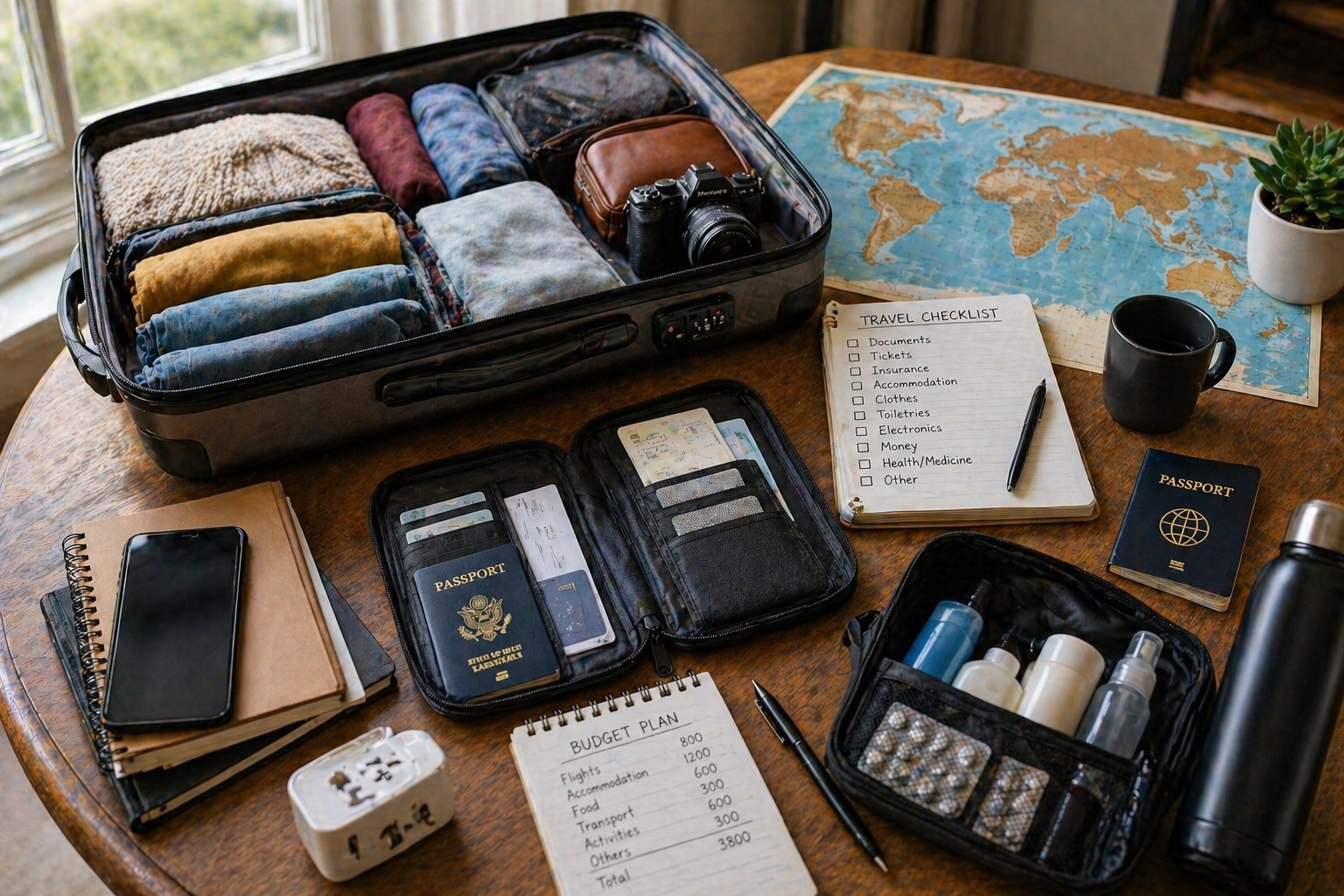
Preparing for a long trip requires more attention than planning a short getaway. When you spend many days or weeks away from home, small details become more important. Clothes, documents, money, health, transportation, accommodation, and daily routines all need to be organized with care.
A long trip can be exciting because it gives you more time to explore, rest, and experience a destination deeply. However, it can also become tiring or stressful if you do not prepare properly. The longer you travel, the more important it is to think about comfort, flexibility, and practical needs.
Good preparation helps you avoid unnecessary problems and enjoy the journey with more peace of mind.
Start Planning Earlier
A long trip usually involves more decisions than a short one. You may need to book several accommodations, organize transportation between cities, arrange travel insurance, prepare documents, check health needs, and create a realistic budget.
Starting early gives you time to compare prices, research destinations, and make better choices. It also helps you avoid rushed decisions that may cost more or create stress later.
Begin with the main structure of the trip: destination, dates, budget, transportation, accommodation, and documents. Once these are clear, you can organize smaller details.
Early planning does not mean everything must be fixed from the beginning. It simply gives you a solid base.
Create a Realistic Budget
Budgeting is especially important for long trips because daily expenses add up quickly. Even small purchases can become significant over several weeks.
Start by estimating the major costs: transportation, accommodation, food, local movement, attractions, insurance, documents, laundry, internet, and emergency money.
Then calculate an average daily budget. This helps you understand how much you can spend each day without going beyond your limit.
Include an emergency reserve. Long trips have more chances for unexpected expenses, such as transportation changes, medical needs, lost items, or weather-related adjustments.
A realistic budget allows you to enjoy the trip without constant financial worry.
Organize Your Documents Carefully
For a long trip, document organization is essential. You may need identification, passport, visas, travel insurance, vaccination certificates, accommodation confirmations, tickets, rental agreements, and copies of important reservations.
Check passport validity early if you are traveling internationally. Some destinations require your passport to be valid for several months beyond your stay.
Research visa and entry requirements for every country you plan to visit. If your trip includes multiple destinations, rules may change from one place to another.
Make digital and printed copies of important documents. Store them in different places. Keep originals secure and accessible during travel days.
Well-organized documents can prevent serious problems.
Plan Your Itinerary With Balance
A long trip gives you more time, but that does not mean you should fill every day with activities. In fact, long trips require more rest and flexibility than short ones.
Create a general itinerary with the main places you want to visit, but avoid scheduling every hour. Leave free days for rest, laundry, unexpected discoveries, or changes in weather.
Alternate busy days with calmer days. After a full day of sightseeing, plan a slower morning or relaxed activity the next day.
If you are visiting multiple cities, avoid moving too often. Changing accommodation every night can become exhausting. Staying longer in fewer places often creates a better experience.
A balanced itinerary helps you enjoy the trip without burning out.
Choose Accommodation Wisely
For long trips, accommodation affects your daily comfort. A place that seems fine for one night may not be comfortable for a week.
Look for accommodation with practical features, such as good location, reliable internet, laundry access, kitchen facilities, comfortable beds, secure storage, and nearby markets or restaurants.
If you plan to work, study, or stay connected during the trip, check Wi-Fi reviews carefully. If you need rest, pay attention to noise comments.
For longer stays, apartments, guesthouses, and small studios may offer more comfort than standard hotel rooms. Having access to a kitchen can also help reduce food costs.
The right accommodation supports your routine and makes the trip easier.
Pack Light but Strategically
Packing for a long trip does not mean packing more of everything. It means packing smarter.
Choose versatile clothes that can be combined easily. Focus on comfortable pieces, layers, and items suitable for the climate and activities. Avoid carrying many outfits that only work for one situation.
Laundry will probably be part of a long trip. Instead of packing clothes for every day, plan to wash items along the way.
Bring comfortable shoes, basic toiletries, medicine, chargers, adapters, and essential personal items. Avoid overpacking because heavy luggage becomes tiring over time.
A lighter suitcase makes transportation, hotel changes, stairs, and public transit much easier.
Prepare a Health and Medicine Kit
Health preparation is important for any trip, but even more important for longer travel.
Bring enough regular medication for the entire trip, plus a little extra if possible. Keep medicine in original packaging when appropriate, especially for international travel.
Consider carrying a basic kit with pain relievers, allergy medicine, bandages, motion sickness tablets, stomach medicine, hand sanitizer, and any personal health items you use.
If you have prescriptions, bring copies. If you have specific health conditions, research medical services near your destination.
Travel insurance is also highly recommended for long trips, especially international ones. Understand what your policy covers and how to contact assistance.
Think About Money and Payment Methods
Long trips require good money organization. Carrying only one payment method can be risky.
Use a combination of cards and some cash. Keep backup cards separate from your main wallet. If one card is lost, blocked, or rejected, you will still have another option.
For international travel, check foreign transaction fees, ATM availability, currency exchange options, and whether cards are widely accepted.
Track your spending during the trip. You do not need to record every detail, but checking your budget regularly helps you avoid surprises.
Good money planning gives you more freedom and security.
Prepare Your Home Before Leaving
Before a long trip, organize your home so you can leave with peace of mind.
Check bills, subscriptions, plants, pets, mail, appliances, locks, and anything that may need attention while you are away.
Unplug unnecessary electronics, remove perishable food, take out the trash, and make sure windows and doors are secure.
If you will be away for many weeks, ask someone you trust to check your home if needed. Leave emergency contact information with a family member, neighbor, or friend.
Preparing your home helps you enjoy the trip without worrying constantly about what you left behind.
Organize Communication and Internet Access
Staying connected can be important during long trips. You may need internet for maps, reservations, banking, translation, transportation, work, or contacting family.
Research mobile data options before traveling. Depending on the destination, you may use roaming, a local SIM card, an eSIM, or Wi-Fi from accommodation and public places.
Download offline maps, tickets, and important documents. This is useful if internet access fails.
Also share your general itinerary with someone you trust. Let them know where you will be staying and how to contact you.
Good communication planning makes the trip safer and more convenient.
Prepare for Laundry
Laundry is often forgotten during travel planning, but it becomes essential on long trips.
Research whether your accommodation has laundry service, washing machines, or nearby laundromats. If you are moving between cities, plan laundry days in places where you will stay longer.
Pack clothes that dry easily and do not wrinkle too much. A small laundry bag can help separate clean and dirty clothes.
You may also bring a few travel-size laundry items if appropriate, but avoid carrying too much.
Planning for laundry helps you pack lighter and stay comfortable.
Take Care of Your Energy
A long trip can be physically and mentally tiring. Even enjoyable travel requires energy. You are constantly making decisions, navigating new places, adapting to routines, and absorbing new information.
Include rest days in your schedule. Sleep enough. Eat well. Drink water. Take breaks during sightseeing days.
Do not feel guilty for slowing down. Rest is part of sustainable travel.
If you try to maintain a fast pace for too long, the trip may become exhausting. A slower rhythm often allows you to enjoy places more deeply.
Stay Flexible
Long trips rarely go exactly as planned. Weather may change. Transportation may be delayed. You may love a place and want to stay longer. You may arrive somewhere and realize it is not what you expected.
Flexibility is one of the greatest advantages of long travel. Leave some space in your itinerary for adjustments.
Avoid booking every detail too tightly unless necessary. Flexible reservations can be useful, especially if your route includes multiple destinations.
Being flexible helps you respond to the trip as it unfolds.
Keep Important Items Safe
During a long trip, you will move through many places, which increases the importance of keeping valuables secure.
Keep documents, cards, money, electronics, and medicine in safe places. Avoid carrying all valuables together. Use hotel safes when appropriate, but always check them before leaving.
Be careful in crowded areas, transportation terminals, markets, and tourist attractions. Keep bags closed and close to your body.
Simple habits can prevent major problems.
Enjoy the Journey Slowly
One of the best parts of a long trip is the chance to experience places with less rush. You can return to a favorite café, walk through neighborhoods more than once, observe daily life, and discover places beyond the main attractions.
Do not treat every day like a race. Allow yourself to live the destination, not only visit it.
Long travel gives you time to connect more deeply with places, people, and routines. That is something short trips often cannot offer.
Prepare Well and Travel Better
Preparing for a long trip means thinking beyond flights and hotels. You need a realistic budget, organized documents, smart packing, good accommodation choices, health preparation, money planning, communication access, and a balanced itinerary.
A long trip is easier to enjoy when you are prepared but not rigid. Plan the essentials, protect your comfort, and leave space for flexibility.
The more thoughtful your preparation, the more freedom you have during the journey.
A long trip can become one of the most meaningful travel experiences you ever have, especially when you give yourself the structure to enjoy it calmly and fully.