
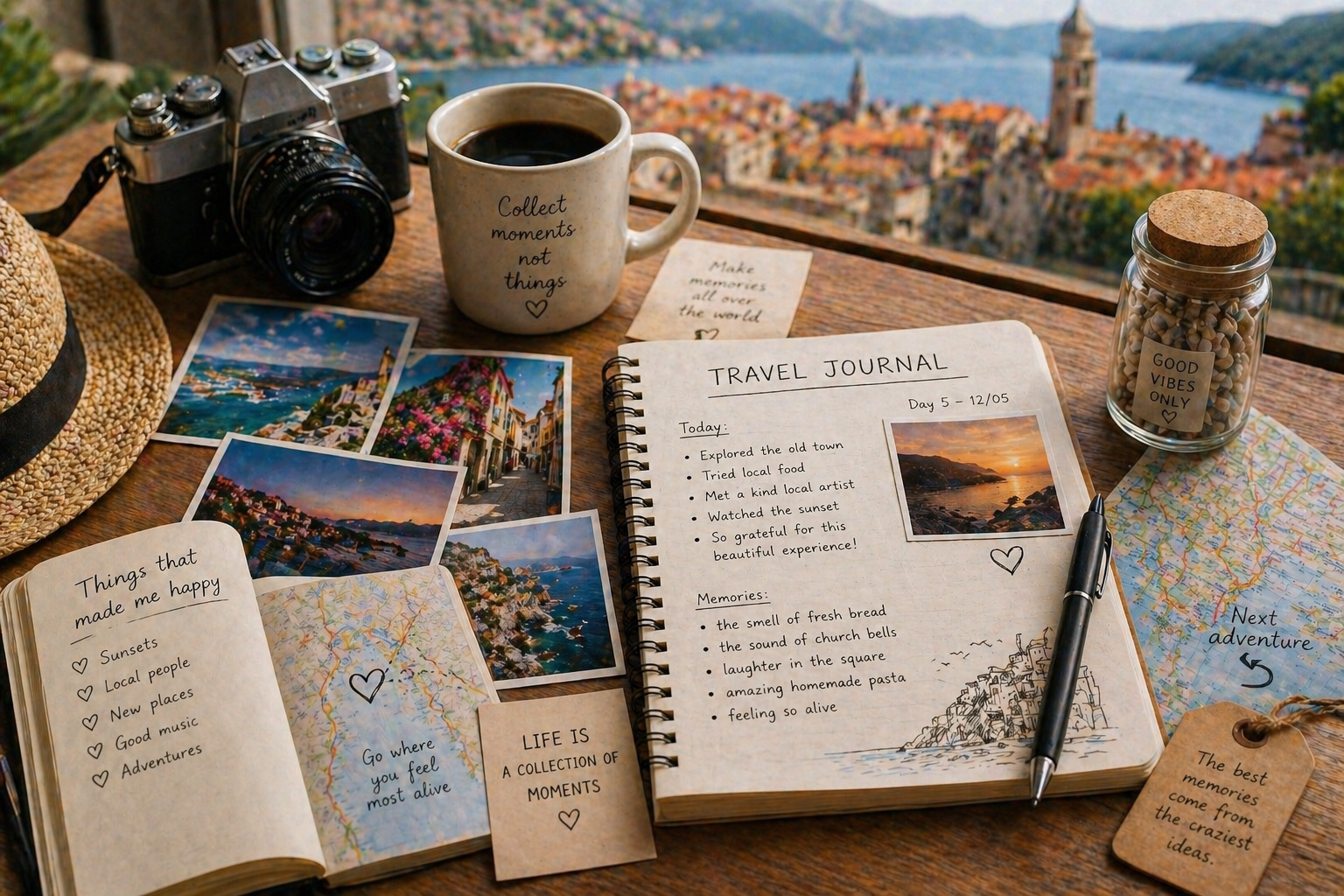
Travel memories are more than photos, souvenirs, and places marked on a map. They are the feelings, lessons, conversations, flavors, views, surprises, and small moments that stay with you long after the trip ends.
Many travelers focus so much on visiting attractions that they forget to truly experience them. They take hundreds of photos, rush through famous places, and return home with full storage but few deep memories. Meaningful travel is different. It invites you to pay attention, connect with the destination, and carry something valuable back into your life.
Making travel memories more meaningful does not require expensive experiences or perfect plans. It requires presence, curiosity, and intention.
Travel With a Clear Intention
Before your trip begins, ask yourself what you want from the experience. Do you want to rest, learn, reconnect with someone, celebrate, explore, heal, feel inspired, or simply step away from routine?
A clear intention gives meaning to your choices. If your goal is rest, you may remember slow mornings and quiet views more than crowded attractions. If your goal is learning, museums, local conversations, and cultural tours may matter more. If your goal is connection, shared meals and simple walks may become the highlight.
You do not need a complicated purpose. Even a simple intention such as “I want to be more present” can shape the whole journey.
Meaningful memories begin before departure.
Slow Down Enough to Notice Details
Rushed travel often creates blurry memories. When every day is overloaded with activities, it becomes harder to remember the feeling of each place.
Slow down when possible. Spend a few extra minutes at a viewpoint. Sit in a square. Walk without checking the time constantly. Notice doors, balconies, smells, sounds, colors, and the way people move through the streets.
Details make memories stronger. You may forget the exact name of a building, but remember the golden light on its walls, the sound of music nearby, or the taste of coffee afterward.
Travel becomes more meaningful when you give places enough time to leave an impression.
Take Fewer but Better Photos
Photos are important, but taking too many can sometimes reduce your presence. Instead of photographing everything automatically, take pictures with intention.
Ask yourself what you want to remember. Is it the landscape, the emotion, the people, the food, the color, the atmosphere, or a small detail?
Capture a mix of wide views and close details. Photograph famous places, but also ordinary moments: a breakfast table, a street corner, your shoes after a long walk, a market stall, or a handwritten note.
After taking the photo, put the camera away and experience the moment directly.
The best photos support memory. They do not replace it.
Keep a Simple Travel Journal
A travel journal is one of the best ways to make memories more meaningful. You do not need to write long pages every day. A few lines can be enough.
Write what surprised you, what you ate, who you met, what made you laugh, what challenged you, or how a place made you feel.
You can also write lists: favorite moments, best meals, new words learned, beautiful views, or things you want to remember.
Journaling captures emotions that photos cannot show. Years later, reading a short note can bring back the atmosphere of a day more clearly than an image alone.
Collect Small Sensory Memories
Meaningful memories often come from the senses. Pay attention to what you see, hear, smell, taste, and touch.
Remember the smell of fresh bread from a bakery, the sound of waves at night, the feeling of old stone streets under your feet, the warmth of the sun in a plaza, or the taste of a fruit you tried for the first time.
These details make travel feel alive in your memory.
When you intentionally notice sensory experiences, the destination becomes more than a visual image. It becomes something you felt with your whole body.
Talk to Local People Respectfully
Conversations can turn a trip into something deeper. You do not need long or dramatic interactions. Simple exchanges with a guide, shop owner, waiter, driver, artisan, host, or local resident can create meaningful moments.
Ask polite questions when appropriate. Where do locals like to eat? What is special about this neighborhood? What dish should visitors try? What is a tradition people are proud of?
Listen with respect. Avoid treating people as part of the attraction. They are not there to perform for travelers.
A sincere conversation can help you understand a place beyond its appearance.
Learn Something About the Destination
A destination becomes more meaningful when you understand its context. Before or during the trip, learn a little about local history, culture, geography, food, language, art, or traditions.
Visit a museum, take a walking tour, read signs carefully, join a cultural activity, or listen to local music.
When you know the story behind a place, you remember it differently. A square becomes more than a photo spot. A dish becomes more than a meal. A building becomes part of a larger history.
Learning gives depth to memory.
Create Personal Rituals During the Trip
Small rituals can make travel memories more special. You might watch the sunset on the first evening, write a note each night, buy a postcard in every city, try one local breakfast, take a morning walk, or choose one quiet moment every day to reflect.
Rituals create continuity. They make the trip feel personal and intentional.
If you travel with someone else, shared rituals can become even more meaningful. A daily coffee, evening walk, or photo tradition can become part of your travel story together.
Meaningful memories often grow from repeated simple moments.
Bring Home More Than Souvenirs
Souvenirs can be beautiful, but the most meaningful things you bring home may not be objects. You may bring a new recipe, a song, a habit, a phrase in another language, a book recommendation, or a different way of seeing daily life.
When choosing souvenirs, look for items connected to real experiences. A small ceramic cup from a local artisan, spices from a market, a notebook from a neighborhood shop, or a postcard from a museum can carry more meaning than generic products.
Buy fewer things, but choose them with care.
A meaningful souvenir should remind you of a moment, not just a location.
Share Stories, Not Only Photos
After returning home, it is natural to show photos. But try also sharing stories.
Tell people about a conversation, a funny mistake, a meal you loved, a place that surprised you, or a challenge you handled. Stories help memories stay alive.
You can also write a blog post, create a photo album with captions, record voice notes, or make a small travel summary for yourself.
When you tell the story of a trip, you understand it better.
Sharing helps transform experiences into lasting memories.
Be Present With Travel Companions
If you travel with family, friends, a partner, or a group, meaningful memories often come from shared experiences. A simple dinner, a long walk, a moment of laughter, or solving a small problem together can become unforgettable.
Put the phone away during some moments. Ask what others are enjoying. Take time to talk, listen, and experience the destination together.
Do not focus only on the perfect photo of the group. Focus on the feeling of being together in a new place.
Shared attention creates stronger memories than shared schedules alone.
Accept Imperfect Moments
Not every meaningful memory is perfect. Rain, delays, wrong turns, closed restaurants, missed trains, tired days, and language mistakes can become part of the story.
When something goes wrong, try to stay flexible. Ask yourself what the moment can teach or reveal.
Sometimes imperfect moments become the memories you laugh about later. They show how you adapted, learned, or discovered something unexpected.
A meaningful trip is not one where everything goes exactly as planned. It is one where you remain open to the experience.
Revisit Your Memories After the Trip
Memories become stronger when you revisit them. After returning, organize your photos, write down favorite moments, print a few images, create an album, or make a playlist from the trip.
You can also cook a dish inspired by the destination, read a book about the place, or continue learning the language.
These actions help the trip stay alive in your daily life.
Travel does not need to end completely when you come home. Its meaning can continue growing.
Reflect on How the Trip Changed You
Every trip has the potential to change something, even in a small way. Maybe you became more patient, more curious, more independent, more grateful, or more aware of another culture.
Ask yourself what the trip taught you. What surprised you? What did you learn about yourself? What do you want to do differently in daily life?
Reflection turns travel into personal growth.
A meaningful memory is not only about what happened. It is also about what it awakened in you.
Make Space for Gratitude
Gratitude makes memories deeper. During the trip, pause occasionally to appreciate where you are. Notice the privilege of seeing a new place, resting, learning, or sharing time with someone.
At the end of the trip, think about the moments you are most thankful for. They may be big experiences or small details.
Gratitude helps you remember the trip with warmth instead of only measuring what you did or did not manage to see.
A grateful traveler carries memories differently.
Turn Travel Into Part of Your Story
To make travel memories more meaningful, travel with intention, slow down, notice details, take thoughtful photos, write simple notes, talk to people respectfully, and learn about the destination.
Bring home memories that go beyond souvenirs. Share stories, reflect on lessons, and allow the trip to influence your daily life in small ways.
The most meaningful travel memories are not always the most dramatic or expensive. They are the ones that made you feel present, connected, curious, and alive.
When you travel with attention, every journey becomes part of your story.