
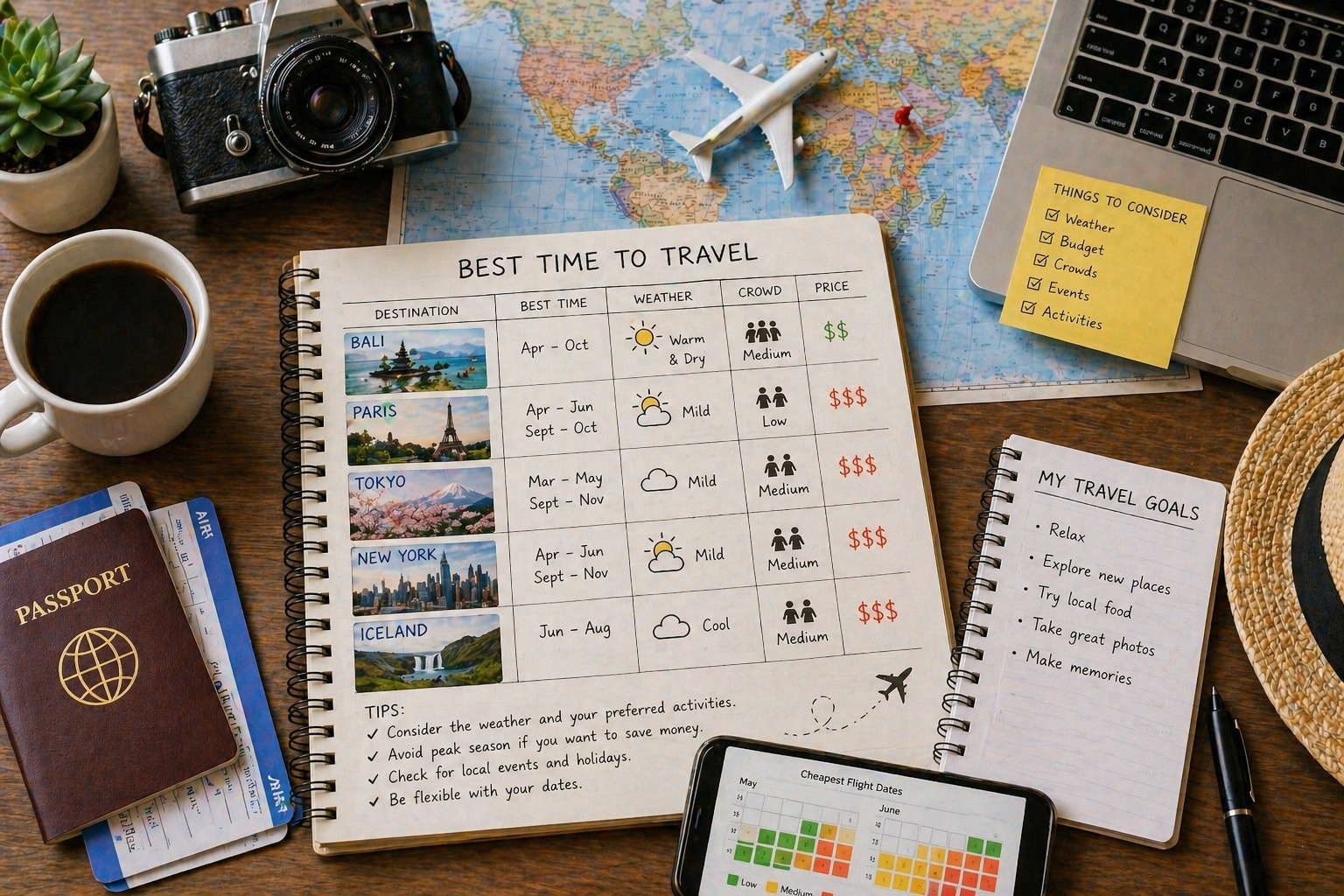
Choosing the best time of year to travel can make a huge difference in your experience. The same destination can feel completely different depending on the season. Weather, prices, crowds, festivals, opening hours, transportation, and local atmosphere all change throughout the year.
A beach town may be perfect in one month and rainy in another. A famous city may be crowded during summer but peaceful in autumn. A mountain destination may offer hiking in warm months and snow activities in winter. Even the cost of flights and hotels can vary dramatically depending on your travel dates.
The best time to travel is not always the most popular time. It is the time that fits your goals, budget, comfort, and expectations.
Start With the Purpose of Your Trip
Before checking calendars and prices, think about why you want to travel. The purpose of your trip should guide the timing.
If your goal is to relax on the beach, you need warm weather and good swimming conditions. If you want museums, restaurants, and city walks, mild weather may be better than extreme heat or cold. If you want skiing, snow season matters. If you want fewer crowds, high season may not be ideal.
A romantic trip, family vacation, adventure journey, cultural visit, food-focused trip, or wellness getaway may each work best at different times of year.
When you know what you want from the trip, it becomes easier to choose the right season.
Research the Destination’s Climate
Weather is one of the most important factors in travel planning. Do not assume the weather will be similar to where you live or based only on the destination’s reputation.
Research average temperatures, rainy seasons, dry seasons, humidity, wind, storms, snow, and daylight hours. Some destinations have strong seasonal differences, while others remain fairly stable throughout the year.
Also pay attention to regional differences. A country may have beaches, mountains, deserts, forests, and cities with completely different climates.
Good climate research helps you avoid uncomfortable surprises and pack correctly.
Understand High Season
High season is usually the most popular and expensive time to visit a destination. It often happens when the weather is best, schools are on vacation, festivals are happening, or conditions are ideal for certain activities.
High season can be wonderful because attractions are open, tours are available, restaurants are active, and the destination feels lively.
However, it can also mean higher prices, crowded streets, long lines, limited accommodation, and busy transportation.
Choose high season if the benefits truly matter to you. For example, if you need guaranteed beach weather or want to attend a specific festival, high season may be worth it.
But if you dislike crowds or have a limited budget, another time may be better.
Consider Shoulder Season
Shoulder season is the period between high season and low season. For many travelers, it is the best time to travel.
During shoulder season, the weather is often still pleasant, but prices may be lower and crowds smaller. Attractions are usually open, but the destination feels less intense.
For example, spring and autumn can be excellent for many cities. The weather may be mild, streets more comfortable for walking, and accommodation more affordable than peak months.
Beach destinations may also be enjoyable just before or after the busiest season, depending on the climate.
Shoulder season often offers the best balance between comfort, cost, and atmosphere.
Be Careful With Low Season
Low season can be attractive because prices are often lower and tourist areas are quieter. You may find cheaper hotels, easier reservations, and a more local atmosphere.
However, low season may also bring disadvantages. Weather may be less favorable, attractions may have shorter hours, some restaurants or hotels may close, tours may operate less frequently, and transportation options may be limited.
Low season can be great if you want rest, lower costs, and fewer crowds. But it requires more careful research.
Before choosing low season, check what will actually be open and whether the weather matches your plans.
A cheap trip is not a good deal if the main experiences you want are unavailable.
Check Rainy and Storm Seasons
Rain does not always ruin a trip, but it can affect outdoor plans, beach days, hiking, road trips, boat tours, and photography.
Some destinations have short daily showers, while others experience long rainy periods. Tropical regions may have intense rain during certain months. Coastal or island destinations may have storm or hurricane seasons.
If you plan outdoor activities, research rainfall carefully. Also prepare backup plans, such as museums, cafés, markets, cultural centers, or indoor experiences.
Traveling during rainy season may be cheaper and quieter, but you need realistic expectations.
Think About Temperature Comfort
Not everyone enjoys the same weather. Some travelers love heat, while others feel uncomfortable in high temperatures. Some enjoy cold climates, while others prefer mild days.
Before choosing your travel dates, think about your personal comfort. Extreme heat can make sightseeing tiring. Intense cold can limit outdoor activities. High humidity can affect energy. Strong wind can make beaches less enjoyable.
Look beyond average temperatures. Consider how the weather will feel during the activities you plan.
The best season is not only the one with “good weather.” It is the one with weather that feels good to you.
Look at Local Events and Festivals
Local events can make a trip unforgettable. Festivals, concerts, religious celebrations, cultural fairs, sports events, food festivals, and national holidays can add energy and meaning to your journey.
If you want to experience a specific event, plan your dates around it and book early.
However, events can also increase prices and crowds. Accommodation may sell out, transportation may become busy, and restaurants may require reservations.
Before choosing dates, check the local calendar. Decide whether you want to join the event atmosphere or avoid the extra demand.
Events can be a highlight when planned intentionally.
Consider School Holidays
School holidays often affect travel prices and crowds, especially in family-friendly destinations, beaches, theme parks, resorts, and major tourist cities.
If you are traveling with children, school breaks may be the only practical option. In that case, plan early and choose accommodation carefully.
If you do not need to travel during school holidays, avoiding them can save money and make the trip calmer.
Check holiday calendars not only in your own region, but also in the destination. Local vacation periods may affect crowds even if your own calendar looks quiet.
Compare Prices Across Different Months
Travel costs can change a lot depending on the month. Flights, hotels, car rentals, tours, and even restaurants may be more expensive during popular periods.
Before choosing your dates, compare prices across several weeks or months. Sometimes traveling just a few days earlier or later can reduce costs.
Use flexible-date searches when available. Look at midweek travel, less popular arrival days, and longer stays if they reduce nightly rates.
Choosing the right time can save money without changing the destination.
Check Attraction Opening Hours
Some destinations are seasonal. National parks, museums, boat tours, mountain routes, island ferries, theme parks, and cultural sites may operate differently depending on the time of year.
Before booking, check whether the attractions you care about will be open during your travel dates.
Also check restoration periods, public holidays, weekly closing days, and seasonal schedules.
There is nothing worse than arriving and discovering that the main reason for your trip is closed.
Think About Daylight Hours
Daylight affects how much you can do in a day. In some destinations, summer offers long days with more time for sightseeing. Winter may bring shorter days, earlier sunsets, and less time for outdoor activities.
Shorter daylight is not always bad. It can create cozy evenings, beautiful lights, and a slower rhythm. But it should be considered when planning.
If your trip depends on hiking, photography, scenic drives, or outdoor exploration, longer daylight may be helpful.
Daylight is an often-forgotten part of seasonal planning.
Match the Season to Your Activities
The best time of year depends heavily on what you want to do.
For beaches, consider water temperature, sunshine, rain, and wind. For hiking, check trail conditions, heat, snow, and daylight. For city trips, mild weather may be ideal. For wildlife viewing, certain months may offer better chances. For food travel, harvest seasons or food festivals may matter.
Do not choose dates only because they are convenient. Check whether they support your main activities.
A destination becomes better when the season matches your plans.
Consider Your Budget Flexibility
If your budget is limited, timing becomes even more important. Traveling outside peak periods can reduce costs significantly.
Shoulder season is often the best choice for budget-conscious travelers who still want pleasant conditions. Low season may offer deeper savings, but requires careful planning.
If you must travel during high season, book early, compare neighborhoods, use public transportation, and plan meals wisely.
The best time to travel is also the time that fits your financial comfort.
Think About Crowd Levels
Crowds can affect your enjoyment. Some travelers love lively places. Others prefer calm spaces and shorter lines.
If you dislike crowds, avoid major holidays, peak summer months, famous festivals, and weekends in popular destinations. Travel midweek when possible. Visit attractions early in the morning.
If you enjoy energy and social atmosphere, busier periods may feel exciting.
There is no universal answer. Choose the crowd level that matches your personality.
Check Local Business Seasons
In some destinations, especially beach towns, islands, ski villages, and rural areas, many businesses operate seasonally.
During high season, everything may be open. During low season, some restaurants, shops, tour companies, or hotels may close temporarily.
If you want a quiet trip, this may not bother you. But if you expect many dining and activity options, check availability before booking.
A destination’s atmosphere can change completely when businesses close for the season.
Prepare for Seasonal Packing
Different seasons require different packing. Choosing the right time of year also means understanding what you will need to bring.
Hot weather may require sunscreen, light clothing, hats, sandals, and reusable water bottles. Cold weather may require coats, boots, gloves, and layers. Rainy periods may require waterproof shoes, umbrellas, or rain jackets.
Packing for the season improves comfort and prevents unnecessary purchases during the trip.
Good seasonal preparation starts before your suitcase is open.
Use Your Personal Schedule Wisely
The best travel time is not only about the destination. It is also about your own life.
Consider work responsibilities, family commitments, health, energy level, budget timing, and how much rest you need before and after the trip.
Sometimes the ideal weather season may not be the ideal personal season. A trip taken when you are too stressed, rushed, or financially pressured may be less enjoyable.
Choose dates that allow you to travel with more calm.
Decide What Trade-Offs You Accept
Every season has trade-offs. High season may offer great weather but higher prices. Low season may offer savings but uncertain conditions. Shoulder season may be balanced but still not perfect.
Ask yourself what matters most. Are you willing to pay more for ideal weather? Are you willing to risk rain for lower prices? Are you willing to wake early to avoid crowds? Are you willing to travel outside popular dates for a quieter experience?
Choosing the best time of year means choosing the trade-offs that feel right for you.
Travel at the Right Time for You
Choosing the best time of year to travel requires research and self-awareness. Consider your trip purpose, climate, high season, shoulder season, low season, prices, events, crowds, opening hours, activities, and personal comfort.
The most popular time is not always the best time. The cheapest time is not always the smartest. The best time is the one that fits your goals, budget, and expectations.
When you choose your travel dates carefully, the whole trip becomes easier, more comfortable, and more enjoyable.