
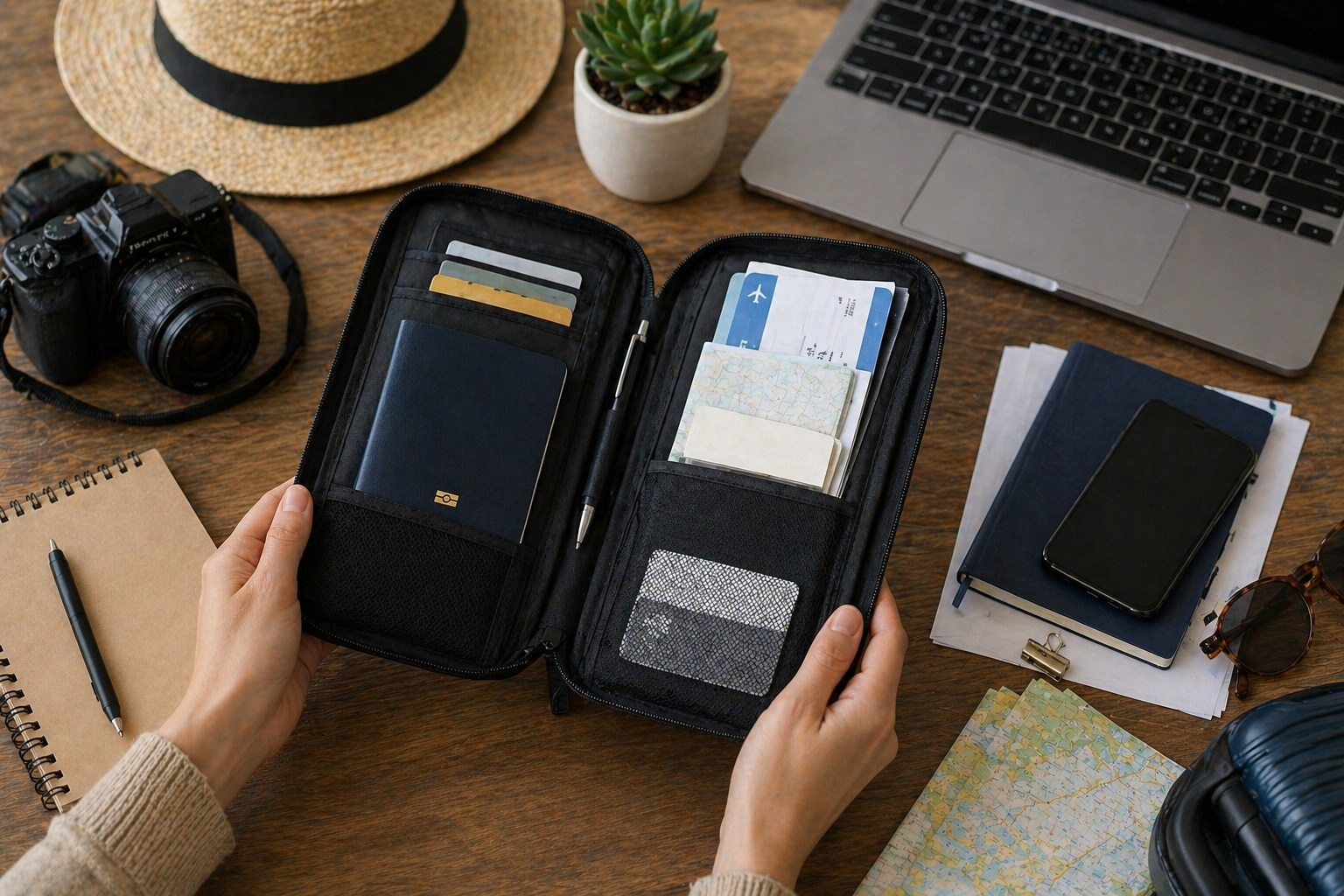
Organizing documents before a trip is one of the most important steps in travel planning. It may not feel as exciting as choosing a destination, booking a hotel, or creating an itinerary, but it can prevent many stressful situations.
A forgotten identification document, an expired passport, a missing reservation confirmation, or a document saved only on a phone with no battery can create serious problems. Good document organization helps you travel with more confidence and makes airports, hotels, tours, and transportation much easier to handle.
The goal is simple: know exactly what you need, keep everything accessible, and have backup copies in case something goes wrong.
Start With the Type of Trip
The documents you need depend on the type of trip you are taking. A short domestic trip may require only basic identification and booking confirmations. An international trip may involve passports, visas, travel insurance, entry forms, vaccination certificates, and additional authorizations.
Before organizing anything, define the basics of your trip:
Where you are going
How you will travel
How long you will stay
Who is traveling with you
Whether the trip is domestic or international
Whether children or dependents are included
This first step helps you avoid preparing unnecessary documents while making sure nothing important is forgotten.
Check Your Identification Documents
Your identification document is usually the most essential travel item. Without it, you may not be able to board transportation, check into accommodation, rent a car, or access certain services.
For domestic travel, check which type of identification is accepted by your airline, bus company, train service, hotel, or local authorities. Make sure the document is valid, readable, and in good condition.
For international travel, your passport is usually required. Check the expiration date early. Some destinations require the passport to be valid for several months beyond your arrival or departure date.
Do not leave this verification for the last minute. Renewing a document can take time, and discovering a problem too close to the trip may create unnecessary stress.
Verify Visa and Entry Requirements
If you are traveling internationally, research whether your destination requires a visa or other entry authorization. Requirements can vary depending on your nationality, destination, purpose of travel, and length of stay.
Some countries allow visa-free entry for tourism. Others require an electronic authorization, a visa on arrival, or a visa requested in advance. In some cases, you may also need proof of accommodation, return tickets, financial means, or travel insurance.
Check this information early and use reliable sources, such as official government or embassy websites.
Even if a friend visited the same place without problems, do not assume the same rules apply to you. Entry requirements can change and may differ according to citizenship and travel details.
Organize Transportation Confirmations
Transportation documents should be easy to access throughout the trip. This includes flight tickets, boarding passes, train tickets, bus confirmations, car rental reservations, ferry tickets, airport transfers, and any other travel arrangements.
Save all confirmations in one folder on your phone or email. If possible, download offline copies so you can access them without internet.
For flights, check baggage rules, seat information, departure time, terminal, and check-in instructions. For trains or buses, confirm the station, platform details when available, and boarding requirements.
Printed copies are not always necessary, but they can be helpful in destinations where internet access is unreliable or where digital tickets are not always accepted.
Keep Accommodation Details Together
Your accommodation information is useful in many situations. You may need it for immigration forms, taxi drivers, transfers, travel insurance, or simply finding your way after arrival.
Keep the following details easily accessible:
Accommodation name
Full address
Phone number
Check-in and check-out dates
Reservation number
Payment status
Check-in instructions
Cancellation policy
If you booked multiple accommodations, organize them by date. This is especially useful for longer trips or itineraries with several cities.
Also save a screenshot of the address in the local language if you are traveling to a place where the alphabet or language is different from yours.
Prepare Travel Insurance Documents
Travel insurance can be very important, especially for international trips. Even when it is not mandatory, it can provide support in situations involving medical care, cancellations, luggage issues, or travel disruptions, depending on the policy.
Before traveling, save your insurance policy, emergency contact number, coverage details, and certificate of insurance.
Do not simply buy insurance and forget about it. Read the basic terms so you know what is covered, what is excluded, and how to request assistance if needed.
Keep the emergency phone number accessible both online and offline. In a stressful situation, you do not want to search through old emails to find it.
Make Copies of Important Documents
Backup copies are one of the simplest ways to protect yourself from document-related problems. If something is lost, stolen, damaged, or inaccessible, copies can help you explain the situation and recover faster.
Make digital copies of your identification, passport, visa, travel insurance, tickets, accommodation confirmations, and important reservations.
Store them in more than one place. For example, you can keep copies on your phone, in cloud storage, and in your email. You may also leave a copy with someone you trust.
For important international trips, consider carrying printed copies of key documents in a separate part of your luggage.
The original documents are still essential, but copies provide extra security.
Use a Travel Document Organizer
A travel document organizer, folder, or small pouch can keep everything in one place. This is especially useful when traveling with family, visiting multiple destinations, or carrying printed documents.
Choose something lightweight, secure, and easy to access. It should fit your passport, identification, tickets, cards, and printed confirmations if needed.
Avoid placing documents loosely in different bags or pockets. This increases the risk of losing something important.
During travel days, keep your most essential documents in your personal bag, not in checked luggage. You should be able to access them quickly at airports, stations, hotels, and checkpoints.
Separate Originals From Copies
It is a good idea to separate original documents from backup copies. If everything is kept in the same place and that bag is lost, your copies will be lost too.
Keep originals in the safest and most accessible place. Keep printed copies in a different bag or suitcase. Digital copies should be stored securely online and offline.
This system gives you more protection without making the process complicated.
Also avoid carrying your passport everywhere if it is not necessary and if your accommodation offers a secure place to store it. In some destinations, a copy may be enough for daily outings, while the original stays safely stored.
Organize Documents for Children and Family Members
Family trips often require more document organization. Each traveler needs proper identification, tickets, insurance details, and reservation information.
If children are traveling, check whether additional authorization is required, especially if they are traveling with only one parent, relatives, or another responsible adult.
Organize documents by person or by category. For example, you can create one folder for each family member or one section for passports, another for tickets, another for insurance, and another for accommodation.
The best method is the one that allows you to find things quickly.
Family document organization avoids confusion during check-in, boarding, and hotel arrival.
Save Emergency Contacts
Emergency contacts are an important part of travel preparation. Keep a list with phone numbers and addresses that may be useful during the trip.
Include:
Accommodation contact
Travel insurance emergency number
Local emergency services
Bank or card provider
Transportation company
A trusted person at home
Embassy or consulate, for international travel
Save this list on your phone, keep a printed version, and share it with someone traveling with you if appropriate.
In an emergency, having these contacts ready can save valuable time.
Review Payment and Card Information
Although cards are not documents in the traditional sense, they are part of your travel organization. Make sure your payment methods are ready before the trip.
Check whether your credit or debit cards are valid and accepted at the destination. For international travel, understand foreign transaction fees and whether you need to notify your bank.
Keep a record of bank contact numbers in case a card is lost or blocked. Do not store card passwords together with the cards.
Carry more than one payment method if possible. A backup card or some local cash can be very useful if one option fails.
Keep Digital Files Clearly Named
Digital organization matters. If all your travel documents are buried in your email inbox with unclear file names, you may still waste time when you need them.
Create a folder on your phone, computer, or cloud storage specifically for the trip. Name files clearly, such as:
Passport copy
Hotel reservation
Flight confirmation
Travel insurance
Train tickets
Car rental
Tour booking
You can also organize files by date if your itinerary includes several stops.
Clear file names make documents easier to find when you are tired, offline, or in a hurry.
Check Everything Before Leaving Home
Before leaving for the airport, station, or road trip, do one final document check.
Confirm that you have your identification, passport if needed, tickets, accommodation details, wallet, cards, insurance information, and any required entry documents.
Also check that your phone is charged and that digital documents are available offline.
This final review may take only a few minutes, but it can prevent serious problems.
A simple habit is to check documents before closing your bag, before leaving home, and before leaving each accommodation during the trip.
Travel With More Confidence
Organizing documents before a trip may seem like a small task, but it has a big impact on your travel experience. When your documents are valid, complete, backed up, and easy to access, you reduce stress and move through each stage of the trip more smoothly.
Start early, check identification and entry requirements, save transportation and accommodation confirmations, prepare insurance details, make copies, and keep everything organized in one secure place.
Travel becomes much easier when you are not searching for important information at the last minute.
A well-organized traveler can focus less on paperwork and more on enjoying the journey.