
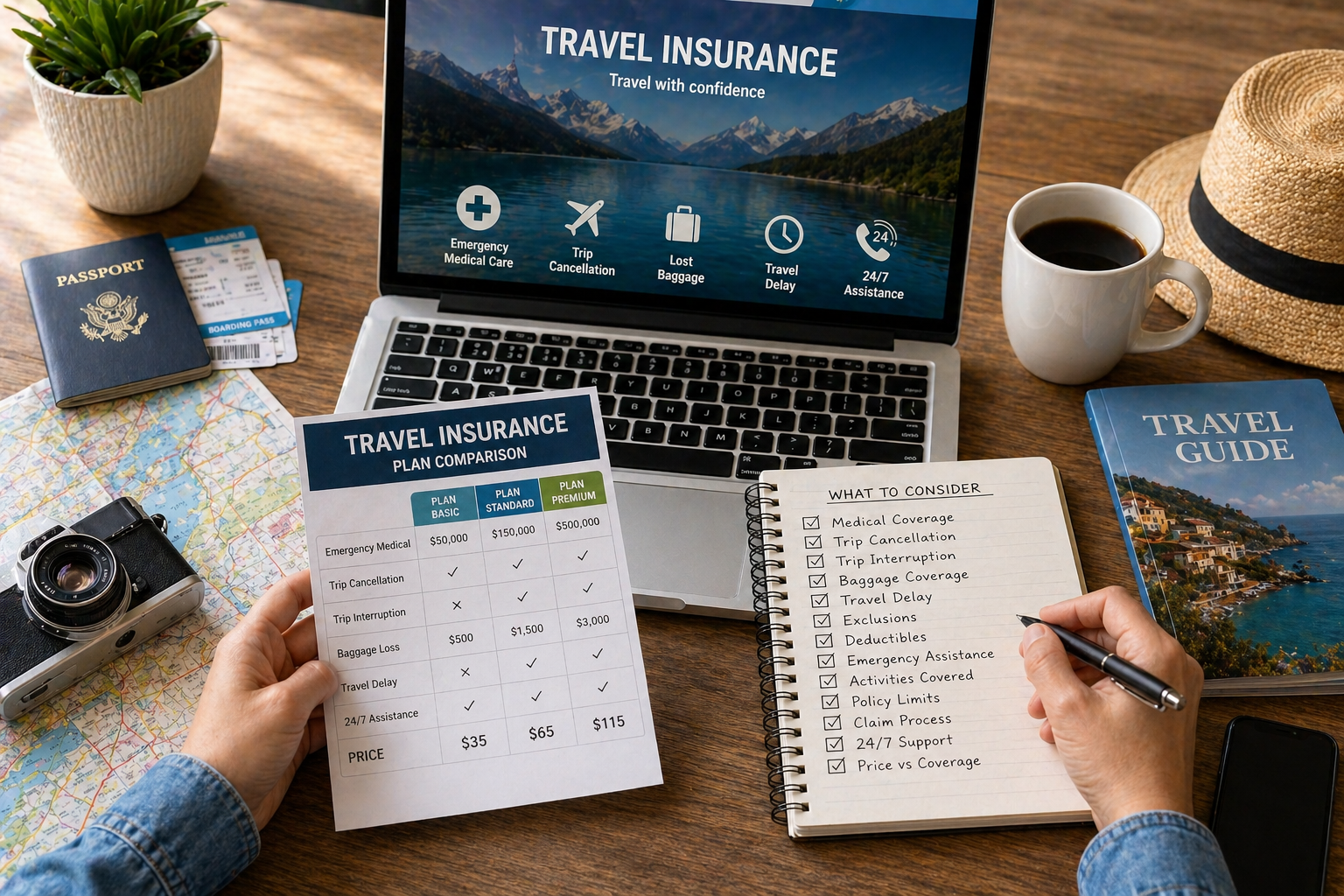
Travel insurance is one of those things many travelers only think about when something goes wrong. It may not be the most exciting part of planning a trip, but it can be one of the most important. A delayed flight, lost luggage, sudden illness, accident, or unexpected cancellation can create stress and extra costs during a journey.
Choosing travel insurance with confidence does not mean buying the first plan you see or choosing only the cheapest option. It means understanding what you need, comparing coverage carefully, and knowing how the policy works before you travel.
A good travel insurance plan can give you peace of mind, especially when traveling internationally, taking a long trip, visiting remote areas, or planning activities that involve more risk.
Understand Why Travel Insurance Matters
Travel insurance exists to help protect you from certain unexpected situations before or during a trip. Depending on the plan, it may include medical assistance, emergency care, trip cancellation, trip interruption, delayed flights, lost luggage, or other travel-related problems.
The exact coverage depends on the policy. That is why reading the details is essential.
Some travelers think insurance is unnecessary because they are healthy or because the trip is short. But unexpected situations can happen to anyone. You may get sick, have an accident, miss a connection, lose a suitcase, or need support in a place where healthcare is expensive.
Travel insurance is not about expecting problems. It is about being prepared in case they happen.
Start With the Type of Trip
The best travel insurance depends on the kind of trip you are taking. A short domestic weekend getaway may require different coverage from a three-week international trip.
Think about your destination, trip length, planned activities, transportation, health needs, and how much money you have already spent on bookings.
An international trip may require stronger medical coverage. A cruise may need specific cruise-related protection. An adventure trip may require coverage for sports or outdoor activities. A trip with expensive prepaid reservations may make cancellation coverage more important.
Insurance should match the real risks and costs of your trip.
Check Whether Insurance Is Required
Some destinations require travel insurance for entry, especially for certain visas, long stays, study programs, or specific types of travel. Some tour companies, cruises, or organized programs may also require proof of coverage.
Before buying, check whether your destination or travel provider has minimum insurance requirements. This may include a specific amount of medical coverage or proof of emergency assistance.
If insurance is required, make sure the plan clearly meets those rules. Save the certificate and keep it accessible during travel.
Even when insurance is not mandatory, it may still be a wise choice.
Focus on Medical Coverage
Medical coverage is one of the most important parts of travel insurance, especially for international trips. Healthcare costs can vary greatly between countries, and medical emergencies can become expensive quickly.
Check what the plan offers for emergency medical care, hospital treatment, doctor visits, medication, ambulance services, and emergency dental care if included.
Also check whether the plan pays providers directly or requires you to pay first and request reimbursement later. This detail can matter a lot during a stressful situation.
If you have pre-existing health conditions, read the policy carefully. Some plans exclude them unless specific conditions are met.
Good medical coverage helps you travel with more confidence.
Look at Emergency Assistance
Emergency assistance is different from reimbursement. It is the support service you can contact if something happens during the trip.
A good travel insurance plan should provide clear emergency contact information, ideally available 24 hours a day. Assistance may help you find medical care, coordinate hospital communication, arrange transportation, or explain next steps.
Before traveling, save the emergency number on your phone and keep it offline. Also write it down or print it.
In a difficult moment, you do not want to search through emails to find help.
Understand Trip Cancellation Coverage
Trip cancellation coverage may reimburse certain prepaid expenses if you need to cancel your trip for a covered reason. Covered reasons vary by policy and may include illness, injury, family emergencies, severe weather, or other specific events.
Do not assume you can cancel for any reason. Standard cancellation coverage usually has limits and conditions.
If you want broader flexibility, some plans offer “cancel for any reason” coverage, but it often costs more and may have strict purchase deadlines and reimbursement limits.
Read the cancellation section carefully before relying on it.
Check Trip Interruption Coverage
Trip interruption coverage may help if your trip has already started and you need to return home early or change plans for a covered reason.
This can be useful if there is a medical issue, family emergency, natural event, or another covered situation that affects your journey.
Check what expenses may be covered, such as unused prepaid bookings, additional transportation, or accommodation changes.
Trip interruption protection can be especially important for longer or more expensive trips.
Review Baggage Coverage
Lost, stolen, delayed, or damaged luggage can create inconvenience and extra expenses. Many travel insurance plans include some baggage protection, but limits vary.
Check how much the plan covers for lost luggage, delayed baggage, personal items, electronics, documents, and valuables. Some items may have lower limits or exclusions.
If your suitcase is delayed, the policy may cover essential purchases after a certain waiting period. Read how long the delay must be before coverage applies.
Keep receipts for important items and report baggage problems to the airline or transportation provider immediately.
Pay Attention to Exclusions
Every insurance policy has exclusions. These are situations the plan does not cover. Reading exclusions is just as important as reading benefits.
Common exclusions may include risky activities, alcohol-related incidents, unattended belongings, pre-existing conditions, high-value items beyond limits, travel to restricted areas, or cancellations for reasons not listed in the policy.
If you plan adventure activities, check whether they are covered. Hiking, skiing, diving, climbing, surfing, or motorcycle travel may require special coverage.
Do not assume. Confirm before buying.
Compare Coverage, Not Only Price
The cheapest plan is not always the best choice. A low-cost policy may have low medical limits, many exclusions, poor assistance, or limited reimbursement.
Compare plans based on what they cover, coverage amounts, deductibles, exclusions, assistance quality, and claim process.
A slightly more expensive plan may provide much better protection for your specific trip.
The goal is not to buy the most expensive policy either. The goal is to choose the plan that offers good value and matches your needs.
Check Deductibles and Limits
A deductible is the amount you may need to pay before insurance coverage applies. Coverage limits are the maximum amounts the plan will pay for certain benefits.
Look carefully at both. A plan may advertise many benefits, but each benefit may have a specific limit.
For example, medical coverage may have one limit, baggage another, and electronics a much lower limit. Some plans may also have per-item limits.
Understanding deductibles and limits helps you avoid surprises when making a claim.
Consider Your Activities
Your planned activities should influence your insurance choice. A calm city trip has different risks from a hiking, skiing, diving, cycling, or adventure-focused journey.
If your trip includes outdoor or sports activities, confirm whether they are covered. Some policies cover light recreational activities but exclude more intense or specialized ones.
If you need special coverage, buy it before the activity begins.
Insurance should match what you actually plan to do, not only where you plan to go.
Check Coverage for Travel Delays
Travel delays can create extra expenses, such as meals, accommodation, transportation, or missed connections. Some insurance plans include delay coverage after a certain number of hours.
Read the conditions carefully. The plan may require documentation from the airline or transportation provider showing the reason and duration of the delay.
Delay coverage is especially useful for trips with connections, long flights, cruises, or prepaid tours.
Keep receipts if you need to buy meals or accommodation because of a covered delay.
Know How Claims Work
Before traveling, understand how to make a claim. Check what documents are required, how to submit them, how long you have to file, and whether claims are handled online.
Common claim documents may include receipts, medical reports, police reports, airline reports, proof of delay, cancellation confirmations, and booking receipts.
During the trip, keep records of anything related to a problem. Take photos when useful and save all receipts.
Knowing the claim process makes it easier to act correctly if something happens.
Buy Insurance at the Right Time
It is usually best to buy travel insurance soon after booking major parts of your trip. Some benefits may only be available if you buy within a certain period after your first trip payment.
This can apply to cancellation benefits, pre-existing condition waivers, or broader coverage options.
Waiting until the last minute may limit what you can buy or what is covered.
Insurance is part of planning, not something to remember only at the airport.
Keep the Policy Accessible
After buying travel insurance, save the policy, certificate, emergency numbers, and claim instructions in several places.
Keep copies on your phone, in your email, and offline. Consider printing the certificate for international trips.
Share the insurance details with a travel companion or trusted person at home if appropriate.
Having the policy is not enough. You need to be able to access it when needed.
Travel With More Peace of Mind
Choosing travel insurance with confidence means understanding your trip, comparing coverage carefully, reading exclusions, checking medical limits, and knowing how to request help.
Do not choose only by price. Choose based on your destination, activities, health needs, prepaid costs, and comfort level.
A good policy cannot prevent every problem, but it can help you respond better when something unexpected happens.
Travel is much easier to enjoy when you know you have prepared for the practical side of uncertainty