
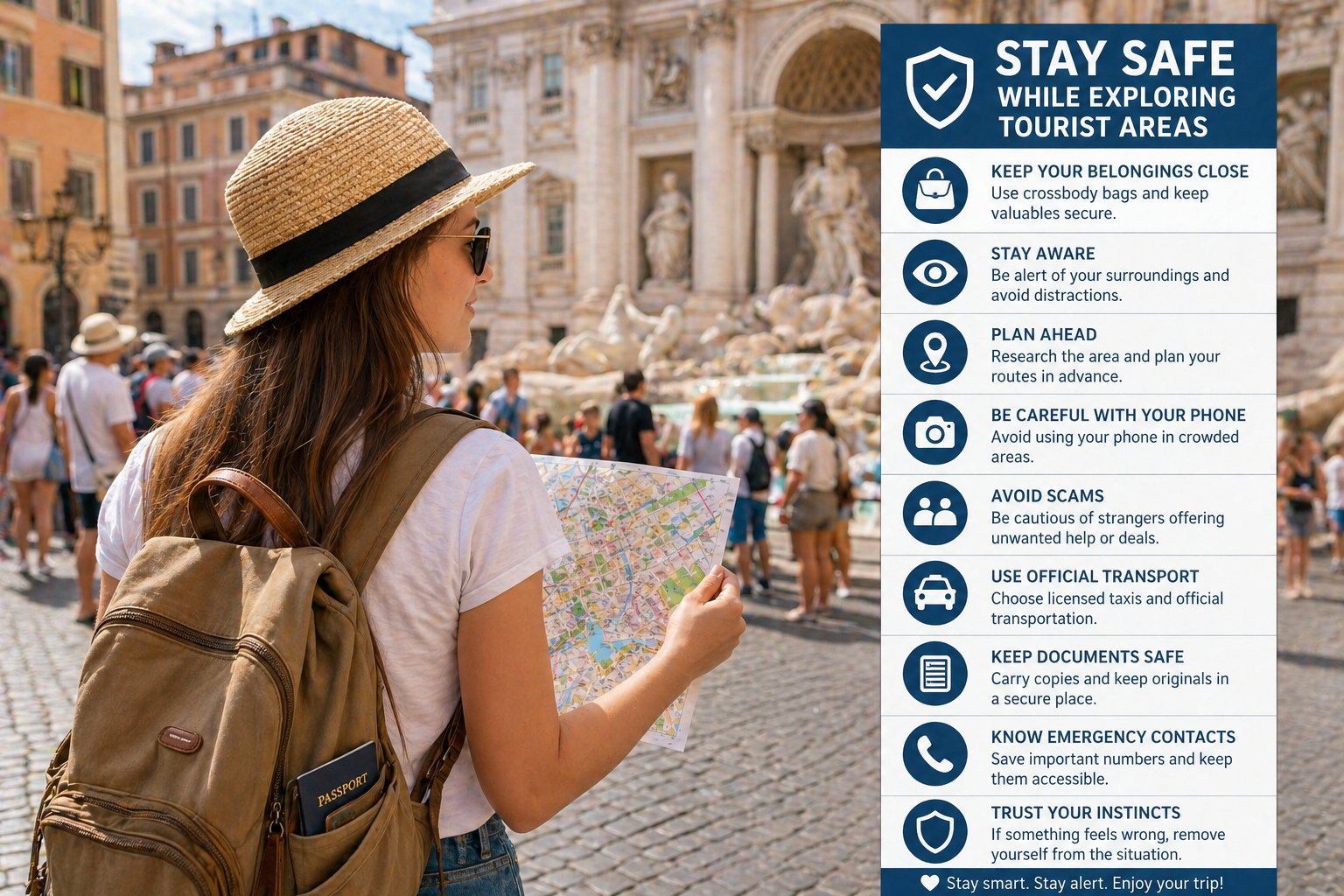
Tourist areas are often the most exciting parts of a destination. They may include famous monuments, busy squares, beaches, markets, museums, viewpoints, historic streets, restaurants, and entertainment zones. These places attract visitors because they are beautiful, interesting, and full of life.
At the same time, tourist areas require attention. Crowds, distractions, unfamiliar streets, transportation changes, and common scams can create situations where travelers feel less secure. Staying safe does not mean traveling with fear. It means being aware, prepared, and calm while enjoying the experience.
With simple habits, you can explore tourist areas with more confidence and protect your belongings, comfort, and peace of mind.
Research the Area Before You Go
Before visiting a tourist area, spend a few minutes learning about it. Check how to get there, the best entrance points, opening hours, transportation options, and whether there are common safety concerns.
Read recent traveler reviews and local advice. Some areas are safe during the day but less comfortable late at night. Others may be very crowded during certain hours, which can increase the risk of losing belongings.
Research also helps you avoid confusion. When you know the basic layout of the place, you are less likely to appear lost or distracted.
A little preparation makes exploration smoother and safer.
Keep Your Belongings Close
Crowded tourist places can attract pickpockets because visitors are often distracted by photos, maps, street performances, or attractions. Keep your bag closed and close to your body.
Avoid carrying wallets, phones, or passports in back pockets or open bags. Crossbody bags, money belts, inside pockets, and anti-theft backpacks can be useful, depending on the destination.
When sitting at a café or restaurant, do not hang your bag on the back of a chair where you cannot see it. Keep it on your lap, between your feet, or in a secure position.
Small habits can prevent big problems.
Carry Only What You Need
You do not need to take every document, card, or valuable item with you when exploring. Carry only what you need for the day.
If your accommodation has a secure place, leave extra cards, large amounts of cash, and unnecessary documents there. Keep digital copies of important documents in a safe online location.
For daily sightseeing, bring identification if required, one payment card, some cash, your phone, and essential items.
The less you carry, the less you risk losing.
Stay Aware Without Looking Nervous
Awareness is different from fear. You can enjoy a tourist area while still paying attention to what is happening around you.
Notice exits, busy streets, transportation points, police or security presence, and places where you can ask for help. Avoid walking while completely absorbed in your phone, especially in crowded or unfamiliar areas.
If you need to check directions, step aside into a café, shop, hotel lobby, or safe corner. This helps you avoid blocking foot traffic and keeps your phone more secure.
A confident and attentive traveler is less vulnerable.
Be Careful With Your Phone
Phones are among the most commonly lost or targeted items in tourist areas. They are also essential for maps, communication, tickets, and photos, so protecting them matters.
Hold your phone securely when taking photos or checking maps. Avoid placing it on café tables, benches, or open bags. Be extra careful near streets, public transportation doors, and crowded attractions.
If you use your phone for navigation, check the route before walking and then put it away when possible.
A phone wrist strap or secure pocket can be helpful in busy destinations.
Avoid Displaying Too Many Valuables
Expensive jewelry, large cameras, luxury bags, watches, and visible cash can attract attention. You do not need to hide everything, but avoid unnecessary display.
Carry your camera when you need it, then store it safely. Take out only the money you need when paying. Keep wallets discreet and avoid counting cash in public.
In some destinations, dressing simply and blending in can help you feel more comfortable.
The goal is not to look afraid. It is to avoid making yourself an easy target.
Learn Common Local Scams
Many tourist areas have common scams aimed at visitors. These can include fake petitions, unofficial guides, overpriced taxis, friendship bracelets, distraction tricks, fake charity requests, or people offering “free” items that later require payment.
Before traveling, research common scams in your destination. Knowing what to expect helps you recognize suspicious situations quickly.
If someone is too insistent, pressures you, blocks your way, or offers something that feels strange, politely refuse and keep walking.
You do not need to be rude, but you do need to be firm.
Use Official Transportation
Transportation around tourist areas can be confusing. Always try to use official taxis, licensed transportation, public transit, or trusted ride apps when available.
Be cautious with drivers who approach you aggressively outside airports, stations, or attractions. Confirm prices, routes, or app details before getting into a vehicle.
If using public transportation, keep belongings close and be aware during boarding and exiting, when crowds can create distractions.
Reliable transportation helps you avoid stress and unexpected costs.
Plan Your Return Route
It is easy to focus on arriving at a tourist area and forget about returning. Before going, know how you will get back to your accommodation.
Check transportation schedules, walking routes, taxi availability, and how the area changes after dark. If you plan to stay for sunset, dinner, or evening events, confirm that the return will still be safe and practical.
Save your accommodation address offline and in the local language if needed.
A good return plan gives you more freedom to enjoy the visit.
Be Extra Careful at Night
Some tourist areas are lively and safe at night, while others become quiet or less comfortable after businesses close. Research the local situation before staying late.
Choose well-lit streets, busy routes, and reliable transportation. Avoid walking alone in empty areas if you feel uncomfortable.
If you are unsure, ask hotel staff or local guides about safe evening zones and transportation options.
Nighttime can be beautiful while traveling, but it deserves extra awareness.
Protect Your Documents
Losing a passport or identification document during travel can create serious stress. When exploring, carry original documents only if necessary.
For international travel, some places may require you to carry your passport, while others accept a copy. Research local rules and follow them.
Keep documents in a secure inner pocket, money belt, or protected bag. Do not place them loosely in an outside pocket or open backpack.
Also keep digital and printed copies separate from originals.
Good document protection can save you from major problems.
Use ATMs Carefully
If you need cash, choose ATMs in secure locations such as banks, shopping centers, airports, or well-lit public places. Avoid isolated machines in empty streets or poorly monitored areas.
Cover the keypad when entering your PIN. Put cash away before leaving the machine. Do not accept help from strangers while using an ATM.
If a machine looks damaged, unusual, or suspicious, choose another one.
Cash access is useful, but it should be done with care.
Keep Emergency Contacts Ready
Before exploring, save important emergency contacts. This may include local emergency services, your accommodation, travel insurance, bank, embassy or consulate for international trips, and a trusted person at home.
Keep these contacts both on your phone and offline. A small note in your wallet or bag can be useful if your battery dies.
You may never need them, but having them ready brings peace of mind.
Prepared travelers respond faster when something unexpected happens.
Stay Hydrated and Rested
Safety is not only about avoiding theft or scams. Your physical condition matters too. When you are tired, hungry, dehydrated, or overheated, you may make poor decisions or become less aware.
Carry water when possible, eat regularly, and take breaks during long sightseeing days. In hot destinations, avoid too much sun exposure and rest during the hottest hours.
Comfort supports awareness. A traveler with energy is more likely to notice details and make calm decisions.
Taking care of your body helps keep you safe.
Trust Your Instincts
If a place, person, street, or situation feels uncomfortable, trust that feeling. You do not need to explain or justify it.
Move away, enter a public place, ask staff for help, call transportation, or change your route. It is better to be cautious than to ignore your own discomfort.
Instincts are not always perfect, but they are useful signals.
A safe traveler listens to both information and intuition.
Avoid Sharing Too Much in Real Time
Posting your exact location in real time can create privacy risks, especially when traveling alone. Consider sharing photos and location details after you leave a place rather than while you are still there.
Avoid publicly sharing your accommodation name, room number, full itinerary, or moments when you are alone in a specific location.
Social media is fun, but privacy matters.
A little discretion can protect your safety and peace of mind.
Be Careful With Alcohol
Trying local drinks or enjoying nightlife can be part of travel, but alcohol reduces awareness and decision-making. In tourist areas, this can increase vulnerability.
Drink responsibly, keep an eye on your drink, and plan your return transportation before the evening begins.
If traveling in a group, look out for each other. If traveling alone, be extra cautious and choose safe, public places.
Enjoyment and responsibility can go together.
Respect Local Rules and Boundaries
Tourist areas often have rules for safety and preservation. These may include restricted paths, photography limits, dress codes, swimming warnings, museum rules, or environmental protections.
Follow signs and staff instructions. Do not climb barriers, enter closed areas, or ignore warning flags at beaches and natural sites.
Rules are not only formalities. They often exist to protect visitors, residents, and the destination itself.
Respect is part of safe travel.
Choose Guided Experiences When Useful
In some destinations, a guided tour can make exploration safer and more informative. Guides know routes, local customs, historical context, and areas to avoid.
This can be especially helpful in large cities, crowded markets, historic centers, natural parks, or destinations where language barriers make independent exploration difficult.
Choose reputable guides or tour companies with good reviews and clear information.
A good guide can improve both safety and understanding.
Stay Calm if Something Goes Wrong
If you lose an item, miss transportation, feel unsafe, or encounter a problem, try to stay calm. Move to a safe place first. Then contact the proper support, such as accommodation staff, police, transportation company, bank, or travel insurance.
If something is stolen, report it according to local procedures, especially if you need documentation for insurance or replacement documents.
Panic can make decisions harder. Calm action helps you solve problems more effectively.
Explore With Confidence and Care
Staying safe while exploring tourist areas is about awareness, preparation, and practical habits. Research the area, keep belongings secure, carry only what you need, use reliable transportation, protect documents, and trust your instincts.
You do not need to let fear control your trip. Most tourist areas can be enjoyed calmly when you stay attentive and make thoughtful choices.
Travel is richer when you feel secure enough to enjoy the moment. With care and confidence, you can explore famous places, local streets, markets, viewpoints, and attractions while protecting yourself and your experience.