
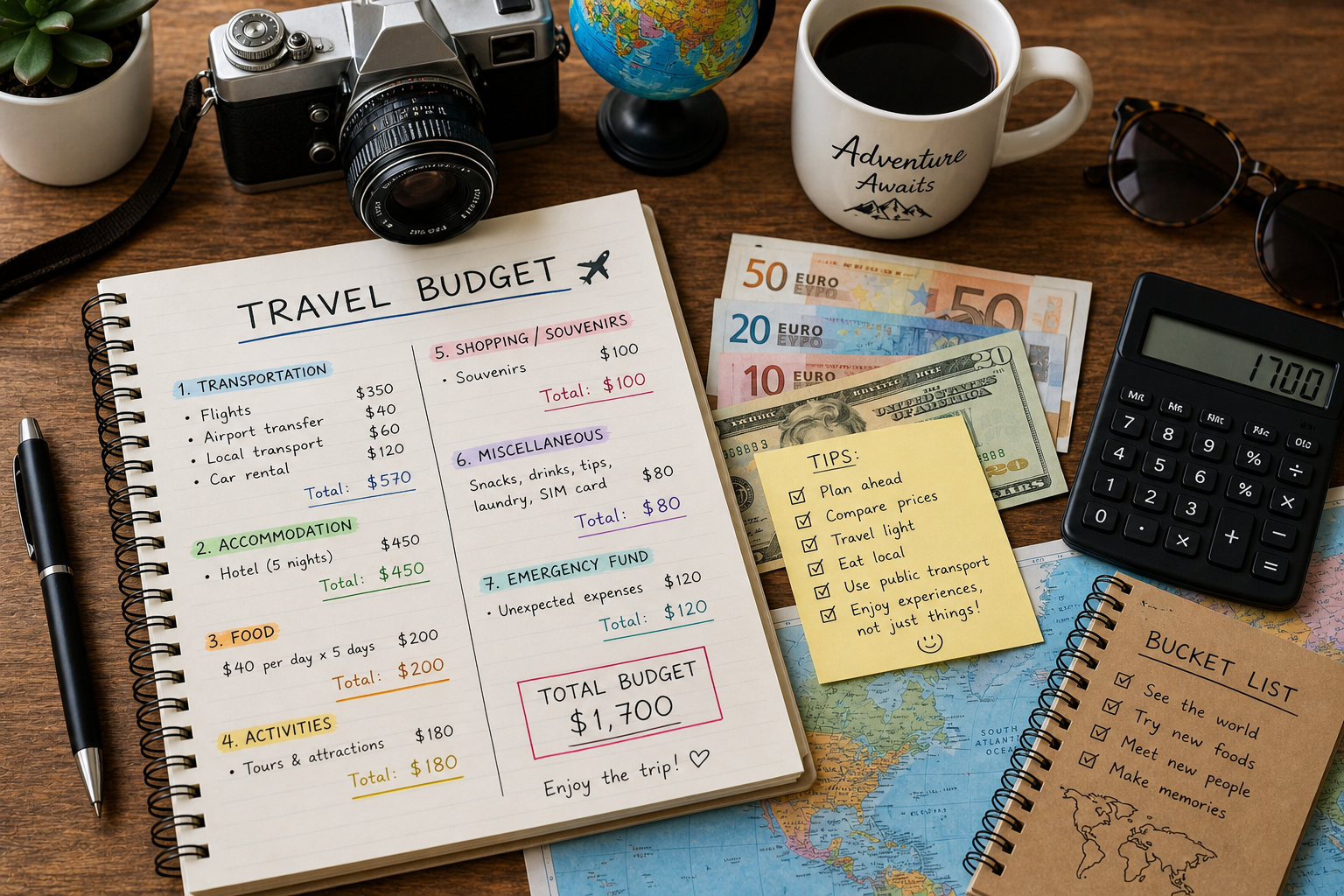
Creating a travel budget before leaving home is one of the best ways to make a trip calmer and more enjoyable. Money should not be the only focus of travel, but not knowing how much you can spend can create stress, uncertainty, and regret after the trip ends.
A good travel budget does not need to be complicated. You do not need advanced spreadsheets or financial expertise. What you need is a clear idea of your main costs, your daily spending limit, and a small reserve for unexpected situations.
When you plan your budget before departure, you make better choices about where to stay, how to move around, what to eat, and which experiences are worth paying for.
Start With the Total Amount You Can Spend
Before researching hotels, flights, restaurants, or tours, define the total amount you can comfortably spend on the trip.
This number should be realistic. It should not depend on money you do not have or create financial pressure when you return home.
Think about your current responsibilities, bills, savings, and other priorities. Travel should bring good memories, not financial anxiety.
Once you know your total budget, you can divide it into categories. This makes planning easier and helps you avoid spending too much in one area.
Separate Fixed Costs From Daily Costs
A simple travel budget works better when you separate fixed costs from daily costs.
Fixed costs are expenses you usually pay before or at the beginning of the trip. These may include flights, bus tickets, accommodation, travel insurance, car rental, attraction tickets, or visas.
Daily costs are expenses that happen during the trip. These include meals, local transportation, snacks, entrance fees, small purchases, tips, and spontaneous activities.
Separating these categories helps you understand how much money is already committed and how much you still have available for each travel day.
Estimate Transportation Costs
Transportation can be one of the biggest parts of a travel budget. Start with the cost of reaching your destination.
This may include flights, trains, buses, fuel, tolls, parking, airport transfers, luggage fees, or rental car costs.
Then think about transportation during the trip. Will you use public transportation, taxis, ride apps, bicycles, ferries, or a rental car? Will you need transfers between cities or day trips?
Do not forget small transportation costs. They may seem minor individually, but they can add up over several days.
A realistic transportation estimate prevents surprises.
Choose Accommodation Based on Value
Accommodation is not only about price. A cheaper hotel far from everything may increase transportation costs and waste time. A slightly more expensive place in a strategic location may save money in other ways.
When budgeting for accommodation, consider the total value. Does it include breakfast? Is there a kitchen? Is parking free? Is public transportation nearby? Can you walk to attractions or restaurants?
Read reviews carefully before booking. Comfort, cleanliness, safety, and location matter.
Your accommodation budget should support the trip you want, not simply be the lowest number possible.
Plan a Daily Food Budget
Food is one of the easiest areas to underestimate. Coffee, snacks, water, breakfast, lunch, dinner, desserts, and small treats can become a large part of your travel spending.
Before leaving, research typical food prices at the destination. Look at menus online, local restaurant options, markets, cafés, and casual places.
Create a daily food estimate that fits your travel style. You may decide to have simple breakfasts, casual lunches, and a few special dinners. Or you may prefer cooking some meals if your accommodation allows it.
A food budget does not mean avoiding good meals. It means enjoying food without losing control of your spending.
Include Activities and Attractions
Think about what you want to do during the trip. Museums, guided tours, boat rides, theme parks, national parks, shows, cooking classes, and special experiences may require tickets or reservations.
Make a list of the activities that matter most and check their prices before departure.
You do not need to pay for activities every day. Many destinations offer free or low-cost experiences, such as parks, beaches, viewpoints, markets, historic streets, public squares, and walking routes.
A good activity budget balances paid experiences with simple discoveries.
Add an Emergency Reserve
Every travel budget should include an emergency reserve. Unexpected expenses can happen even on well-planned trips.
You may need medicine, a taxi, extra luggage payment, replacement items, laundry, a delayed transportation solution, or an extra meal during a long wait.
The reserve does not need to be huge, but it should exist. It gives you peace of mind and prevents small problems from becoming stressful.
If you do not use the reserve, that is great. You return home with extra money.
Budget for Souvenirs and Shopping
Souvenirs and small purchases can easily exceed expectations. A few gifts, local products, clothes, crafts, snacks, or decorative items may seem harmless, but together they can affect your budget.
Before traveling, decide how much you want to spend on shopping. This limit helps you choose more thoughtfully.
Instead of buying many random items, choose meaningful souvenirs that connect to your experience. Local crafts, regional foods, postcards, books, or small handmade objects can be more memorable than generic products.
A souvenir budget helps you enjoy shopping without regret.
Consider Travel Insurance
Travel insurance may be an important part of your budget, especially for international trips, longer journeys, expensive bookings, or destinations where medical care can be costly.
Check what type of coverage makes sense for your trip. Compare plans based on medical coverage, cancellation rules, assistance, baggage protection, and exclusions.
Do not choose insurance only by price. Choose coverage that fits your destination and activities.
Including insurance in the budget early prevents you from treating it as an unexpected extra later.
Check Currency and Payment Fees
If you are traveling internationally, research the local currency and possible payment fees. Exchange rates, card fees, ATM fees, and foreign transaction charges can affect your total cost.
Before leaving, check whether your destination uses cash frequently or accepts cards widely. Some places require cash for markets, public transportation, small restaurants, or tips.
A mix of payment methods can be useful. Carry some cash when appropriate and have a backup card.
Currency planning helps you avoid unnecessary fees and payment problems.
Create a Daily Spending Limit
After estimating fixed costs, calculate how much remains for daily expenses. Divide that amount by the number of travel days.
This gives you a daily spending limit.
For example, if you have a set amount left after paying transportation and accommodation, divide it between meals, local transport, activities, and extras.
You do not need to spend the exact same amount every day. Some days may be more expensive, while others may be cheaper. The daily limit simply helps you stay aware.
Use a Simple Budget Format
Your budget can be very simple. You can use a notebook, phone note, spreadsheet, or budgeting app.
Create categories such as:
Transportation
Accommodation
Food
Local transportation
Activities
Shopping
Emergency reserve
Write the estimated cost for each category. Then compare it with your total available budget.
The goal is clarity, not perfection.
A simple budget you actually use is better than a complex one you ignore.
Research Before Booking
Before making reservations, compare prices from different sources. Check accommodation platforms, official hotel websites, transportation companies, attraction pages, and local services.
Look for flexible dates, discounts, free cancellation options, and included benefits.
Do not rush bookings only because something looks like a deal. Make sure the offer fits your itinerary and total budget.
Good research before departure often saves money during the trip.
Identify Where You Can Save
Once your budget is written, look for areas where you can save without reducing comfort too much.
You might choose accommodation with breakfast, use public transportation, walk more, visit free attractions, travel outside peak dates, pack light to avoid luggage fees, or eat some meals at local markets.
Saving does not mean removing everything enjoyable. It means spending less on things that matter less so you can spend more on what matters most.
A smart budget reflects your priorities.
Decide Where You Want to Spend More
A good travel budget is not only about cutting costs. It is also about choosing where to invest.
Maybe you want a comfortable hotel because rest is important. Maybe you want one special dinner, a guided tour, a scenic train ride, or a memorable cultural experience.
Decide this before the trip. When you intentionally plan for special expenses, you can enjoy them without guilt.
Travel budgeting should support meaningful experiences, not eliminate them.
Track Spending During the Trip
Even a simple budget works better when you check it during the trip. At the end of each day, write down roughly how much you spent.
You do not need to record every small detail unless you enjoy doing that. A general overview is enough for many travelers.
If you notice you are spending too much, adjust the next day with cheaper meals, free activities, or less shopping.
Small adjustments during the trip are easier than dealing with regret after returning home.
Prepare for Different Travel Styles
Your budget should match your travel style. A backpacking trip, family vacation, romantic getaway, road trip, city break, beach holiday, and luxury retreat all have different cost patterns.
Do not copy someone else’s budget without adapting it to your needs.
Think honestly about your comfort level. If you know you dislike very basic accommodation, budget for something better. If you love food experiences, give meals more space. If you prefer nature and free activities, your attraction budget may be lower.
A realistic budget is personal.
Avoid Depending on Credit Without a Plan
Credit cards can be useful during travel, especially for reservations, emergencies, and international payments. However, relying on credit without a plan can lead to overspending.
Before leaving, decide how much you can charge and how you will pay it afterward.
Use credit as a tool, not as an excuse to ignore your budget.
A trip should not become a financial burden months after it ends.
Review the Budget After Returning
After the trip, compare your estimated budget with what you actually spent. This helps you plan better next time.
Which category cost more than expected? Where did you save? Did the emergency reserve help? Did you spend too much on food, transportation, or shopping?
This review is not about guilt. It is about learning.
Every trip teaches you how to budget more accurately.
Travel With More Confidence
Creating a simple travel budget before leaving home helps you travel with more peace of mind. Start with your total amount, separate fixed and daily costs, estimate transportation, accommodation, food, activities, shopping, and emergency money.
A budget does not limit your trip. It gives you clarity and control.
When your money plan is organized, you can focus more on enjoying the destination, making memories, and returning home without financial stress.