
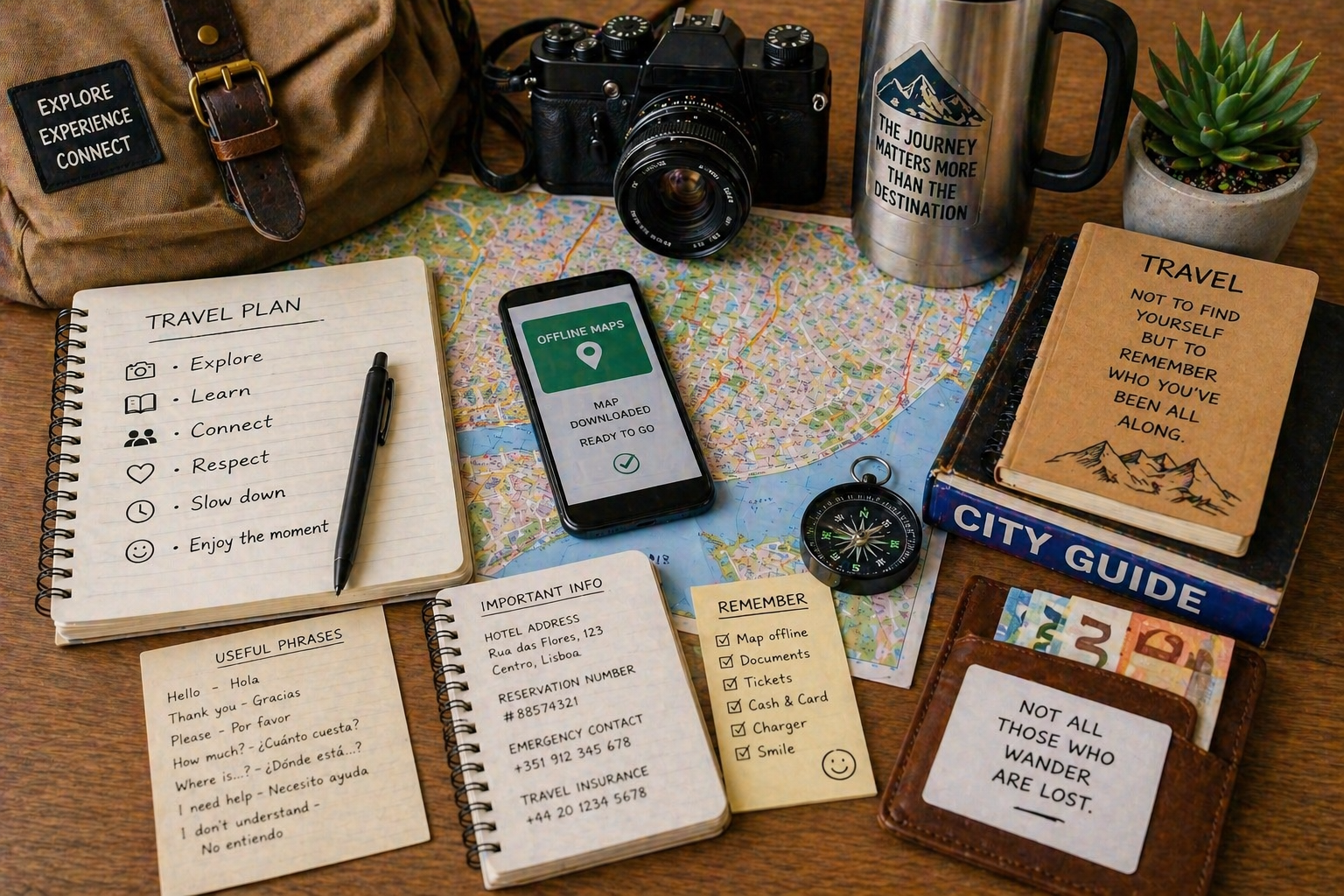
Technology has made travel much easier. With a phone, you can check maps, book hotels, translate phrases, compare restaurants, buy tickets, call transportation, take photos, and communicate with people in seconds. It is hard to imagine modern travel without digital tools.
However, depending too much on technology can create problems. Batteries die, internet signals fail, apps stop working, phones get lost, and sometimes constant screen use keeps you from truly enjoying the destination.
Traveling without depending too much on technology does not mean rejecting useful tools. It means creating balance. Your phone can help you, but it should not be the only thing that allows you to move, decide, communicate, and enjoy the trip.
Understand Your Main Digital Dependencies
Before your trip, think about which parts of travel you usually depend on technology for. This may include maps, tickets, reservations, translation, payments, transportation, photos, restaurant searches, or communication.
Once you know your main dependencies, you can prepare backups.
For example, if you depend on your phone for maps, download offline maps or carry a small printed map. If you depend on digital tickets, save screenshots and keep reservation numbers written down. If you rely on translation apps, learn a few basic phrases before traveling.
The goal is not to avoid technology. The goal is to avoid being helpless without it.
Download Important Information Offline
One of the easiest ways to reduce technology problems is to make digital tools available offline. Internet access may fail in airports, mountains, rural areas, subways, beaches, or foreign countries.
Before leaving, download offline maps, tickets, booking confirmations, transportation routes, addresses, travel insurance details, and important documents.
Take screenshots of hotel addresses, check-in instructions, boarding passes, tour confirmations, and emergency contacts.
Offline access keeps your phone useful even without signal.
This simple habit can prevent stress in many situations.
Carry a Small Printed Backup
Printed information may seem old-fashioned, but it can be very useful. A small travel folder or paper with essential details can save you if your phone battery dies or the device is lost.
You do not need to print everything. Focus on the most important information:
Accommodation address
Reservation numbers
Emergency contacts
Travel insurance details
Transportation confirmations
Important tickets
Basic itinerary
Passport or ID copy, when appropriate
Keep printed backups in a safe place, separate from original documents.
Paper does not need battery, signal, or updates. That makes it valuable.
Learn the Basic Layout of the Destination
Instead of depending completely on navigation apps, spend a little time understanding the destination’s layout. Look at a map before going out and identify main streets, neighborhoods, landmarks, transportation stations, and your accommodation location.
Knowing the general direction helps you feel more confident. You do not need to memorize every street. Just understand the basics.
For example, know whether your hotel is north or south of the main square, which metro station is closest, or which river, park, or avenue can guide you.
A mental map reduces the need to check your phone constantly.
Ask People for Directions
Before smartphones, travelers regularly asked people for directions. This can still be useful, especially in places where maps are confusing or local routes are not obvious.
Ask hotel staff, shop owners, restaurant workers, transportation employees, or local guides. Be polite and keep questions simple.
If there is a language barrier, show the destination name or address on paper or your phone.
Asking for help can create small human interactions that make travel more meaningful.
Technology gives information. People often give context.
Use Landmarks Instead of Only Apps
Landmarks are helpful for navigating without staring at a screen. A church tower, bridge, park, market, river, monument, main avenue, or mountain can guide your movement through a city.
When you walk, notice visible reference points. This helps you understand where you are and how to return.
In historic centers, landmarks are especially useful because narrow streets may confuse digital maps.
Training yourself to observe the environment makes you a more confident traveler.
It also helps you stay present.
Keep Your Phone Battery Protected
Even if you want to depend less on technology, your phone will still be important. Protecting battery life is practical.
Charge your phone fully before leaving for the day. Carry a portable charger if you will be out for many hours. Use battery-saving mode when needed. Close unnecessary apps and reduce screen brightness.
Avoid using your phone constantly for things you do not need. Endless scrolling, repeated photo reviewing, and frequent app switching drain battery quickly.
When your phone battery lasts longer, you can use it for truly important moments.
Avoid Using Your Phone for Every Decision
Technology can make travel easier, but it can also create decision overload. Restaurant reviews, attraction rankings, social media recommendations, and maps can make you question every choice.
Sometimes it is better to choose simply. Walk into a café that looks pleasant. Visit a quiet street. Sit in a park. Ask a local for a recommendation. Follow your curiosity.
Not every travel moment needs to be optimized by ratings and algorithms.
Some of the best experiences happen when you stop searching and start noticing.
Practice Phone-Free Moments
Create small moments during the trip when you intentionally put the phone away. This could be during meals, scenic views, walks, conversations, museum visits, or quiet mornings.
You do not need to disconnect for the entire trip. Even short phone-free periods can make the experience richer.
Notice the sounds, smells, light, architecture, people, and atmosphere around you. These details are easy to miss when you are constantly checking a screen.
Travel feels deeper when you are fully present.
Bring a Physical Notebook
A notebook can replace several phone habits. You can use it to write addresses, record expenses, note recommendations, plan the day, journal memories, or list places you enjoyed.
Writing by hand can slow down your thoughts and make the trip feel more intentional. It is also useful when your phone is unavailable.
A small notebook does not take much space and can become a meaningful travel keepsake.
Sometimes the best memory of a trip is not a photo, but a note written in the moment.
Learn Basic Phrases Instead of Relying Only on Translation Apps
Translation apps are helpful, but learning a few basic phrases makes travel smoother and more respectful.
Learn greetings, thank you, please, excuse me, yes, no, how much, bathroom, help, and simple food words. If you have allergies or dietary restrictions, prepare key phrases in advance.
You will still use translation tools when needed, but basic language knowledge creates independence and confidence.
It also shows respect for the local culture.
A few words can change the tone of an interaction.
Carry Essential Items Separately
If your phone holds everything, losing it can be a major problem. Keep some essentials separate.
Do not store all cards, documents, tickets, and contact information only on your phone. Carry identification, some cash, a backup card, and written emergency details separately.
If you rely on mobile payments, make sure you also have a physical payment method.
Digital convenience is useful, but physical backups protect you when something unexpected happens.
Use Printed or Physical Tickets When Helpful
Digital tickets are convenient, but printed tickets can sometimes be easier. This is especially true for long travel days, areas with poor signal, older transportation systems, or attractions where scanning screens can be difficult.
You do not need to print every ticket, but consider printing important ones for flights, trains, buses, ferries, or special tours if the destination is unfamiliar.
At minimum, save screenshots and reservation numbers.
Ticket access should not depend entirely on internet connection.
Memorize or Write Down Your Accommodation Name
One simple but important habit is knowing where you are staying. Do not rely only on opening a booking app when you need the address.
Memorize the accommodation name or keep it written in your wallet or bag. If the local language uses a different alphabet, save or print the address in the local script.
This can help with taxis, directions, emergencies, and returning after a long day.
Knowing your temporary home base gives you confidence.
Take Fewer Photos, More Intentionally
Phones make it easy to take hundreds of photos, but this can sometimes distance you from the experience. Instead of photographing everything automatically, take fewer photos with more attention.
Ask yourself what you truly want to remember. Capture light, details, people, food, landscapes, and emotions that matter.
Then put the phone away and enjoy the moment directly.
A smaller collection of meaningful photos can be more valuable than thousands of rushed images.
Prepare for Payment Without Apps
In some places, mobile payment works perfectly. In others, cash or physical cards are still necessary.
Before traveling, research common payment methods at the destination. Carry some cash when appropriate, especially for markets, small shops, public transportation, tips, or rural areas.
Keep cards accessible and know emergency contact numbers for your bank.
Depending too much on payment apps can be risky if your phone battery dies or internet fails.
A simple payment backup avoids stress.
Use Technology at Specific Times
Instead of checking your phone constantly, set natural moments for technology use. For example, check the map before leaving, review transportation after lunch, and confirm the next day’s plan in the evening.
This reduces distraction while keeping you organized.
Using technology intentionally helps you stay in control of it. The phone becomes a tool, not the center of the trip.
A few focused checks can replace constant scrolling.
Trust Your Observation Skills
Traveling with less technology helps you become more observant. You start noticing street signs, transportation patterns, local habits, landmarks, and the natural rhythm of the destination.
At first, it may feel uncomfortable. But over time, it builds confidence.
Observation is a travel skill. The more you practice it, the less dependent you feel.
A traveler who looks around often understands more than one who only follows a screen.
Enjoy More Human Connection
Technology can make travel efficient, but human connection makes it memorable. Asking for directions, ordering with basic phrases, talking to hotel staff, joining tours, visiting local shops, and asking for recommendations can create meaningful moments.
Not every interaction will be deep, but many will make the trip feel warmer.
When you depend less on technology, you often become more open to the people around you.
That openness can transform the journey.
Travel With Digital Balance
Traveling without depending too much on technology is about preparation and balance. Download important information offline, carry printed backups, learn basic phrases, understand the map, protect your phone battery, and create phone-free moments.
Use technology when it helps, but do not let it replace attention, curiosity, or human interaction.
A trip becomes richer when your phone supports the experience instead of controlling it.
When you look up from the screen, you may notice that the destination has been waiting for your full attention all along.