
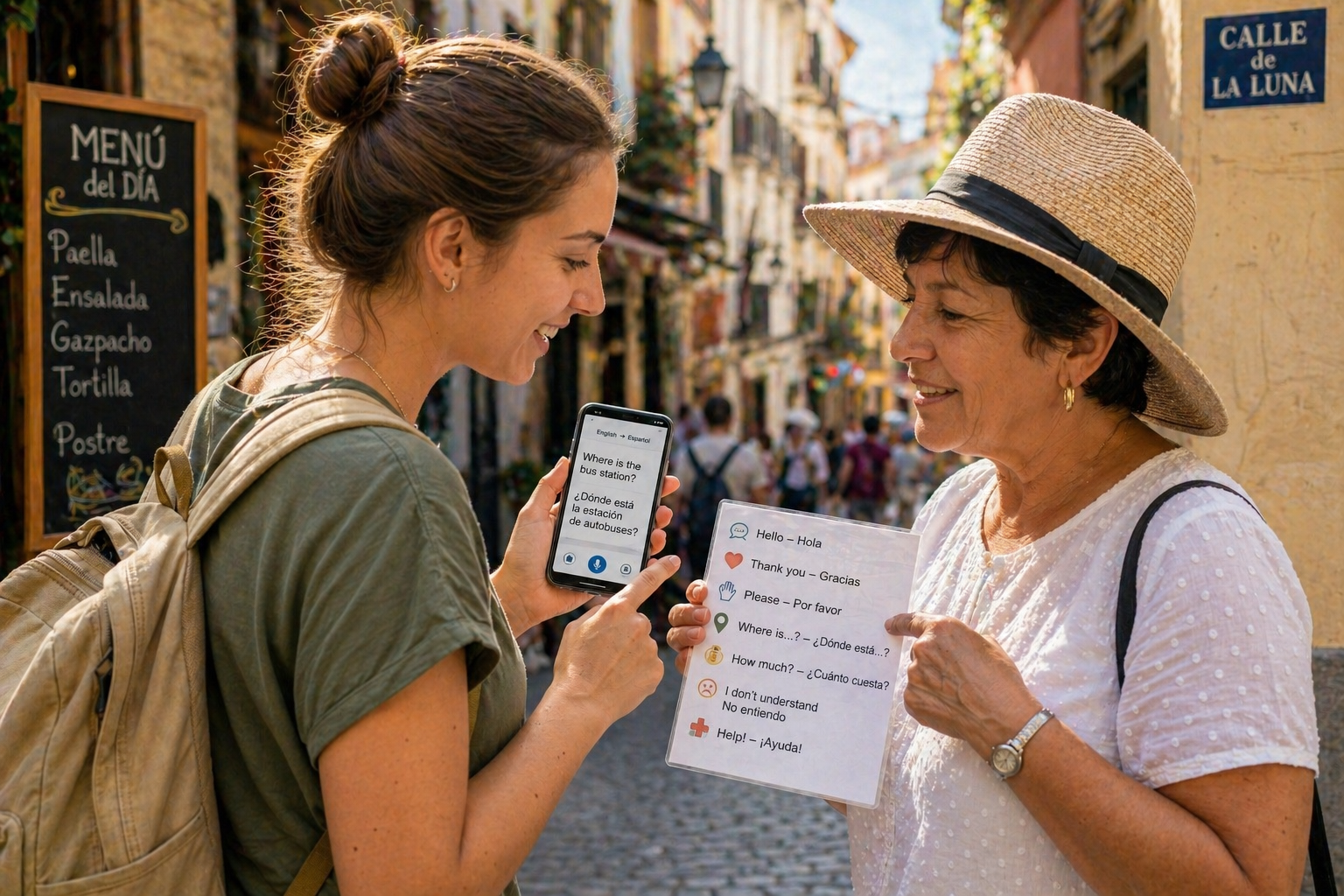
Traveling to a place where you do not speak the local language can feel exciting and intimidating at the same time. A new language adds mystery, culture, and discovery to the journey, but it can also create practical challenges when ordering food, asking for directions, using transportation, checking into accommodation, or handling unexpected situations.
The good news is that you do not need to be fluent to travel well. With preparation, patience, and the right tools, you can communicate enough to move around, show respect, and enjoy the destination with more confidence.
Language barriers are not always obstacles. Sometimes they become part of the adventure and lead to memorable interactions.
Learn Basic Words Before You Go
One of the best ways to prepare for a language barrier is to learn a few basic words and phrases before the trip. You do not need to study the entire language. Start with simple expressions that help in daily situations.
Useful phrases include:
Hello
Good morning
Please
Thank you
Excuse me
Yes
No
How much?
Where is the bathroom?
I need help
I do not speak the language
Do you speak English?
Even if your pronunciation is not perfect, trying to use the local language shows respect. Many people appreciate the effort, and it can make interactions warmer.
A few words can go a long way.
Use Translation Apps Wisely
Translation apps are incredibly helpful for modern travelers. They can help you read signs, menus, instructions, messages, and conversations.
Before your trip, download a reliable translation app and save the language offline if possible. Internet access may not always be available when you need it.
Use the camera translation feature for menus, labels, and signs. Use text translation for short messages. Voice translation can also help in simple conversations, although it may not always be perfect.
Keep sentences short and clear when using translation apps. Simple phrases translate better than long explanations.
Technology is useful, but it works best when combined with patience and common sense.
Save Important Phrases Offline
If you have important needs, prepare translated phrases before traveling. This is especially useful for allergies, dietary restrictions, medical conditions, accessibility needs, or emergency situations.
For example, you may want phrases such as:
I am allergic to peanuts.
I do not eat meat.
I need a doctor.
Please call a taxi.
This is the address of my hotel.
I need help finding this place.
Save these phrases on your phone and take screenshots so they can be accessed offline. For serious allergies or medical concerns, consider carrying a printed card in the local language.
Preparation gives you confidence when communication matters most.
Keep Accommodation Information Ready
Your accommodation address is one of the most important pieces of information when traveling with a language barrier. You may need it for taxis, public transportation, immigration forms, or asking for help.
Save the full address in the local language when possible. Also save the accommodation phone number, booking confirmation, and map location.
If the local alphabet is different from yours, having the address written correctly can prevent confusion.
A simple screenshot of the hotel name and address can be extremely useful.
Use Simple Language
When speaking with someone who does not share your language fluently, simple communication works best. Avoid slang, idioms, long explanations, and complex sentences.
Instead of saying, “I was wondering if you could tell me where I might find the nearest metro station,” say, “Metro station, please?” while pointing to a map.
Use basic words, gestures, and visual support. Speak slowly, but do not speak loudly unless necessary. Volume does not make language easier to understand.
Clear and simple communication is more effective than perfect grammar.
Use Gestures Respectfully
Gestures can help when words are not enough. Pointing to a map, showing a photo, indicating numbers with fingers, or miming simple actions can make communication easier.
However, be aware that gestures can have different meanings in different cultures. Some hand signs that seem normal in one place may be rude in another.
Use gestures politely and avoid anything aggressive or exaggerated.
A smile, calm body language, and respectful attitude can help communication even when words are limited.
Carry a Small Notebook or Use Phone Notes
Writing can help when pronunciation is difficult. You can type or write names, addresses, numbers, times, prices, or destinations.
This is especially useful for transportation, restaurants, hotels, and shopping. Showing a written address is often easier than trying to pronounce it.
A small notebook can also be useful if your phone battery dies. Phone notes work well when your device is charged.
Written communication reduces confusion in practical moments.
Use Images and Maps
Images can solve many communication problems. If you need to show a destination, open it on a map. If you want a specific dish, show a photo. If you need a pharmacy, show the symbol or translated word.
Maps are especially helpful for directions. Instead of asking long questions, you can point to your destination and ask for help.
Photos can also help when shopping, finding transportation, or explaining a simple need.
Visual communication is one of the easiest ways to overcome language barriers.
Be Patient With Misunderstandings
Misunderstandings are normal when languages are different. You may order the wrong dish, take longer to understand directions, or need to repeat yourself several times.
Stay patient. Getting frustrated usually makes communication harder.
If someone does not understand you, try another method. Use fewer words, show a translation, point to a map, write the information, or ask someone else politely.
Most travel communication problems can be solved with calm persistence.
Do Not Assume Everyone Speaks English
In many destinations, some people speak English, especially in tourist areas. But it is not respectful or realistic to assume everyone will.
Before traveling, remember that you are visiting a place where another language may be part of daily life. Learning basic phrases and preparing tools shows consideration.
When asking if someone speaks English, ask politely. If they do not, use translation tools or simple gestures.
A respectful attitude makes interactions better for everyone.
Choose Accommodation With Helpful Staff
When language barriers worry you, accommodation can make a big difference. Hotels, guesthouses, hostels, and apartments with responsive staff can help you arrange transportation, understand local instructions, book tours, or solve small problems.
Read reviews before booking. Look for comments about helpful staff, communication, and support for international travelers.
If you are nervous about language, staying somewhere with reception or clear communication may be more comfortable than a fully independent rental.
Good accommodation can act as a useful support base.
Join Guided Tours
Guided tours can help you explore a destination even when you do not speak the local language. A guide who speaks your language or English can explain history, culture, transportation, and practical details.
Walking tours, food tours, museum tours, and day trips can make the destination easier to understand.
Tours are also helpful because guides can answer questions and help you learn local words or customs.
A good guide can turn confusion into clarity.
Learn Food Words
Food is one of the most common situations where language barriers appear. Menus may not have translations, and ingredients may be unfamiliar.
Before traveling, learn basic food words, especially if you have dietary restrictions. Know the words for meat, fish, chicken, vegetables, milk, eggs, nuts, spicy, sweet, water, coffee, and allergy if needed.
Translation apps can help with menus, but they may not always translate dishes accurately. If you are unsure, ask politely or choose places with photos.
Food communication becomes easier when you know a few key words.
Prepare for Transportation Situations
Transportation can be confusing when you do not understand the language. Stations, ticket machines, announcements, and route signs may be difficult to interpret.
Before using public transportation, research how it works. Learn the words for entrance, exit, ticket, platform, train, bus, airport, station, and stop.
Download transportation apps if available. Save your destination and route before leaving your accommodation.
If you need help, show your destination on a map. Staff or locals may be able to point you in the right direction even without a shared language.
Preparation makes transportation less stressful.
Stay Calm in Unexpected Situations
Language barriers can feel more stressful when something goes wrong. A missed train, lost item, medical concern, or booking problem may require communication when you are already anxious.
In these moments, slow down. Use translation tools, show documents, ask for official staff, and avoid making rushed decisions.
Keep emergency contacts, accommodation details, insurance information, and important phrases accessible.
When you prepare in advance, unexpected situations become easier to handle.
Respect the Local Language
Language is part of culture. Treat it with respect. Avoid making fun of pronunciation, signs, accents, or communication differences.
Try to listen carefully and learn small words during the trip. Use greetings when entering shops or restaurants. Say thank you in the local language whenever possible.
These small actions show appreciation for the place you are visiting.
Respect often matters more than fluency.
Use Humor and Humility
Language mistakes are part of travel. You may mispronounce a word, misunderstand a menu, or accidentally say something funny. When this happens, humility helps.
Laugh kindly at yourself when appropriate, but never at the other person. A friendly attitude can turn awkward moments into pleasant ones.
Travel communication is not about perfection. It is about connection.
When you accept that mistakes may happen, language barriers become less intimidating.
Build Confidence Through Practice
The more you try to communicate, the easier it becomes. Start with simple interactions: greeting a shopkeeper, ordering coffee, saying thank you, or asking for the price.
Each small success builds confidence. Over time, you may feel more comfortable using basic phrases and gestures.
Even if you only learn a few words, you become more engaged with the destination.
Language practice makes travel feel more personal.
Connect Beyond Words
Not all communication depends on language. Kindness, patience, facial expressions, gestures, and shared moments can communicate a lot.
A smile from a vendor, help from a stranger, a shared laugh over a translation mistake, or a simple gesture of gratitude can become a meaningful travel memory.
Language barriers remind us that human connection can happen in many ways.
Sometimes the most memorable interactions are not perfectly translated.
Travel With More Confidence
Dealing with language barriers while traveling requires preparation, patience, and respect. Learn basic phrases, use translation apps, save important information offline, keep accommodation details ready, communicate simply, and rely on maps, images, and gestures when needed.
You do not need fluency to travel well. You need willingness, calm, and curiosity.
A different language can make a destination feel unfamiliar, but it can also make the experience richer. When you approach communication with humility and openness, language barriers become part of the journey rather than something to fear.