
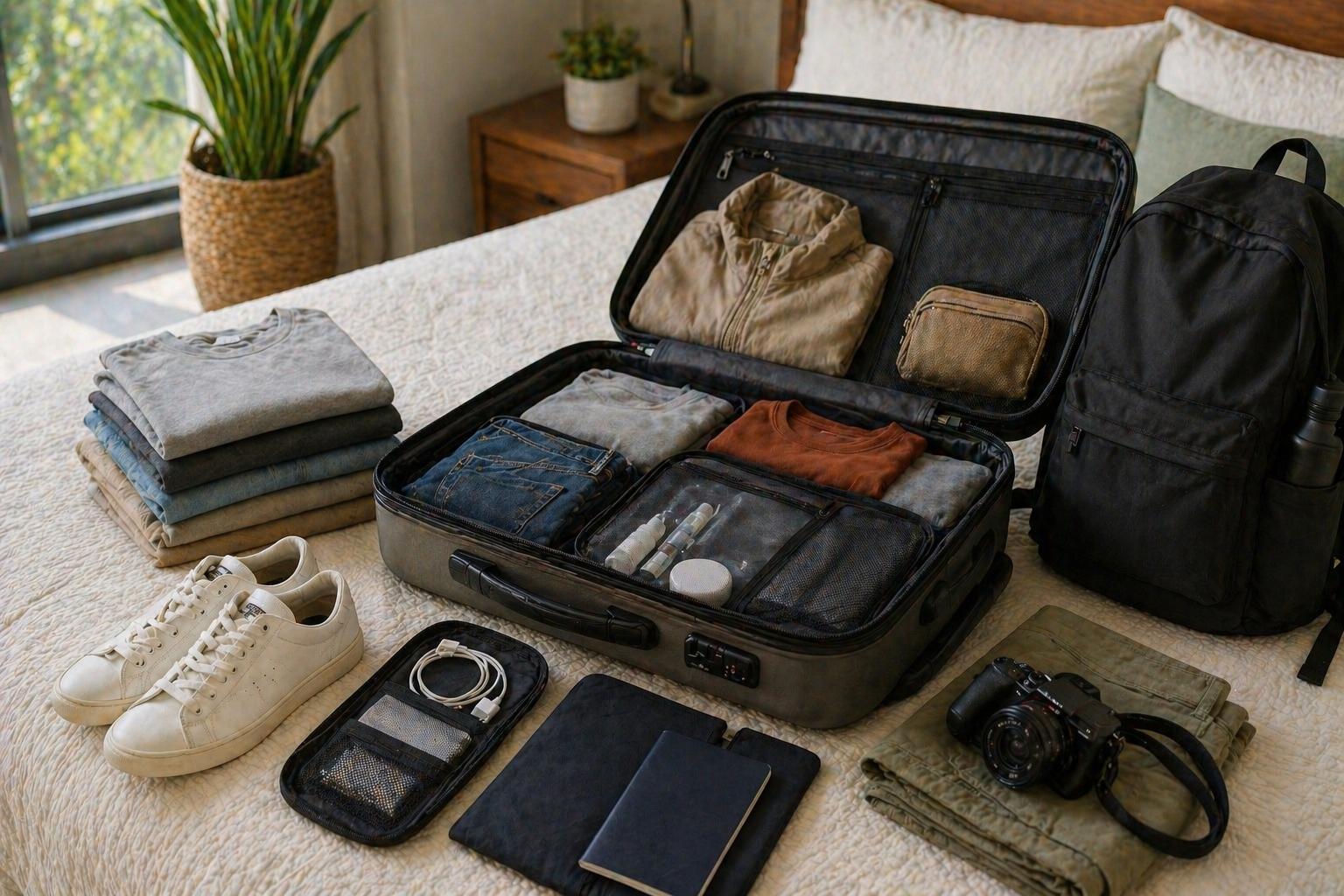
Travel becomes much more enjoyable when you move with ease. A lighter and more organized trip helps you save time, reduce stress, avoid unnecessary costs, and feel more comfortable from beginning to end.
Many travelers only think about organization when something goes wrong: a missing document, a suitcase that is too heavy, a charger left behind, or a hotel confirmation buried in old emails. But good organization starts before the trip. It appears in the way you pack, plan, move around, and manage your daily routine while traveling.
A lighter trip is not only about carrying less luggage. It is also about making smarter decisions so the whole experience feels simpler and calmer.
Start With a Clear Travel Plan
Before packing or booking extra activities, create a simple overview of your trip. You do not need a complicated itinerary, but you should know the basics.
Write down your destination, travel dates, accommodation, transportation, main activities, and important reservations. This gives you a clear picture of what the trip actually requires.
When your plan is vague, you may pack too much or organize things poorly because you are preparing for too many possible situations. When your plan is clear, it becomes easier to choose what is truly necessary.
A clear travel plan is the foundation of a lighter and more organized experience.
Choose the Right Luggage
The suitcase or bag you choose can make a big difference. The best luggage is not always the largest one. It is the one that matches your trip length, transportation style, and destination.
For short trips, a carry-on or small backpack may be enough. For longer trips, a medium suitcase can work well if you pack strategically. If you will walk a lot, use public transportation, or change accommodations often, avoid heavy and difficult-to-carry luggage.
Check baggage rules before traveling, especially if you are flying. Size and weight limits can vary between airlines and ticket types.
Choosing the right luggage helps you avoid extra fees, physical discomfort, and unnecessary complications.
Pack Clothes That Work Together
One of the easiest ways to travel lighter is to pack clothes that combine with each other. Instead of choosing separate outfits for every day, build a small travel wardrobe with versatile pieces.
Neutral colors, comfortable fabrics, and simple items can create several combinations. A shirt that works with jeans, shorts, or a skirt is more useful than a piece that only matches one outfit.
Think about layers, especially if the weather may change. A light jacket, cardigan, or sweater can be useful in airports, restaurants, cooler evenings, and air-conditioned spaces.
Avoid packing clothes just because you might wear them. Focus on what fits the weather, activities, and length of the trip.
Limit Shoes
Shoes take up space and add weight quickly. Many travelers pack too many pairs and end up wearing the same comfortable ones most of the time.
For most trips, one pair of comfortable walking shoes and one extra pair suitable for the destination are enough. For example, sandals may be useful for beach trips, while a simple dressier pair may work for dinners or events.
Always choose shoes you have already worn before. New shoes can cause pain or blisters, which can affect your entire trip.
Comfortable and practical shoes are more valuable than stylish options that hurt your feet.
Use Packing Organizers
Packing cubes, small fabric bags, toiletry pouches, and cable organizers can make your luggage easier to manage. They help separate items by category and prevent your suitcase from becoming messy after the first day.
You can use one organizer for shirts, another for underwear, another for electronics, and another for toiletries. A separate bag for dirty clothes is also useful.
You do not need expensive travel accessories. Simple cloth bags or pouches can work well.
Organizers save time because you do not need to unpack everything to find one item.
Create a Simple Packing Checklist
A checklist prevents forgetfulness and reduces last-minute stress. It also helps you avoid packing unnecessary items.
Divide your list into categories such as documents, clothes, toiletries, electronics, medicine, shoes, accessories, and personal items.
Start the checklist a few days before the trip. As you remember things, add them. Before leaving home, review the list calmly.
A good checklist should be practical, not endless. If your list is too long, review it and remove items that are unlikely to be used.
The goal is to pack with confidence, not fear.
Keep Documents in One Place
Documents should be organized before the trip and easy to access during travel days. Keep identification, passport, tickets, accommodation confirmations, insurance details, and important reservations together.
Use a travel wallet, folder, or secure pocket. Also save digital copies on your phone and in cloud storage.
If you are traveling internationally, check passport validity, visa rules, and entry requirements well in advance.
When documents are organized, airports, hotels, transportation, and check-ins become much smoother.
Organize Digital Information
A lighter and more organized trip also depends on your phone. Many important details are digital now: tickets, reservations, maps, addresses, boarding passes, and payment confirmations.
Create a folder in your email or phone for the trip. Save screenshots of important information. Download maps and documents for offline access.
Name files clearly when possible. It is much easier to find “hotel reservation” or “flight confirmation” than to search through dozens of messages.
Digital organization reduces stress, especially when internet access is weak or your time is limited.
Pack Toiletries Carefully
Toiletries can take up more space than expected. Bring only what you use regularly and choose travel-size containers when possible.
Check whether your accommodation provides items such as shampoo, soap, towels, or hairdryer. There is no need to bring things that will already be available.
Make sure liquids are well closed and packed in a separate pouch to avoid leaks. If you are flying with carry-on luggage, check liquid rules before packing.
A compact toiletry kit keeps your luggage lighter and cleaner.
Prepare a Small Day Bag
A day bag is useful for sightseeing and daily activities. It should be comfortable, secure, and not too large.
Carry only what you need for the day: phone, wallet, documents if necessary, water, sunglasses, small medicine, portable charger, and perhaps a light jacket.
Avoid carrying too many valuables or heavy items while exploring. A lighter day bag helps you walk more comfortably and stay organized.
At the end of each day, clean out receipts, wrappers, and unnecessary items so the bag stays practical.
Avoid Last-Minute Packing
Last-minute packing often leads to overpacking and forgetting essentials. When you are rushed, everything feels important.
Pack at least part of your suitcase before the final day. Leave only daily-use items for the end.
After packing, review your luggage and remove things you probably will not use. This final review can make your suitcase lighter and more realistic.
A calm packing process leads to better decisions.
Plan Laundry for Longer Trips
For longer trips, laundry can help you pack much less. Instead of bringing clothes for every day, plan to wash items during the journey.
Check whether your accommodation has laundry service, washing machines, or nearby laundromats. Pack clothes that dry quickly and can be worn in different combinations.
A small laundry bag helps separate used clothes from clean ones.
Planning laundry is one of the best strategies for long, light, and organized travel.
Keep Your Itinerary Flexible
Organization does not mean controlling every minute. A flexible itinerary helps your trip feel lighter because you are not constantly rushing.
Choose the main activities for each day, but leave free time for rest, meals, weather changes, and spontaneous discoveries.
An overloaded schedule creates mental weight. You may feel pressured to complete a list instead of enjoying the destination.
A lighter trip includes space to breathe.
Reduce Unnecessary Purchases
Buying too many things during a trip can make your luggage heavier and your budget tighter. Souvenirs are nice, but choose them intentionally.
Before buying something, ask whether you really want it, whether it fits in your luggage, and whether it will be useful or meaningful after the trip.
Small, practical, or local items are often better than large objects that are difficult to carry.
Leaving some empty space in your luggage can help, but avoid filling it just because there is room.
Review Your Bag During the Trip
Organization should continue after departure. Every few days, take a few minutes to reorganize your suitcase or backpack.
Separate clean and dirty clothes, throw away unnecessary papers, check where your documents are, and make sure chargers and small items are easy to find.
This small habit prevents your luggage from becoming chaotic as the trip continues.
A few minutes of organization can save time and frustration later.
Travel With Less Weight and More Peace
A lighter and more organized trip is not about sacrificing comfort. It is about choosing what truly supports your experience.
Start with a clear plan, choose suitable luggage, pack versatile clothes, limit shoes, use organizers, keep documents together, and prepare your digital information. Avoid overpacking, plan laundry when needed, and keep your itinerary flexible.
When your luggage is lighter and your plans are organized, you move with more freedom. You spend less energy managing things and more energy enjoying the destination.
Travel feels better when you carry only what you need and leave space for what really matters: experiences, discoveries, and good memories.