
Travel becomes much more meaningful when you go beyond landscapes and attractions. Beautiful places can impress you, but local culture helps you understand the soul of a destination. It appears in food, music, language, traditions, architecture, markets, daily habits, celebrations, and the way people interact.
Understanding local culture does not mean becoming an expert in a few days. It means traveling with curiosity, respect, and attention. Instead of only passing through a place, you begin to notice how people live, what they value, what they preserve, and how history shapes daily life.
A culturally rich trip can change the way you see a destination and make your memories deeper.
Research the Destination Before You Arrive
A good cultural experience begins before the trip. Spend some time learning about the destination’s history, traditions, geography, and social habits.
You do not need to study deeply, but basic knowledge can help you understand what you see. Research important historical moments, typical foods, local festivals, religious influences, traditional music, crafts, and common customs.
This preparation gives context to your experience. A building becomes more than architecture when you understand its history. A dish becomes more interesting when you know why it is important. A celebration becomes more meaningful when you understand its origin.
Arriving with some knowledge also helps you avoid disrespectful behavior.
Learn Basic Local Phrases
If the destination uses a different language, learning a few basic phrases can make a big difference. Words like “hello,” “please,” “thank you,” “excuse me,” and “good morning” show respect and effort.
You do not need to speak perfectly. Most people appreciate when visitors try, even if pronunciation is not exact.
Learning simple phrases also helps with small daily interactions in markets, restaurants, transportation, and shops. It can make you feel more connected and less distant from the place.
Language is one of the most direct doors into culture. Even a few words can create warmer interactions.
Try Local Food With Curiosity
Food is one of the most enjoyable ways to understand local culture. Traditional dishes often carry history, climate, geography, family habits, and regional identity.
Instead of eating only familiar meals, try local dishes, snacks, desserts, drinks, and ingredients. Visit markets, bakeries, family restaurants, street food areas, or small cafés.
Ask politely about typical foods and how they are prepared. If you have dietary restrictions, research options in advance, but still look for local flavors that fit your needs.
Food does not need to be expensive to be meaningful. Sometimes a simple meal in a local place teaches more about a destination than a famous restaurant.
Visit Local Markets
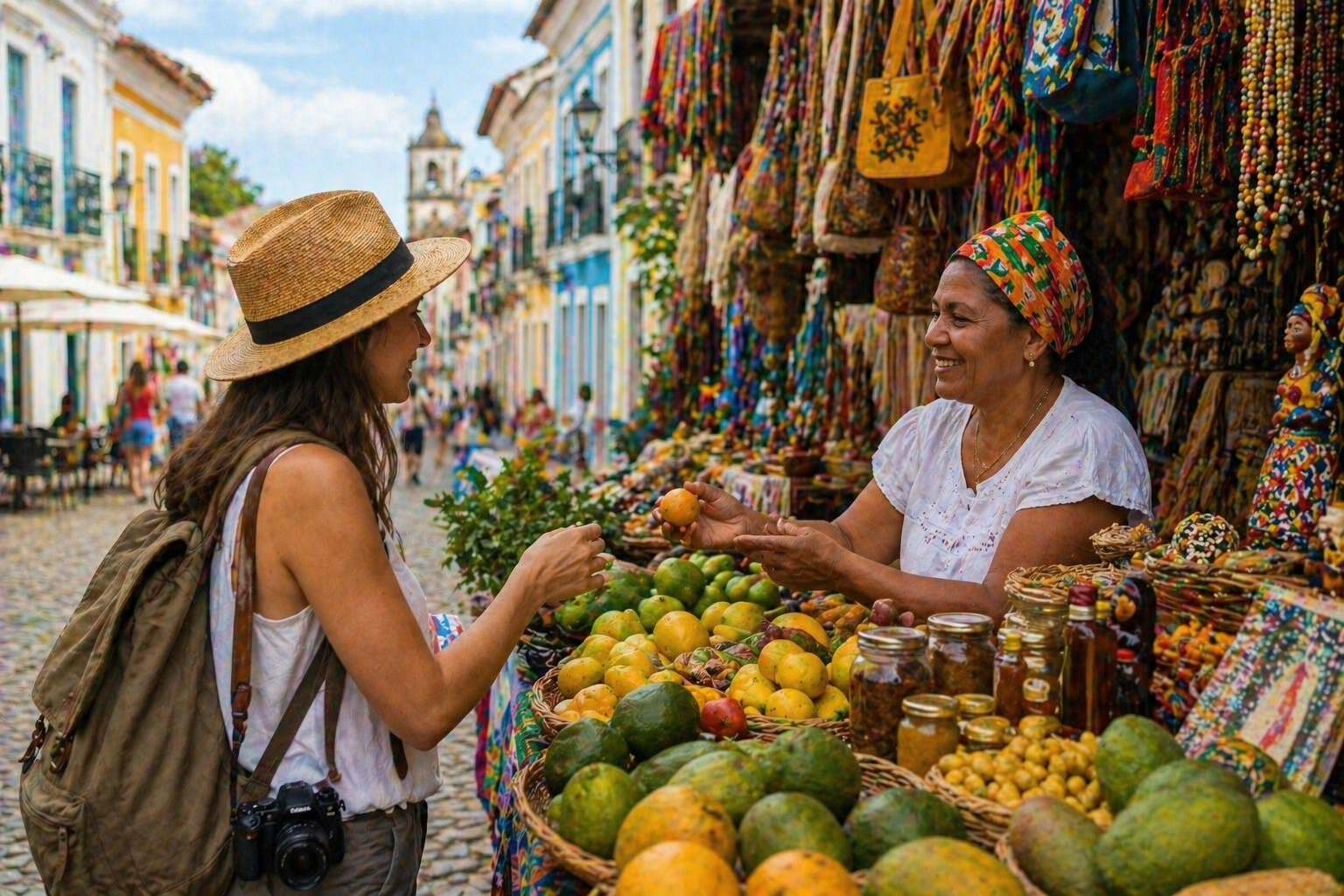
Markets are excellent places to observe culture. They show what people eat, buy, sell, cook, and value in daily life.
A local market may include fruits, spices, bread, crafts, flowers, clothes, fish, sweets, or handmade products. It can also reveal rhythms of everyday life, from morning shopping to conversations between vendors and customers.
Walk calmly and respectfully. Avoid blocking people who are shopping. Ask before taking close photos of vendors or products when appropriate.
Markets are not only places to buy things. They are living spaces where culture appears naturally.
Observe Daily Life
Not every cultural experience needs to be planned. Sometimes the best way to understand a destination is simply to observe.
Sit in a public square. Watch how people greet each other. Notice how families spend time together, how cafés are used, how people dress, how streets are organized, and what daily routines look like.
Observation helps you move beyond tourist attractions. You begin to notice the destination as a real place where people live, work, celebrate, rest, and interact.
Be discreet and respectful. The goal is not to treat local people as attractions, but to pay attention to the environment with humility.
Respect Local Customs
Every place has its own customs and expectations. What feels normal at home may not be appropriate elsewhere.
Before and during the trip, learn about clothing expectations, greetings, tipping habits, public behavior, religious practices, dining etiquette, and photography rules.
This is especially important when visiting religious sites, traditional communities, memorials, or culturally sensitive places. Dress modestly when required, speak softly where silence is expected, and follow posted rules.
Respecting customs shows that you value the place and its people. It also helps you avoid uncomfortable situations.
Visit Museums and Cultural Centers
Museums, galleries, and cultural centers can help explain the history and identity of a destination. They offer context that may not be obvious when walking through streets or visiting attractions.
Look for museums about history, art, local traditions, music, immigration, nature, or regional crafts. Small museums can be just as interesting as famous ones, especially when they focus on local stories.
Take your time. Read descriptions, observe objects, and think about how the past connects with the present.
Cultural centers may also offer exhibitions, performances, workshops, or talks that help you understand the destination better.
Take a Guided Tour
A good local guide can transform your understanding of a place. Guides often share stories, details, and perspectives that you might miss alone.
Walking tours, food tours, historical tours, neighborhood tours, and nature tours can all be useful. Choose tours that are respectful, well-reviewed, and connected to local knowledge.
Ask questions, but do so politely. A guided tour is a chance to learn, not only to take photos.
If possible, support local guides and community-based experiences. This helps your tourism spending benefit people who live in the destination.
Attend Local Events
Local events can offer a powerful look into culture. Festivals, concerts, fairs, religious celebrations, food events, sports, theater, and traditional performances can reveal what people celebrate and how they gather.
Before traveling, check if any events will happen during your stay. Some may be large and famous. Others may be small neighborhood celebrations.
If you attend, observe respectfully. Learn whether visitors are welcome, what behavior is expected, and whether photography is appropriate.
Events can make a trip feel more alive and memorable.
Explore Neighborhoods Beyond Tourist Areas
Popular tourist areas are often beautiful and convenient, but they may not show the full character of a destination. Exploring other neighborhoods can give you a broader view.
Look for areas known for local cafés, street art, traditional shops, parks, markets, architecture, or community life. Always research safety and transportation before going.
You do not need to go far from the main areas. Sometimes walking a few streets away from the busiest attraction reveals a quieter, more authentic side of the place.
Neighborhood exploration helps you understand how different parts of a destination connect.
Support Local Businesses
Where you spend money can shape your cultural experience. Local businesses often reflect regional identity more than international chains.
Choose local restaurants, independent cafés, family-run shops, craft stores, small hotels, markets, and locally guided tours when possible.
Buying from local businesses can also create more meaningful souvenirs. Handmade crafts, regional foods, books, textiles, or artwork often carry more memory than generic products.
Support should be thoughtful. Avoid bargaining aggressively in ways that disrespect the seller’s work, especially with handmade items.
Ask Questions With Respect
Curiosity is valuable, but it should be expressed respectfully. If you have a chance to talk with local people, ask simple and polite questions.
You might ask about food, traditions, places to visit, local music, or daily life. Avoid sensitive topics unless the person clearly feels comfortable discussing them.
Listen more than you speak. Do not assume that one person represents an entire culture.
Respectful conversations can become some of the most memorable parts of a trip.
Pay Attention to Architecture
Architecture tells stories. Buildings, streets, colors, materials, balconies, doors, churches, temples, houses, and public squares can reveal history, climate, religion, social life, and artistic influences.
As you walk, notice how places are built. Are streets narrow or wide? Are homes colorful or simple? Are public spaces lively? Are buildings old, modern, or mixed?
Architecture helps you understand how people adapted to climate, geography, and history.
Even without technical knowledge, you can learn a lot by observing the built environment.
Listen to Local Music
Music is a strong expression of culture. It reflects history, emotion, celebration, resistance, religion, romance, and daily life.
Listen to local music before and during your trip. Visit places with live performances when possible. Pay attention to instruments, rhythms, dance styles, and the atmosphere around the music.
You can also ask locals what artists or styles are important in the region.
Music can help you feel the destination in a way that facts alone cannot.
Be Careful With Stereotypes
Every culture is complex. Avoid reducing a destination to stereotypes, clichés, or simplified ideas.
A place may be known for certain foods, music, clothing, or traditions, but real culture is always more diverse. People may have different lifestyles, opinions, backgrounds, and identities within the same region.
Travel with an open mind. Let the destination surprise you. Be willing to update your assumptions.
Understanding culture requires humility.
Travel Slowly When Possible
The faster you move, the less you notice. Slow travel gives you time to observe routines, revisit places, talk to people, and understand details.
Even if your trip is short, you can slow down within each day. Spend more time in fewer places. Sit in a café. Walk without rushing. Return to a market. Watch the sunset from a public square.
Culture often appears in small moments, not only big attractions.
A slower pace makes your travel experience richer.
Bring Cultural Awareness Home
Understanding local culture during a trip does not end when you return home. You may bring back new recipes, music, books, habits, ideas, or a deeper respect for different ways of living.
Reflect on what you learned. What surprised you? What challenged your assumptions? What did you admire? What would you like to learn more about?
Travel can expand your view of the world when you allow it to teach you.
A Deeper Way to Travel
To better understand local culture during a trip, travel with curiosity, patience, and respect. Research before arriving, learn basic phrases, try local food, visit markets, observe daily life, attend events, explore neighborhoods, and support local businesses.
The goal is not to master a culture in a few days. The goal is to approach the destination with attention and openness.
When you travel this way, places become more than beautiful backgrounds. They become living stories, full of people, traditions, flavors, sounds, and meanings that make the journey truly unforgettable.