
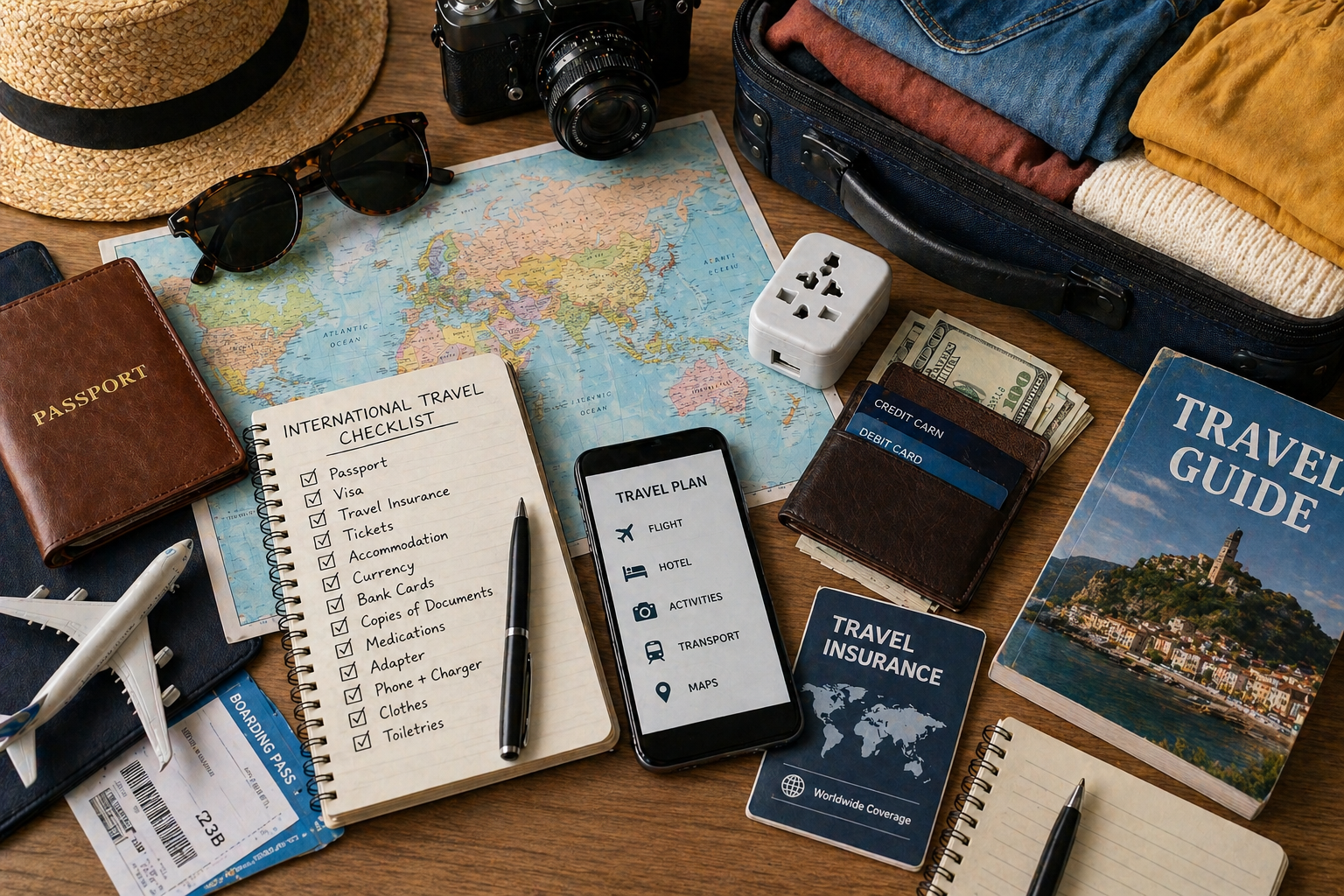
International travel can be one of the most exciting experiences in life. Visiting another country allows you to discover new cultures, languages, foods, landscapes, traditions, and ways of seeing the world. At the same time, traveling abroad requires more preparation than most domestic trips.
Documents, entry rules, currency, language, transportation, health needs, local customs, and communication all deserve attention. A small detail, such as an expired passport or missing visa, can create serious problems if it is not checked early.
Preparing for international travel does not need to be overwhelming. When you organize the main steps calmly, you can travel with more confidence and enjoy the destination with less stress.
Check Your Passport Early
Your passport is usually the most important document for international travel. Before booking or finalizing plans, check its expiration date and condition.
Some countries require your passport to be valid for several months beyond your arrival or departure date. A passport that is technically still valid may not be accepted if it expires too soon.
Also make sure the passport is not damaged. Torn pages, water damage, or unreadable information may create problems during check-in or border control.
Do not leave passport checks for the last minute. Renewing a passport can take time, and delays can affect your entire trip.
Research Visa and Entry Requirements
Every country has its own entry rules. Depending on your nationality, destination, purpose of travel, and length of stay, you may need a visa, electronic travel authorization, proof of accommodation, return ticket, travel insurance, or other documents.
Research official sources, such as government or embassy websites, before traveling. Do not rely only on old blog posts or someone else’s experience, because rules can change.
If your trip includes more than one country, check requirements for each destination. Transit countries may also have rules, especially if you leave the airport or need to change terminals.
Understanding entry requirements early helps you avoid unpleasant surprises.
Organize Travel Insurance
Travel insurance is highly recommended for international trips. In some destinations, it may be required. Even when it is not mandatory, it can be very useful in situations involving medical care, trip interruptions, delays, or luggage problems, depending on the policy.
Before buying, compare coverage carefully. Look at medical coverage, emergency assistance, cancellation conditions, lost luggage coverage, and exclusions.
If you plan activities such as skiing, hiking, diving, or adventure sports, check whether they are covered. Some policies exclude higher-risk activities unless you add specific coverage.
Save the insurance certificate and emergency contact number offline and in printed form if possible.
Learn About Local Currency
Currency preparation helps you manage money more confidently abroad. Before traveling, research the local currency, exchange rate, card acceptance, ATM availability, and common payment habits.
Some countries are very card-friendly. Others still rely heavily on cash, especially for small shops, markets, transportation, or rural areas.
Avoid carrying all your money in one place. Use a mix of payment methods when possible, such as cards and some cash. Keep a backup card separate from your main wallet.
Also check foreign transaction fees with your bank. Small fees can add up during the trip.
Notify Your Bank if Needed
Some banks may block transactions that appear unusual, especially international purchases. Before traveling, check whether you need to activate international card use or notify your bank.
Also confirm your card expiration date, withdrawal limits, and emergency contact number.
It is useful to have more than one payment method. If one card is blocked, lost, or rejected, you will still have another option.
Money problems can be stressful abroad, so prepare before departure.
Make Copies of Important Documents
Document backups are essential for international travel. Make digital copies of your passport, visa, insurance, flight tickets, accommodation confirmations, and important reservations.
Store copies in your email, cloud storage, and phone. Keep offline access in case you do not have internet.
You may also carry printed copies in a separate part of your luggage. Do not keep all copies with the original documents.
If something is lost or stolen, copies can help you explain the situation and request assistance faster.
Research Health Requirements
Some destinations have health recommendations or requirements. Depending on where you are going, you may need vaccines, medication, certificates, or precautions related to water, food, insects, altitude, or climate.
Research this early because some vaccines or health measures may need time before travel.
If you take regular medication, bring enough for the entire trip, plus a little extra if possible. Keep medicine in original packaging when appropriate and carry prescriptions if needed.
For serious health conditions, research local medical services and keep emergency information accessible.
Health preparation helps you travel with more peace of mind.
Learn Basic Local Phrases
If you are traveling to a country where another language is spoken, learning a few basic phrases can be very helpful.
Words like hello, thank you, please, excuse me, yes, no, bathroom, water, help, and how much can make daily interactions easier. Even if many people speak English, trying the local language shows respect.
If you have allergies or dietary restrictions, prepare translated phrases in advance. Save them on your phone and consider carrying a printed card.
Language does not need to be perfect to be useful. A little effort can create better communication and warmer interactions.
Understand Local Customs
International travel is richer when you understand local customs. Before your trip, research basic etiquette, greetings, clothing expectations, tipping habits, dining rules, public behavior, religious traditions, and photography restrictions.
This is especially important when visiting temples, mosques, churches, memorials, traditional communities, or conservative regions.
Respecting local culture helps you avoid uncomfortable situations and shows consideration for the people who live there.
A respectful traveler usually has a better experience.
Plan Communication and Internet Access
Staying connected abroad can help with maps, translation, reservations, transportation, banking, and contacting family.
Before traveling, research your options. You may use international roaming, a local SIM card, an eSIM, or Wi-Fi from hotels and public places.
Download offline maps and important documents before departure. Internet access may not work immediately when you arrive.
Also save your accommodation address in the local language if possible. This can help taxi drivers or local staff understand where you need to go.
Good communication planning makes arrival and daily movement easier.
Prepare for Arrival Transportation
Arriving in another country can feel confusing, especially after a long flight. Plan your first transfer before leaving home.
Research how to get from the airport, train station, or port to your accommodation. Check official taxis, public transportation, ride apps, hotel transfers, or shuttle services.
If you arrive late at night or with heavy luggage, paying for a safer and more direct transfer may be worth it.
Save the route and address offline. A smooth arrival helps you start the trip calmly.
Check Electrical Outlets and Voltage
Different countries use different plug types and sometimes different voltage. Before traveling, check whether you need a plug adapter or voltage converter.
Most modern phone and laptop chargers work with multiple voltages, but it is always good to confirm. Hairdryers, straighteners, and other appliances may not be compatible.
Bring the right adapter so you can charge your phone, camera, and other important devices as soon as you arrive.
This small detail is easy to forget but very important.
Pack According to Culture and Climate
Packing for international travel requires attention to both weather and local expectations. Research the climate, season, rainfall, and typical temperatures for your travel dates.
Also consider cultural norms. Some destinations require modest clothing in religious or traditional places. Others may have specific expectations for public spaces.
Pack comfortable shoes, versatile clothes, layers, toiletries, medicine, chargers, travel documents, and items suitable for your activities.
Avoid overpacking. International travel often involves airports, transfers, stairs, and public transportation, so manageable luggage is very helpful.
Understand Transportation at the Destination
Before arriving, research how people move around the destination. Is public transportation reliable? Are taxis safe? Do ride apps work? Is it walkable? Will you need a rental car?
Learn the basics of tickets, routes, travel cards, and common transportation mistakes.
If you plan to drive abroad, check whether your driver’s license is accepted or whether you need an international driving permit. Also research local driving rules, parking, tolls, and road conditions.
Transportation knowledge helps you explore with more confidence.
Prepare for Time Zone Changes
International trips may involve time zone changes and jet lag. If the difference is large, your body may need time to adjust.
Try to rest well before traveling. During the flight, drink water and avoid overloading your schedule on arrival day.
Plan a lighter first day if possible. A short walk, simple meal, and early night may be better than a full itinerary after a long journey.
Adjusting gradually helps you enjoy the rest of the trip more.
Know Emergency Contacts
Before traveling abroad, save important emergency contacts. This may include local emergency numbers, your accommodation, travel insurance, bank, airline, embassy or consulate, and a trusted person at home.
Keep these contacts online and offline. If your phone is lost or out of battery, having printed information can be helpful.
You may never need these numbers, but having them ready brings peace of mind.
Review Rules for Food, Customs, and Luggage
International travel often includes customs rules about what you can bring into or out of a country. Food, plants, seeds, medicines, alcohol, electronics, animal products, and large amounts of cash may have restrictions.
Research rules before packing, especially if you plan to bring food souvenirs or medication.
Also check airline baggage limits and prohibited items. International flights may have different rules from domestic routes.
Knowing these rules helps you avoid delays, fines, or confiscated items.
Stay Open and Flexible
International travel may include surprises. Things may work differently from what you are used to. Meal times, transportation, service style, personal space, noise levels, and daily rhythms may vary.
Approach differences with curiosity instead of frustration. The goal of international travel is not to find another version of home. It is to experience another place respectfully.
Flexibility helps you enjoy the destination as it is.
Travel Abroad With Confidence
Preparing for international travel means checking documents, researching entry rules, organizing insurance, planning money, learning basic customs, preparing communication, and packing thoughtfully.
The process may seem detailed, but each step helps prevent stress later.
When the practical side is organized, you can focus on what makes international travel so special: new cultures, new flavors, new landscapes, and the feeling of discovering the world beyond your usual routine.