
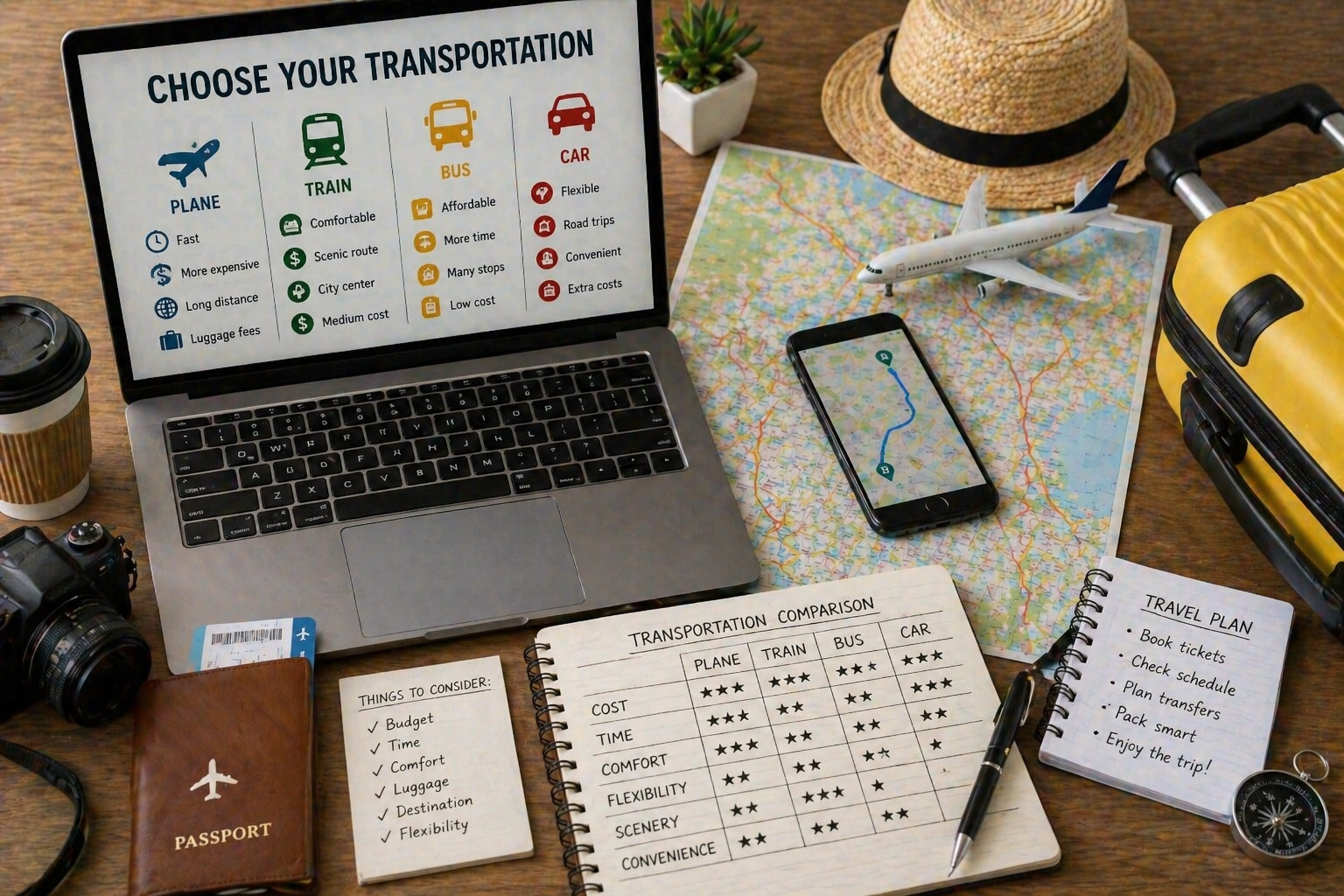
Choosing the right transportation is one of the most important parts of travel planning. It affects your budget, comfort, time, energy, luggage, safety, and even the way you experience the destination.
Many travelers choose transportation based only on price. But the cheapest option is not always the best one. A low-cost flight may include expensive baggage fees. A cheap hotel far from the center may require costly taxis. A long bus ride may save money but leave you too tired to enjoy the first day.
Good transportation planning is about balance. The right choice depends on where you are going, how much time you have, who is traveling with you, what you can spend, and what kind of experience you want.
Start With the Distance
The first thing to consider is distance. A short trip to a nearby destination may be better by car, bus, or train. A longer trip may require a flight or a combination of transportation options.
Do not look only at distance on a map. Consider the real travel time. A destination may look close but require slow roads, traffic, transfers, or limited schedules. Another destination may be farther away but easier to reach with a direct flight or train.
Think about the complete journey from your home to your accommodation. Include time to reach the airport or station, waiting time, check-in, baggage claim, transfers, and local transportation after arrival.
The best option is the one that makes sense from door to door.
Consider Your Available Time
Time is one of the biggest factors in transportation choice. If you only have a weekend, spending many hours in transit may not be worth it. For short trips, faster or more direct transportation can make the experience much better.
If you have a longer vacation, slower transportation may be acceptable and even enjoyable. A scenic train ride, road trip, or overnight bus may become part of the adventure.
Ask yourself how much of your trip you are willing to spend moving from one place to another. Transportation should support the trip, not consume most of it.
When time is limited, convenience often has more value.
Compare the Real Cost
Transportation costs are not always obvious at first. A ticket price may look low, but extra fees can change the final amount.
When comparing options, include baggage fees, seat selection, airport transfers, tolls, fuel, parking, rental car insurance, public transportation passes, taxis, and possible overnight stops.
For example, a cheap flight to an airport far from the city may become expensive once transfers are included. A car rental may seem affordable, but parking and fuel can raise the cost. A train ticket may be more expensive than a bus, but it may save time and provide more comfort.
The real cost is the total amount you will spend to reach the destination comfortably.
Think About Comfort
Comfort matters, especially for long journeys. A very cheap option may not be worth it if it leaves you exhausted, uncomfortable, or stressed.
Consider seat space, travel duration, luggage handling, bathroom access, meal options, waiting time, and how easy it is to rest during the journey.
If you are traveling with children, older adults, or people with mobility limitations, comfort becomes even more important. Direct routes, fewer transfers, and flexible schedules can make a big difference.
Sometimes paying a little more for comfort protects your energy and helps you enjoy the trip more.
Evaluate Your Luggage
Your luggage can affect transportation decisions. Traveling light gives you more flexibility. You can walk more easily, use public transportation, board trains or buses with less effort, and avoid baggage fees.
If you are carrying large suitcases, sports equipment, baby items, or several bags, some transportation options may become harder.
Before choosing, check luggage rules. Airlines, buses, trains, ferries, and car rentals may all have different limits and fees.
If you want to use public transportation after arrival, make sure your luggage will be manageable.
A good transportation plan considers not only the traveler, but also what the traveler is carrying.
Understand the Destination’s Infrastructure
Some destinations are easy to explore without a car. Others almost require one. Before deciding, research how transportation works where you are going.
Large cities often have metro systems, buses, trains, taxis, bike rentals, or walkable neighborhoods. Beach towns, countryside areas, national parks, and mountain destinations may have limited public transportation.
If attractions are spread out, renting a car may be practical. If parking is difficult and traffic is heavy, public transportation may be better.
Do not assume transportation will work the same way everywhere. Each destination has its own rhythm and structure.
Decide Whether Renting a Car Makes Sense
A rental car can offer freedom, especially when visiting rural areas, beaches, mountains, small towns, or multiple destinations. It allows you to stop when you want, carry luggage more easily, and explore places that public transportation does not reach.
However, renting a car also brings responsibilities and costs. You need to consider fuel, parking, tolls, insurance, road conditions, traffic, navigation, and local driving rules.
In some cities, a car can become more of a problem than a solution. Parking may be expensive, streets may be confusing, and public transportation may be easier.
Rent a car when it improves the trip, not simply because it feels convenient.
Look at Safety
Safety should be part of every transportation decision. Research reliable companies, official taxis, safe public transportation areas, road conditions, and travel times.
If arriving late at night, consider booking a trusted transfer or using a reliable ride service instead of figuring everything out after arrival.
For road trips, check the vehicle, plan rest stops, avoid driving tired, and be cautious in bad weather.
For public transportation, keep belongings secure and stay aware in crowded stations or vehicles.
Safe transportation choices help you travel with more peace of mind.
Consider the People Traveling With You
Transportation that works well for one person may not work for a group. Families, couples, friends, solo travelers, and older adults may have different needs.
A solo traveler may prefer public transportation or walking. A family with children may need extra space, fewer transfers, and easier luggage handling. A group may find car rental more economical when costs are divided. Older travelers may prefer direct routes and comfortable seats.
Before booking, think about everyone’s energy, comfort, luggage, budget, and limitations.
A good travel decision should support the whole group.
Plan Airport and Station Transfers
Many travelers book flights, trains, or buses but forget to plan how they will get from the arrival point to the accommodation.
Before traveling, research transfer options. Is there a train from the airport? Are taxis reliable? Do ride apps work there? Is there a hotel shuttle? Is public transportation safe and practical with luggage?
Also consider arrival time. Public transportation may be great during the day but limited late at night.
A smooth transfer helps your trip start calmly.
Check Schedules Carefully
Transportation schedules can shape your itinerary. Flights, trains, ferries, buses, and tours may not run as often as you expect.
Before making plans, check departure and arrival times. Pay attention to weekends, holidays, seasonal schedules, and local time zones when relevant.
If you are connecting between transportation types, leave enough time. Tight connections can create stress, especially if delays happen.
A schedule that looks efficient on paper may be risky in real life.
Balance Price With Energy
Saving money is important, but your energy also has value. A cheaper transportation option may require waking up too early, arriving too late, making several transfers, or spending many uncomfortable hours in transit.
Ask whether the savings are worth the effort. Sometimes they are. Other times, paying more for a direct route, better time, or shorter journey improves the entire trip.
This is especially true for short vacations, special occasions, family trips, and long travel days.
Travel is not only about reaching the destination. It is also about arriving in a condition to enjoy it.
Use Transportation as Part of the Experience
Transportation can be more than a practical detail. A scenic train ride, ferry crossing, road trip, bike route, cable car, tram, or walking path can become a memorable part of the journey.
If the destination offers beautiful routes, consider including them intentionally. Sometimes the journey itself becomes one of the highlights.
However, do not romanticize every difficult route. A scenic option should still be safe, realistic, and comfortable enough for your trip.
The best transportation choices can add value to the experience.
Prepare for Delays
Delays can happen with any type of transportation. Weather, traffic, maintenance, strikes, crowds, and schedule changes may affect your plans.
Build some flexibility into your itinerary. Avoid scheduling important activities too close to your arrival time. Keep snacks, water, chargers, and essential items accessible during travel days.
If you have a connection, leave enough time between segments.
A little preparation makes delays easier to handle.
Think About Sustainability
Transportation choices also affect the environment. When practical, consider lower-impact options such as trains, buses, walking, biking, shared rides, or public transportation.
For short distances, ground transportation may be a good alternative to flying. At the destination, walking and public transit can reduce emissions while helping you experience local life more closely.
Sustainable choices are not always possible in every situation, but small improvements matter.
Traveling responsibly means considering the impact of how you move.
Choose What Fits This Trip
There is no single best transportation option for every journey. The right choice depends on the destination, budget, time, comfort, safety, luggage, and travelers involved.
A flight may be best for a long-distance trip. A train may be ideal for a scenic route. A car may be perfect for exploring small towns. Public transportation may be the smartest choice in a large city. Walking may be the best way to discover a historic center.
The goal is not to choose the cheapest or fastest option automatically. The goal is to choose the one that fits the trip you want to have.
Move Better, Travel Better
Choosing the right transportation helps your trip flow more smoothly. Start by considering distance and time, then compare real costs, comfort, luggage, safety, infrastructure, and who is traveling with you.
Plan transfers, check schedules, prepare for delays, and stay flexible.
Transportation is not just a detail between one place and another. It is part of the travel experience. When you choose wisely, you save energy, reduce stress, and arrive more ready to enjoy the destination.