
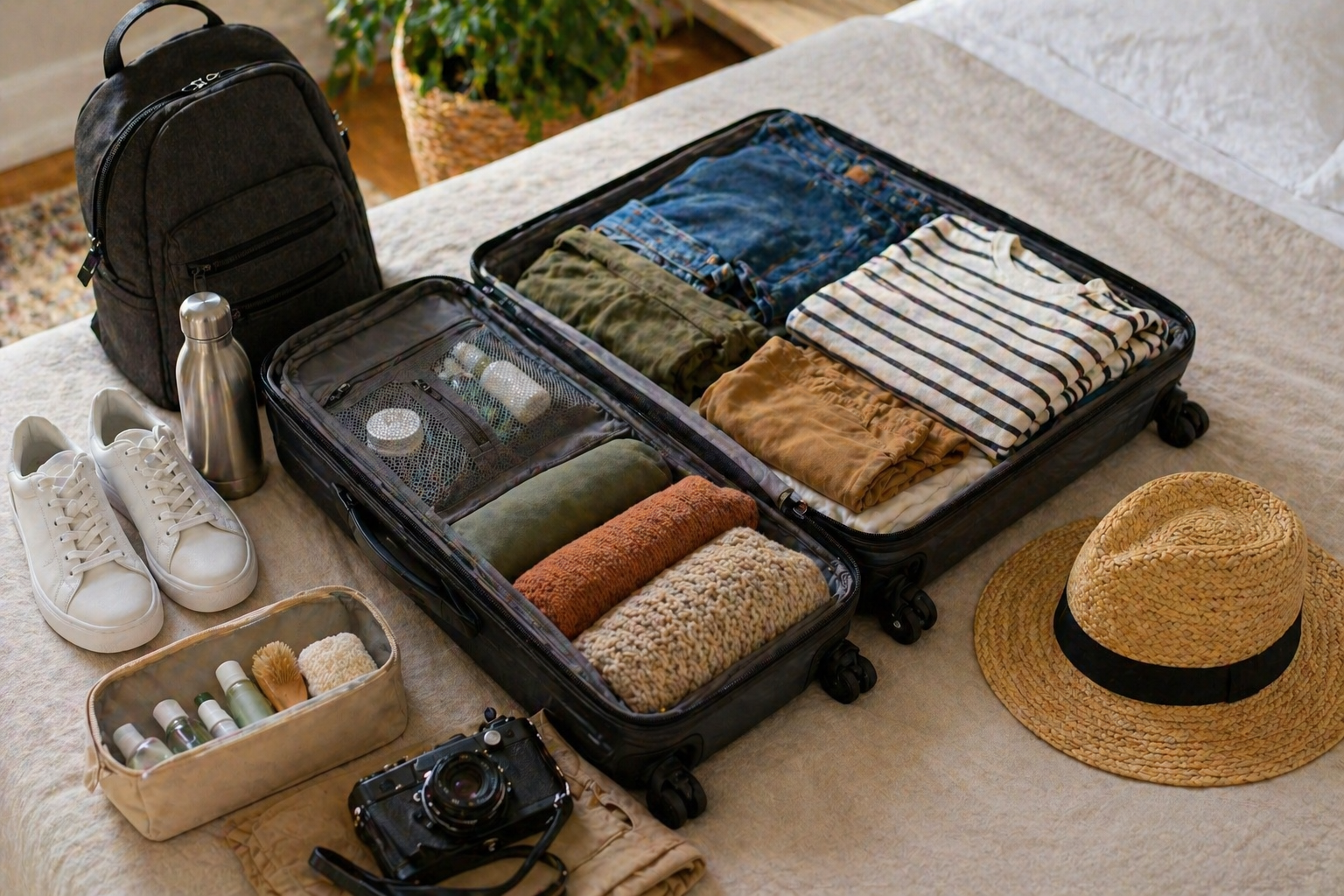
Overpacking is one of the most common travel mistakes. It usually starts with good intentions. You want to be prepared, comfortable, and ready for every possible situation. So you add one extra outfit, then another pair of shoes, then a few items “just in case.” Before you know it, your suitcase is heavy, crowded, and difficult to manage.
Packing too much can make a trip more stressful. Heavy luggage is harder to carry, may create extra baggage fees, takes longer to organize, and makes moving between places more tiring. It can also distract you from what really matters: enjoying the journey.
The good news is that avoiding overpacking is a skill. With a few simple habits, you can pack smarter, travel lighter, and still have everything you truly need.
Start With Your Actual Itinerary
Before putting anything in your suitcase, look at your real travel plans. Where are you going? How many days will you stay? What activities are already planned? What is the weather likely to be? Will you need formal clothes, beachwear, hiking shoes, or only casual outfits?
Many people overpack because they prepare for imaginary situations instead of the actual trip. If you are going to spend most days walking through a city, you probably do not need several elegant outfits. If you are going to the beach, you may not need heavy shoes or many layers.
Your itinerary should guide your suitcase. Pack for what you will realistically do, not for every possible idea.
Check the Weather Before Packing
Weather is one of the best ways to reduce unnecessary luggage. When you know the expected temperature, rain chances, wind, and seasonal conditions, it becomes easier to choose useful clothes.
Do not pack based only on assumptions. A destination known for being warm may have cool nights. A mountain area may be sunny during the day and cold after sunset. A tropical place may have rain in the afternoon.
Check the forecast close to your departure date and pack accordingly. If the weather is uncertain, choose layers instead of bulky pieces.
A light jacket, cardigan, or raincoat can be more useful than several heavy items.
Choose a Color Palette
A simple color palette helps you create more outfits with fewer clothes. Instead of packing random pieces, choose items that combine easily.
Neutral colors such as black, white, beige, navy, gray, and denim work well for many trips. You can add one or two accent colors if you want variety.
When your clothes match each other, you do not need a separate outfit for every day. One pair of pants can work with several shirts. One jacket can match most outfits. One pair of comfortable shoes can fit different moments.
Packing with a color palette makes your suitcase lighter and your choices easier during the trip.
Pack Versatile Clothing
Versatile clothing is one of the strongest tools against overpacking. Choose pieces that can be worn in different situations.
A simple shirt can work for sightseeing, dinner, or travel days. Comfortable pants can be used for walking and casual evenings. A light dress or button-up shirt can be dressed up or down depending on the accessories.
Avoid packing items that only work for one specific situation unless that situation is confirmed and important.
The more versatile your clothes are, the fewer items you need.
Limit Shoes
Shoes are one of the biggest causes of heavy luggage. They take up space, add weight, and are often used less than expected.
For most trips, two pairs are enough: one comfortable walking pair and one extra pair suited to the destination. For a beach trip, the second pair may be sandals. For a city trip, it may be a casual shoe that also works for dinner. For a hiking trip, sturdy trail shoes may be essential.
Avoid bringing shoes you have never worn before. They may cause discomfort, blisters, or pain.
Choose comfort and practicality first. A trip is much better when your feet are happy.
Use the “One Week Rule” for Longer Trips
For trips longer than one week, you usually do not need to pack clothes for every single day. Instead, pack for about one week and plan to do laundry.
This works especially well for long vacations, work trips, family travel, and multi-city itineraries. Laundry may be available at your accommodation, nearby laundromats, or local services.
Choose clothes that dry easily and can be worn more than once when appropriate. This keeps your suitcase manageable even for longer journeys.
Packing for every day of a long trip often leads to unnecessary weight.
Avoid Too Many “Just in Case” Items
The phrase “just in case” is one of the biggest enemies of light packing. Of course, some backup items are useful. Medicine, important documents, chargers, and weather protection can be necessary.
But many “just in case” items are rarely used. Extra outfits, additional shoes, full-size toiletries, books you will not read, or accessories for unlikely events can fill your suitcase quickly.
Before packing an item, ask yourself: “Is this likely to be used?” If the answer is no, leave it behind.
Being prepared is good. Carrying your entire home is not necessary.
Choose Travel-Size Toiletries
Toiletries can become surprisingly heavy. Full-size shampoo, conditioner, lotion, perfume, skincare products, and hair products take space and may leak.
Bring only what you use regularly. Transfer liquids to travel-size containers when appropriate. Check whether your accommodation provides basic items such as soap, shampoo, towels, or hairdryer.
If you are flying with carry-on luggage, follow liquid rules carefully.
For many destinations, you can buy basic toiletries locally if needed. This does not mean arriving unprepared, but it can reduce unnecessary weight.
Make a Packing List
A packing list helps you stay focused. Without a list, it is easy to keep adding items because you feel unsure.
Divide your list into categories: documents, clothes, shoes, toiletries, electronics, medicine, accessories, and destination-specific items.
Start the list a few days before departure and adjust it as needed. When packing, follow the list instead of adding random extras.
After the trip, review what you actually used. This helps you improve your packing for future travels.
A good list brings confidence and prevents excess.
Lay Everything Out Before Packing
Before placing items in your suitcase, lay everything on a bed or table. Seeing everything together helps you notice duplicates and unnecessary pieces.
You may realize that you packed too many shirts, similar jackets, extra shoes, or accessories that do not match the trip.
Remove anything that does not serve a clear purpose. If you are unsure about an item, ask whether it matches your itinerary, weather, and comfort needs.
This visual review is one of the easiest ways to reduce overpacking.
Use Packing Cubes Wisely
Packing cubes and organizers can help keep luggage neat, but they can also hide overpacking if you use them to squeeze too much into your suitcase.
Use organizers to separate categories and make items easier to find. Do not use them as an excuse to bring more than necessary.
A cube for tops, one for bottoms, one for underwear, and one for accessories may be enough. Keep dirty clothes separate with a laundry bag.
Organization should make your suitcase lighter and easier, not simply more crowded.
Wear Bulky Items During Travel
If you need to bring bulky items, wear them during travel when practical. A jacket, boots, or sweater can take up a lot of space inside your suitcase.
This is especially useful for colder destinations. Instead of packing the heaviest coat, wear it on the plane, train, or bus.
However, do not make yourself uncomfortable just to save space. The idea is to be practical, not suffer during the journey.
Use this strategy when it makes sense.
Leave Empty Space
A suitcase packed to the limit before leaving home can become a problem later. You may buy souvenirs, local products, gifts, or small items during the trip.
Leave some empty space if possible. This makes repacking easier and reduces stress on the return.
You can also bring a lightweight foldable bag for laundry, shopping, or extra items. Just be careful not to use it as permission to buy too much.
Empty space gives your trip flexibility.
Consider the Cost of Heavy Luggage
Overpacking can cost money. Airlines may charge for checked bags, overweight luggage, or extra carry-ons. Taxis may become necessary if luggage is too heavy for public transportation. Storage lockers may cost more when bags are larger.
Even when there are no direct fees, heavy luggage costs energy. Carrying it up stairs, through stations, across streets, or between hotels can become exhausting.
Before adding more items, think about whether they are worth the cost in money and effort.
Often, lighter luggage is one of the best travel comforts.
Pack for Comfort, Not Fear
Many travelers overpack because they are afraid of being unprepared. But fear-based packing usually creates more stress, not less.
Instead, pack for comfort and realistic needs. Bring what helps you enjoy the trip: suitable clothes, comfortable shoes, essential medicine, documents, chargers, and a few personal items that matter.
Trust that you can handle small needs along the way. Most destinations have stores, pharmacies, laundry services, and basic supplies.
Confidence helps you pack lighter.
Reuse Clothes Strategically
You do not need a completely different outfit every day. Many clothes can be worn more than once, especially jackets, jeans, sweaters, and outer layers.
Choose fabrics and colors that stay fresh longer and combine easily. Use accessories, layers, or different combinations to create variety.
For warm destinations, lightweight clothes can often be washed and dried quickly. For colder destinations, layers can be repeated without issue.
Reusing clothes is practical, economical, and normal during travel.
Avoid Packing for Other People’s Expectations
Sometimes people overpack because they want to look perfect in every photo or prepare for what others might think. This can lead to unnecessary outfits, uncomfortable shoes, and accessories that do not match the trip.
Your suitcase should support your experience, not social pressure.
Bring clothes that make you feel comfortable and confident, but do not sacrifice practicality for imagined expectations.
The best travel memories are usually about experiences, not how many outfits you packed.
Do a Final Suitcase Review
After packing, do one final review. Open your suitcase and look again. Remove at least a few items if possible.
Ask yourself:
Will I really use this?
Does it match more than one outfit?
Is it suitable for the weather?
Is it worth the space?
Can I buy or borrow it if needed?
This final step can make a big difference. Most people can remove several items without affecting the trip.
A lighter suitcase is often the result of one honest review.
Travel Lighter and Freer
Avoiding overpacking is about making thoughtful choices. Start with your itinerary, check the weather, choose versatile clothes, limit shoes, reduce “just in case” items, use travel-size toiletries, and review everything before closing your suitcase.
You do not need to pack for every possible situation. You need to pack for the trip you are actually taking.
Travel feels easier when your luggage is manageable. You move faster, spend less energy, stay more organized, and focus more on the destination.
A lighter suitcase can lead to a lighter travel experience.