
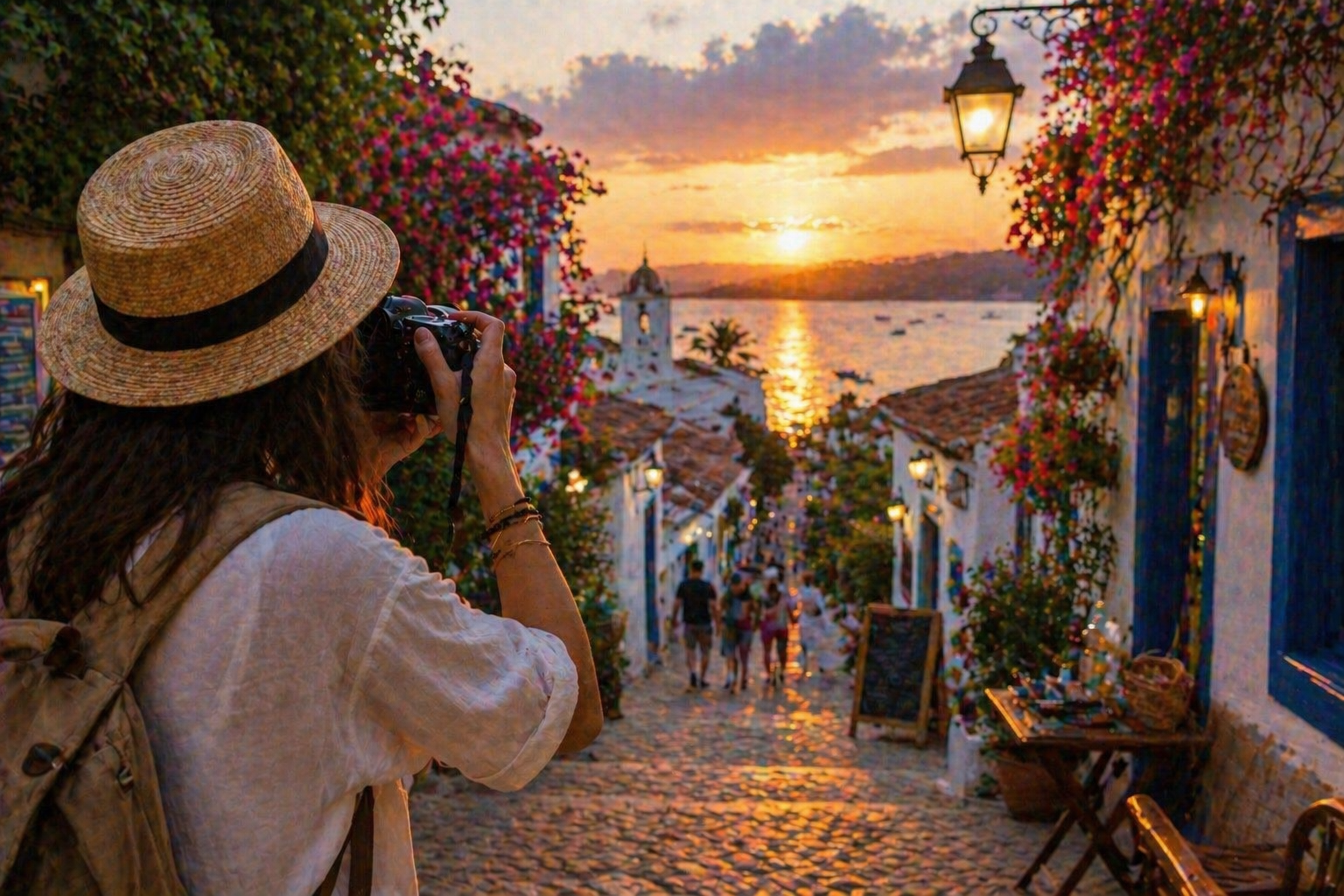
Travel photos are more than images. They help you remember places, emotions, details, people, colors, and moments that may never happen the same way again. A good travel photo can bring back the feeling of a sunset, the charm of a street, the flavor of a local meal, or the joy of discovering a new destination.
Many travelers believe they need expensive equipment to take beautiful photos. While a good camera can help, the most important elements are attention, light, composition, patience, and storytelling. Even a simple phone can capture wonderful travel memories when used with care.
Taking better photos during your travels is not about making every moment look perfect. It is about learning to observe better and capture the experience in a meaningful way.
Pay Attention to Light
Light is one of the most important parts of photography. The same place can look completely different depending on the time of day and the direction of the light.
Early morning and late afternoon usually offer softer, warmer light. These times are often ideal for landscapes, streets, portraits, and city views. Midday light can be harsh, creating strong shadows and bright highlights, especially in sunny destinations.
If you are taking photos during the middle of the day, look for shade, reflections, covered streets, or indoor scenes. Cloudy days can also be great for photography because the light is softer and more even.
Before taking a photo, notice where the light is coming from. Good light can turn a simple scene into a beautiful image.
Wake Up Early for Popular Places
Famous attractions can be difficult to photograph when they are crowded. Waking up early can help you capture quieter streets, softer light, and a calmer atmosphere.
Early mornings are especially useful for historic centers, viewpoints, beaches, monuments, bridges, and popular squares. You may also see the destination waking up, with locals opening shops, cafés preparing for the day, and streets still peaceful.
You do not need to wake up early every day, but it can be worth it for the places that matter most to you.
A quiet morning photo often feels more personal and less rushed.
Think About Composition
Composition is the way elements are arranged in a photo. Good composition helps guide the viewer’s eye and makes the image more balanced.
One simple technique is the rule of thirds. Imagine the photo divided into nine equal parts by two vertical lines and two horizontal lines. Placing the main subject along these lines or near their intersections often creates a more interesting image than placing everything exactly in the center.
You can also use natural frames, such as windows, doors, arches, trees, or streets. Leading lines, like roads, bridges, paths, or railings, can guide the eye toward the subject.
Before taking the shot, move a little. Step forward, step back, crouch down, or change the angle. Small changes can make a big difference.
Capture Details, Not Only Landmarks
It is natural to photograph famous attractions, but travel memories are also found in small details. A colorful door, a local dish, a market stall, a street sign, a flower-covered balcony, a cup of coffee, handmade crafts, or textures on old walls can tell a strong story.
Details make your photo collection more personal. They show how the destination felt, not only what it looked like from a distance.
Try to photograph both wide scenes and close-up details. This creates variety and helps you remember the atmosphere of the place.
Sometimes the smallest details become the most meaningful images.
Include People When Appropriate
People can bring life and scale to travel photos. A person walking through a street, sitting near a viewpoint, buying fruit at a market, or looking at a landscape can make an image feel more natural and emotional.
If you are photographing strangers closely, be respectful. In many situations, it is best to ask permission, especially in markets, small communities, religious places, or personal moments.
You can also include yourself or your travel companions in photos. Not every image needs to be posed. Natural moments often feel more authentic than perfect poses.
Travel photos become richer when they include human presence and emotion.
Tell a Story With Your Photos
A strong travel photo does more than show a place. It tells a story. Before taking a photo, ask yourself what you want to remember.
Is it the peacefulness of the morning? The energy of a busy street? The size of a mountain? The beauty of a meal? The warmth of a local interaction? The feeling of being far from home?
Thinking about the story helps you decide what to include and what to leave out.
A photo of a beach can show only sand and water, or it can show a hat, footprints, sunlight, and a person looking at the sea. The second photo may tell more about the experience.
Keep Your Lens Clean
This may seem simple, but it matters a lot. Phone and camera lenses can easily collect fingerprints, dust, sunscreen, or moisture during travel.
A dirty lens can make photos look blurry, dull, or hazy. Before taking important photos, clean the lens gently with a soft cloth.
This is especially useful when photographing landscapes, sunsets, city lights, or detailed scenes.
Sometimes better photos start with a clean lens.
Avoid Taking Every Photo From Eye Level
Most people take photos standing up, with the camera at eye level. While this works in many situations, changing perspective can make your images more interesting.
Try crouching down to capture a street, flower, reflection, or building from a lower angle. Raise the camera above your head to photograph a market, table, or crowd. Shoot through windows, arches, leaves, or doorways for a more creative effect.
Changing perspective helps you see familiar scenes in a new way.
A simple angle adjustment can make a common photo feel unique.
Use Reflections and Shadows
Reflections and shadows can add creativity to travel photography. Look for reflections in water, windows, mirrors, wet streets, fountains, or polished surfaces.
Shadows can create mood, depth, and interesting shapes, especially during early morning or late afternoon.
These elements can make your photos more artistic without requiring special equipment.
When walking through a destination, pay attention not only to the main subject, but also to how light interacts with the environment.
Be Patient
Good photos often require patience. Sometimes you need to wait for the right light, for people to move, for a street to become quieter, or for a moment to happen naturally.
Instead of taking one quick photo and leaving, spend a little time observing. Watch how people move through the scene. Notice the changing light. Wait for a better composition.
Patience is especially useful in busy places. A few extra minutes can make the difference between a chaotic image and a balanced one.
Photography teaches you to slow down and pay attention.
Do Not Overuse Zoom
Using digital zoom on a phone can reduce image quality. If possible, move closer to the subject instead of zooming in too much.
If you cannot move closer, take the photo without excessive zoom and crop it later if needed. This often keeps better quality.
Some phones have optical zoom, which works better than digital zoom. Still, use it carefully and check the image sharpness.
Getting physically closer can also help you notice details you might otherwise miss.
Edit Photos Lightly
Editing can improve a travel photo, but too much editing can make it look unnatural. Basic adjustments to brightness, contrast, shadows, color temperature, and cropping are often enough.
Try to keep the image close to how the moment felt. If the sky becomes too blue, the skin tones too orange, or the colors too intense, the photo may lose authenticity.
Editing should enhance the memory, not completely change it.
A natural-looking photo often ages better than an overly edited one.
Keep Your Photos Organized
During a trip, it is easy to take hundreds or even thousands of photos. Without organization, it can become difficult to find your favorites later.
At the end of each day, delete blurry or duplicate photos. Mark favorites if your phone or camera allows it. Back up important images when possible.
You can organize photos by destination, date, or activity after the trip. This makes it easier to create albums, blog posts, social media content, or printed memories.
Good organization protects your photos and helps you enjoy them later.
Put the Camera Away Sometimes
Taking photos is wonderful, but travel should not happen only through a screen. Some moments are better experienced directly.
Put the camera away during meals, conversations, quiet walks, or special views. Look around. Listen. Notice smells, sounds, and feelings.
The best travel memories are not always the best photos. Sometimes they are moments you fully lived.
Balance photography with presence.
Respect Rules and People
Not every place allows photography. Museums, religious sites, cultural ceremonies, private spaces, and protected areas may have restrictions.
Always follow local rules. Avoid using flash where it is not allowed. Do not photograph people in vulnerable or private situations without permission.
Respectful photography is part of responsible travel. A beautiful image is not worth making someone uncomfortable or disrespecting a place.
Travel photography should preserve memories with care and consideration.
Practice Before and During the Trip
The best way to improve travel photos is to practice. Before your trip, learn the basic settings of your phone or camera. Test portrait mode, exposure control, night mode, focus, timer, and video options.
During the trip, experiment with angles, light, details, and composition. Not every photo will be perfect, and that is normal.
With practice, you start seeing better images before you even lift the camera.
Photography becomes easier when observation becomes a habit.
Capture the Feeling of the Journey
Taking better photos during your travels is not about expensive gear or perfect conditions. It is about noticing light, choosing thoughtful compositions, capturing details, respecting people, and telling the story of your experience.
Photograph famous places, but also photograph quiet moments. Capture landscapes, but also textures, meals, streets, markets, and emotions.
The best travel photos are the ones that bring you back to the feeling of being there.
When you photograph with attention and presence, your images become more than souvenirs. They become meaningful pieces of your journey.