
Taking your first trip can be one of the most exciting experiences of your life. It may also bring many questions. Where should you go? How much money should you save? What should you pack? How do you choose accommodation? What happens if something does not go as planned?
These doubts are completely normal. Every experienced traveler was once a beginner. The difference between a stressful first trip and a pleasant one usually comes down to preparation. You do not need to know everything, but you do need a clear plan.
Your first trip does not have to be perfect. In fact, no trip ever is. What matters most is creating a simple structure that helps you feel confident, safe, and ready to enjoy the experience.
Choose a Destination That Feels Comfortable
For your first trip, it is usually better to choose a destination that feels manageable. This does not mean the place has to be boring or too close to home. It simply means choosing somewhere that matches your comfort level.
A destination with good transportation, clear tourist information, reliable accommodation options, and easy access to food and services can make your first experience much smoother.
If you are nervous about traveling, consider starting with a domestic destination or a city where the language, culture, and transportation system feel familiar. Once you gain confidence, planning more complex trips becomes easier.
Think about what kind of place would make you feel excited but not overwhelmed. A beach town, a historic city, a countryside retreat, or a popular urban destination can all be good choices, depending on your personality.
Start Planning Earlier Than You Think
One of the best things you can do as a first-time traveler is start planning early. Early planning gives you more time to compare prices, research details, prepare documents, and solve problems calmly.
Waiting until the last minute may increase costs and limit your choices. Flights, hotels, tours, and transportation options can become more expensive or unavailable as the travel date approaches.
Start with the basics: destination, dates, budget, transportation, and accommodation. Once these are clear, you can organize the smaller details.
Planning early also helps reduce anxiety. When you know where you are going, where you will stay, and how you will move around, the trip feels less uncertain.
Create a Simple Travel Budget
A travel budget is not meant to limit your enjoyment. It helps you understand what is possible and prevents unpleasant surprises.
Begin by estimating the main costs of your trip. These usually include transportation, accommodation, food, local transportation, attractions, travel insurance, shopping, and emergency expenses.
Do not forget small daily costs. A bottle of water, a coffee, luggage storage, public transportation tickets, or tips can add up over several days.
It is also wise to set aside extra money for unexpected situations. You may need to change transportation, buy medicine, replace a forgotten item, or pay for something you did not plan.
A good first-trip budget should be realistic, not overly strict. Give yourself enough flexibility to enjoy the destination without feeling guilty about every purchase.
Book Accommodation in a Convenient Location
For a first trip, location matters a lot. A cheaper hotel far from the places you want to visit may not save money if you spend too much time and cash on transportation.
Look for accommodation near public transportation, restaurants, markets, and the main areas you plan to explore. Being well located can make your trip easier, especially if you are still learning how to move around a new place.
Before booking, read recent reviews. Pay attention to comments about cleanliness, noise, safety, staff, internet, and the surrounding area.
Also check the cancellation policy. Flexible reservations can be useful if your plans change. This is especially helpful for first-time travelers who may still be adjusting their itinerary.
Choose comfort and practicality over appearance. A beautiful room is nice, but a clean, safe, well-located place is usually more important.
Make a Travel Checklist
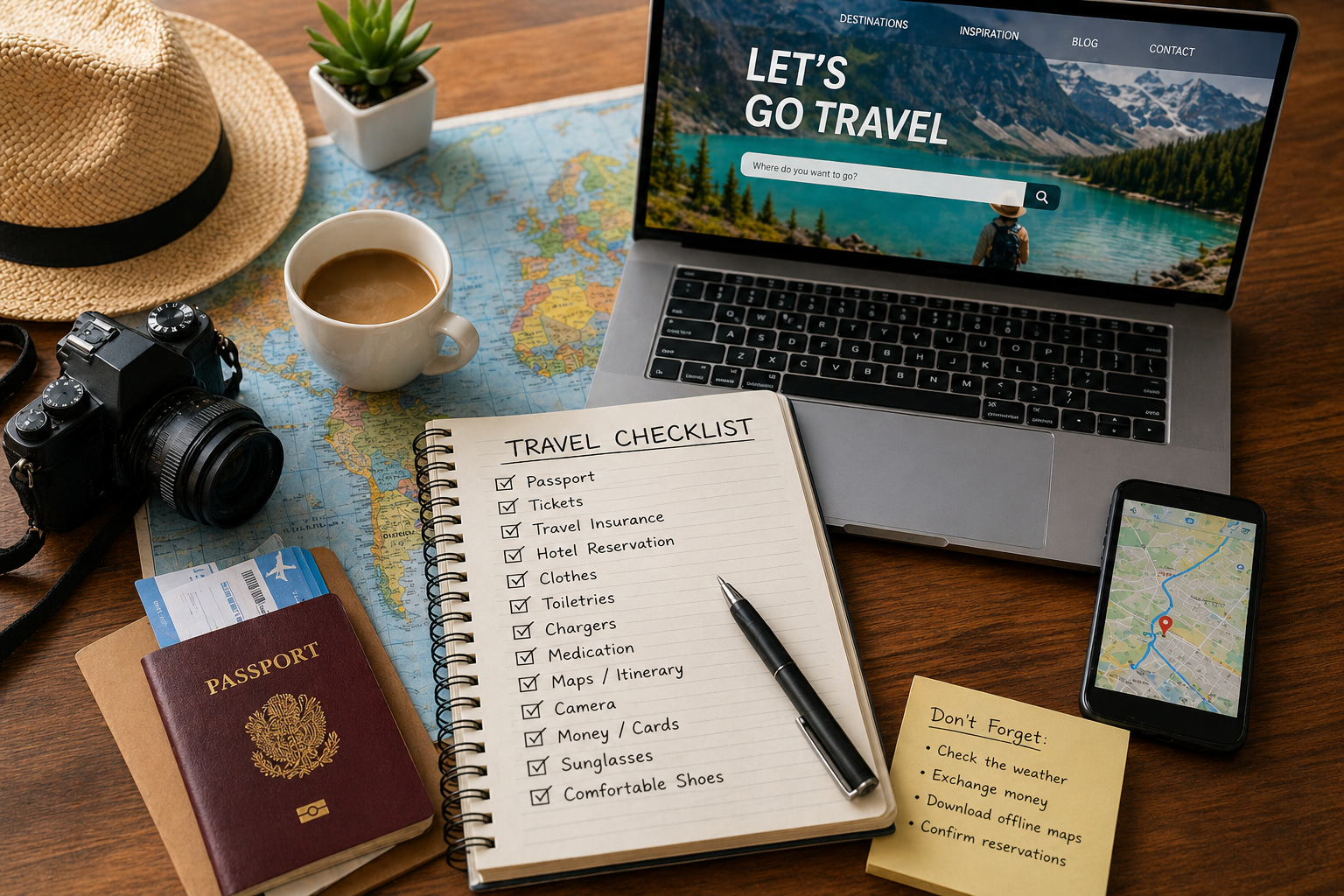
A checklist is one of the simplest and most effective tools for organizing your first trip. It helps you remember important tasks and reduces the chance of forgetting something essential.
Your checklist can include:
Documents
Tickets and reservations
Accommodation details
Travel insurance
Clothes
Toiletries
Chargers
Medicine
Payment methods
Emergency contacts
You can create the list on paper, in a notes app, or in a spreadsheet. The format does not matter as much as the habit of checking it regularly.
Start your checklist days or weeks before the trip. As you remember new items, add them. Before leaving home, review everything calmly.
A checklist may seem basic, but it gives you a strong sense of control during the planning process.
Organize Your Documents Carefully
Documents are one of the most important parts of any trip. Even a short domestic trip can become stressful if you forget your identification or booking information.
For your first trip, keep all essential documents in one safe and easy-to-access place. If you are traveling by plane, bus, or train, check what type of identification is required.
For international travel, verify passport validity, visa requirements, entry rules, vaccination requirements, and travel insurance recommendations. These details can vary depending on the destination.
Make digital copies of important documents and store them in your email or cloud storage. It is also useful to keep offline copies on your phone.
Printed copies can help if your phone battery runs out or if internet access is limited. You do not need to print everything, but having key confirmations available can bring peace of mind.
Pack Light and Smart
Many first-time travelers pack too much. This is understandable, because it is tempting to prepare for every possible situation. However, heavy luggage can make the trip more tiring.
Before packing, check the weather, length of stay, planned activities, and luggage rules of your airline or transportation company.
Choose clothes that are comfortable and easy to combine. Neutral pieces can create several outfits without taking up too much space. Comfortable shoes are especially important because you may walk more than usual.
Avoid packing items “just in case” unless they are truly important. In many destinations, you can buy basic things if needed.
Keep essential items in your carry-on or personal bag. This may include documents, medicine, chargers, a change of clothes, and valuable items.
Packing smart makes moving around easier and helps you focus more on the experience.
Learn Basic Information About the Destination
Before arriving, learn some basic details about the place you will visit. You do not need to become an expert, but a little research can make a big difference.
Find out how public transportation works, what areas are best for tourists, which attractions require advance booking, what the local weather is like, and what customs visitors should respect.
If the destination uses another language, learn a few simple phrases. Words like “hello,” “thank you,” “please,” and “excuse me” can help create positive interactions.
Also check local rules and habits. Some places have specific expectations about clothing, tipping, noise, public behavior, or visiting religious and cultural sites.
Respecting the destination shows consideration and helps you have a more authentic travel experience.
Plan Your Itinerary Without Overloading It
For your first trip, avoid trying to see everything. A packed itinerary can quickly become exhausting.
Choose a few main attractions and leave free time between activities. Consider transportation time, meal breaks, rest, and possible delays.
A good travel day does not need to include ten different places. Sometimes visiting two or three spots calmly is better than rushing through many locations without really enjoying them.
Use maps to group nearby attractions on the same day. This saves time and energy.
Also create backup options. If it rains, if an attraction is closed, or if you feel tired, it helps to have an alternative plan.
Your itinerary should guide your trip, not control it.
Prepare for Small Unexpected Situations
Even with good planning, small problems can happen. A bus may be late. The weather may change. A restaurant may be closed. You may get lost for a few minutes. These situations are part of travel.
The key is not to panic. Most travel problems have simple solutions when you stay calm.
Keep important addresses saved on your phone. Have emergency contacts available. Carry a portable charger if possible. Keep some extra money in a separate place.
It is also helpful to arrive earlier for flights, tours, and transportation. Being in a rush can make any small issue feel much bigger.
When you expect a little unpredictability, you become more patient and flexible.
Take Care of Your Safety
Safety should always be part of travel planning. This does not mean being afraid. It means being attentive and responsible.
Research the safest areas to stay and visit. Avoid carrying all your money in one place. Be careful with your belongings in crowded areas. Do not share too much personal information with strangers.
At night, choose well-lit routes and reliable transportation. If something feels uncomfortable, trust your instincts and move away.
Keep someone you trust informed about your general plans, especially if you are traveling alone.
Simple precautions can help you travel with more confidence and enjoy the destination with less worry.
Enjoy the Experience Without Comparing It
One common mistake first-time travelers make is comparing their trip to other people’s experiences. Social media can create unrealistic expectations. Perfect photos do not show tired feet, delays, wrong turns, or moments of uncertainty.
Your first trip belongs to you. It does not need to look like anyone else’s.
Maybe you prefer slow mornings instead of visiting attractions early. Maybe you enjoy simple meals more than famous restaurants. Maybe your favorite memory will be something small and unexpected.
Allow yourself to experience the destination in your own way. Travel is not a competition. It is a chance to discover places, people, cultures, and also yourself.
A Confident Start to Your Travel Journey
Organizing your first trip becomes much easier when you focus on the essentials. Choose a comfortable destination, plan early, create a realistic budget, book practical accommodation, organize documents, pack wisely, and leave room for flexibility.
You do not need to know every detail before you go. You only need enough preparation to feel secure and open to the experience.
Your first trip may teach you what you enjoy, what you would do differently next time, and what kind of traveler you are becoming. Every detail, even the imperfect ones, becomes part of the story.
With simple planning and a calm attitude, your first trip can be the beginning of many memorable journeys.