
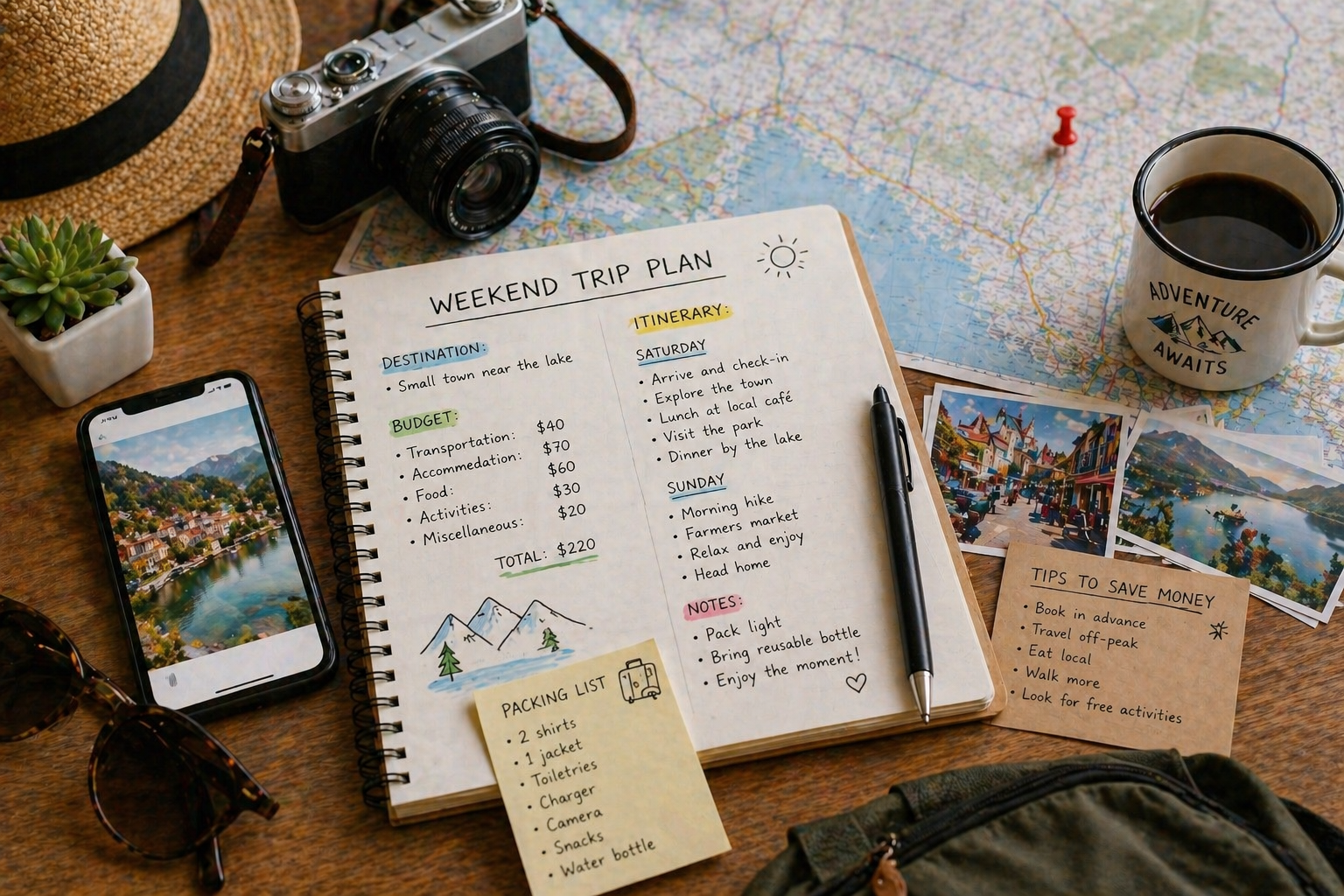
A weekend trip can be one of the best ways to rest, explore, and break the routine without needing a long vacation. With only two or three days, you can visit a nearby city, enjoy nature, relax at the beach, discover a small town, or spend time somewhere different from your daily environment.
The challenge is that short trips can become expensive if they are not planned carefully. Last-minute transportation, overpriced accommodation, tourist restaurants, and unnecessary purchases can quickly raise the total cost.
The good news is that a weekend trip does not need to be expensive to be enjoyable. With smart choices, realistic planning, and a focus on simple experiences, you can create a memorable getaway without spending too much.
Choose a Nearby Destination
The easiest way to save money on a weekend trip is to choose a destination that is not too far from home. Long-distance travel usually increases costs because of flights, fuel, tolls, transfers, or extra transportation.
For a short trip, nearby destinations often make more sense. Look for towns, beaches, countryside areas, mountains, lakes, parks, historic centers, or cities within a reasonable distance.
A closer destination gives you more time to enjoy and less time spent moving. It can also reduce the need for expensive transportation and overnight stops along the way.
Sometimes the best weekend trip is not the most famous place, but the one that is simple to reach and easy to enjoy.
Set a Clear Budget Before Planning
Before booking anything, decide how much you can spend. A clear budget helps you make better decisions from the beginning.
Divide your budget into basic categories: transportation, accommodation, food, activities, local movement, and emergency money. Even if the trip is short, small expenses can add up quickly.
When you know your limit, you can choose a destination, hotel, restaurants, and activities that fit your reality.
A weekend trip should feel refreshing, not financially stressful after you return home.
Travel With a Simple Itinerary
A weekend trip does not need a complicated itinerary. In fact, trying to do too much can make the trip more expensive and tiring.
Choose one main goal for the weekend. Maybe you want to rest, visit a specific attraction, enjoy local food, spend time outdoors, or explore a charming neighborhood.
Plan one or two main activities per day and leave space for walking, resting, and spontaneous discoveries.
A simple itinerary saves money because you avoid paying for too many tours, tickets, and transportation between distant places.
Compare Transportation Options
Transportation can be one of the biggest costs of a weekend trip. Before deciding, compare your options carefully.
Driving may be convenient if the destination is nearby and parking is easy. A bus or train may be cheaper if the route is direct. Carpooling with friends can reduce fuel and toll costs. In some cases, a short flight may be practical, but flights often add extra expenses such as baggage fees and airport transfers.
Look at the total cost, not only the ticket price. Include fuel, tolls, parking, transfers, luggage, and time.
The best transportation option is the one that balances cost, comfort, and convenience for a short trip.
Book Accommodation With Good Value
Accommodation can also affect your budget. For a weekend trip, you do not always need a luxury hotel. What matters most is cleanliness, safety, location, and comfort.
Look for guesthouses, small hotels, apartments, inns, hostels with private rooms, or budget-friendly stays with good reviews.
A place with breakfast included can save money. A room with a small kitchen can help if you want to prepare simple meals. A central location may reduce transportation costs, even if the nightly price is slightly higher.
Always read recent reviews before booking. A cheap place with poor location or bad service may not be worth it.
Travel With Friends or Family
Traveling with other people can reduce costs, especially for accommodation and transportation. A group can share fuel, parking, rental apartments, groceries, and some activities.
If you are planning a weekend with friends or family, discuss the budget clearly before booking. Make sure everyone agrees on accommodation style, food plans, transportation, and paid activities.
Shared travel can be fun and economical when expectations are aligned.
The goal is to save money without creating uncomfortable situations later.
Avoid Peak Dates When Possible
Weekend travel is often more expensive during holidays, long weekends, festivals, school breaks, and major local events. If your schedule is flexible, choose a regular weekend instead.
Prices for accommodation and transportation may be lower, attractions may be less crowded, and restaurants may be easier to access.
If you want to visit a popular destination, traveling slightly outside the busiest period can make the trip more affordable and more relaxing.
Saving money sometimes starts with choosing the right date.
Pack Light to Avoid Extra Costs
For a weekend trip, you probably do not need much luggage. Packing light saves time, space, and sometimes money.
If you are flying, avoiding checked luggage can reduce fees. If you are taking a bus or train, light luggage makes movement easier. If you are driving, packing less keeps the car more comfortable.
Bring only essential clothes, toiletries, documents, chargers, medicine, and items related to your activities.
A small bag is usually enough for two or three days.
Plan Affordable Meals
Food is an important part of travel, but you do not need to eat at expensive restaurants for every meal.
Balance your food spending. You might have a simple breakfast, casual lunch, and one special dinner. Or choose a good local restaurant at lunch, when prices may be lower, and have a lighter evening meal.
Visit bakeries, markets, cafés, food stalls, and casual restaurants. These places often offer local flavor at better prices.
If your accommodation includes breakfast, use it. If you have kitchen access, prepare simple snacks or meals.
Eating affordably does not mean eating badly. It means choosing wisely.
Bring Snacks and Water
Buying snacks and drinks in tourist areas can become expensive. Before leaving, pack simple snacks and a reusable water bottle.
Fruit, sandwiches, crackers, nuts, cereal bars, or homemade snacks can help during the journey and while exploring.
Having snacks available also prevents rushed decisions when you are hungry, such as stopping at the nearest expensive place.
Small preparation can save money and keep your energy stable.
Look for Free Attractions
Many destinations offer free or low-cost attractions. Parks, beaches, public squares, viewpoints, historic streets, markets, churches, walking routes, gardens, and cultural events can all create memorable experiences.
Before traveling, research free things to do in the destination. Check local event calendars, tourism websites, public spaces, and museum free days.
A weekend trip can be rich without many paid tickets.
Often, the best memories come from simple moments: watching a sunset, walking through a beautiful street, or discovering a local market.
Choose One Paid Experience That Matters
Saving money does not mean avoiding all paid experiences. Instead of spending on many small things, choose one paid activity that truly matters.
This could be a guided tour, museum, boat ride, special restaurant, nature activity, or cultural experience.
When you choose intentionally, you enjoy the experience more and avoid wasting money on activities that do not add much value.
A good budget trip is not about spending nothing. It is about spending on what improves the journey.
Walk More
Walking is one of the best ways to save money and experience a destination. It allows you to notice details, discover small shops, enjoy architecture, and feel the local rhythm.
Choose accommodation in a walkable area when possible. Plan activities close to each other to avoid unnecessary transportation.
Wear comfortable shoes and check distances before leaving.
Walking turns movement into part of the experience instead of just a cost.
Avoid Impulse Shopping
Weekend trips often lead to impulse purchases. Souvenirs, snacks, clothes, accessories, and small items may seem inexpensive individually, but together they can affect your budget.
Before buying something, ask whether you truly want it or whether you are buying only because you are in a tourist mood.
Set a small souvenir budget if you enjoy bringing something home. Choose meaningful items instead of random objects.
Memories do not need to become clutter.
Use Discounts and Local Deals
Before the trip, check whether there are discounts for attractions, transportation, restaurants, or activities. Some destinations offer city passes, online ticket discounts, student prices, family packages, or free entry times.
Be careful with deals that encourage you to spend on things you would not choose otherwise. A discount is only useful if the experience already fits your plans.
Use deals strategically, not impulsively.
Keep the Trip Relaxed
One reason weekend trips become expensive is that travelers try to make them feel bigger than they need to be. They book too many activities, eat in too many expensive places, and rush to “make the most” of limited time.
A weekend getaway can be simple and still feel special.
Enjoy slow mornings, scenic walks, local food, quiet views, and time away from routine. You do not need to fill every hour.
Relaxation is often the real value of a weekend trip.
Track Spending Lightly
During the trip, keep a simple sense of what you are spending. You do not need to record every detail, but check whether you are staying close to your budget.
If you spend more on dinner, choose a free activity the next day. If transportation costs more than expected, keep shopping lower.
Small adjustments help you stay comfortable financially.
A budget works best when it guides you without making the trip feel restrictive.
Return Without Financial Regret
A weekend trip should leave you refreshed, not worried about money. When you choose a nearby destination, set a clear budget, book good-value accommodation, pack light, plan meals, enjoy free attractions, and spend intentionally, the trip becomes much easier to afford.
You do not need a large budget to create a meaningful getaway.
Sometimes two simple days in a pleasant place are enough to rest, explore, and return home with new energy.
A well-planned weekend trip proves that travel does not always need to be long or expensive to be memorable.