
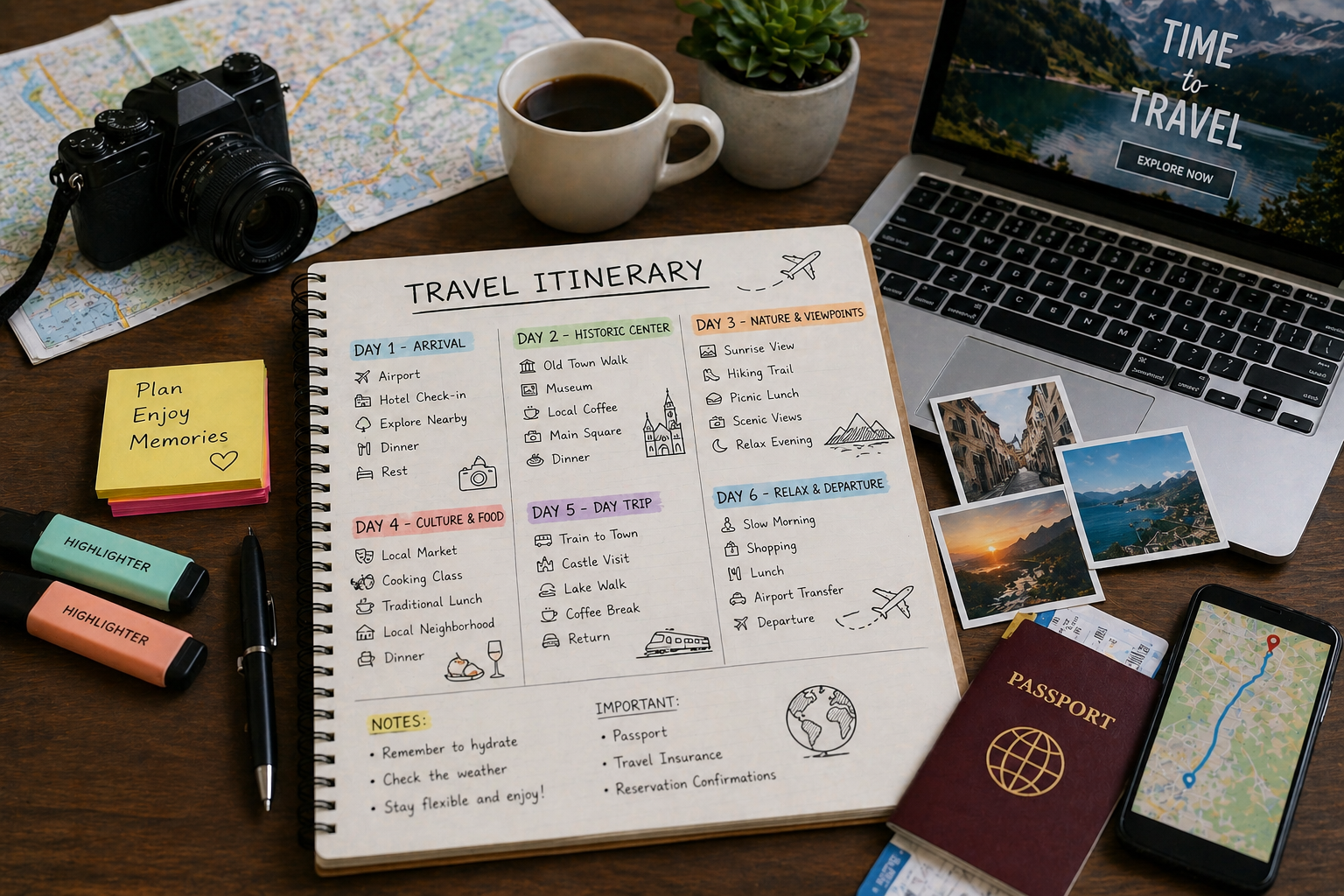
A travel itinerary is one of the most useful tools for enjoying a trip with more confidence. It helps you understand where you are going, what you want to do, how much time you need, and how each day can flow more smoothly.
However, a good itinerary is not a rigid schedule that controls every minute of your vacation. The best travel plans create structure without removing freedom. They help you avoid confusion, save time, reduce stress, and make better use of each day.
Building a well-organized itinerary does not require complicated tools or professional planning skills. With a clear method, you can create a simple and realistic plan that supports your trip from beginning to end.
Start With Your Travel Priorities
Before adding activities to your itinerary, decide what matters most to you. Every destination offers many possibilities, but you probably will not have time to do everything.
Start by making a list of the places, experiences, and activities that truly interest you. These may include famous attractions, local restaurants, museums, parks, beaches, neighborhoods, cultural experiences, viewpoints, shops, or day trips.
Then divide your list into three groups: must-see, nice-to-see, and optional. This helps you focus on what is most important and avoid overloading your schedule.
A common mistake is trying to include every attraction that appears in travel guides or social media posts. A better approach is to choose experiences that match your interests and travel style.
Your itinerary should reflect your trip, not someone else’s checklist.
Research the Destination Before Organizing the Days
Good research makes itinerary planning much easier. Before deciding what to do each day, learn how the destination works.
Look at maps, transportation options, opening hours, ticket requirements, local holidays, weather conditions, and distances between places. These details can affect your schedule more than you might expect.
For example, two attractions may look close on a map but require a long route by public transportation. A museum may be closed on the exact day you planned to visit. A popular tour may require advance booking. A scenic viewpoint may be better at sunset than in the morning.
The more you understand the destination, the more realistic your itinerary becomes.
You do not need to know everything, but you should have enough information to avoid obvious planning mistakes.
Group Attractions by Location
One of the best ways to create an efficient itinerary is to group attractions by area. This saves time, reduces transportation costs, and makes each day feel more natural.
Instead of crossing the city several times, choose activities that are near each other. You can dedicate one day to the historic center, another to museums, another to parks, and another to nearby neighborhoods.
Use a map to mark the places you want to visit. Then look for clusters. These clusters can become the base of your daily plans.
This method is especially helpful in large cities, where travel time can be significant. It also helps you discover nearby restaurants, cafés, shops, and hidden spots that fit naturally into your route.
A well-organized itinerary respects geography.
Avoid Overplanning Each Day
It is tempting to fill every hour with activities, especially when visiting a destination for the first time. But an overloaded itinerary can quickly become exhausting.
Travel takes more time than expected. You may need time for breakfast, walking, transportation, lines, photos, rest, bathroom breaks, weather changes, and spontaneous stops.
A good rule is to choose one or two main activities per day and add smaller options around them. This gives your day structure while leaving room for flexibility.
If you schedule too much, you may feel frustrated when you cannot complete everything. If you schedule enough, you can enjoy each place with more attention.
Remember that the goal of travel is not to collect attractions. It is to experience the destination.
Consider Your Travel Pace
Everyone has a different travel rhythm. Some travelers enjoy waking up early and exploring all day. Others prefer slow mornings, relaxed meals, and free afternoons.
When building your itinerary, be honest about your pace. Do not create a schedule for the traveler you wish you were. Create one for the traveler you actually are.
If you know you get tired after long walks, include breaks. If you enjoy taking photos, allow extra time at scenic places. If you like long lunches, do not schedule attractions too close together.
Also consider the people traveling with you. Children, older adults, first-time travelers, and large groups may need a slower pace.
A good itinerary should feel possible and enjoyable, not like a race.
Check Opening Hours and Booking Rules
Many attractions have specific opening hours, closed days, or limited entry times. Ignoring these details can cause disappointment.
Before finalizing your itinerary, check the official information for museums, parks, monuments, tours, restaurants, and cultural sites. Some places close one day per week. Others require timed tickets or advance reservations.
Restaurants may also have unusual hours depending on the destination. Some close between lunch and dinner. Others require reservations, especially on weekends.
If an attraction is very important to your trip, plan it early and confirm the details. Do not leave major experiences to chance.
This simple habit can prevent wasted time and unnecessary stress.
Build Flexibility Into Your Plan
A well-organized itinerary includes flexibility. Weather, traffic, tiredness, delays, and unexpected opportunities can change your plans.
Instead of planning every detail tightly, create flexible blocks. For example, you can reserve the morning for one main attraction, the afternoon for a neighborhood walk, and the evening for dinner in a specific area.
Keep a list of backup activities. These may include indoor options for rainy days, relaxed activities for tired moments, or extra attractions if you have more time than expected.
Flexibility helps you adapt without feeling lost.
A good itinerary is not ruined when plans change. It gives you enough structure to adjust calmly.
Balance Famous Attractions With Local Experiences
Famous attractions are popular for a reason, and many are worth visiting. However, a trip becomes richer when you balance major sights with more local experiences.
Include time for markets, quiet streets, neighborhood cafés, parks, small galleries, local food, scenic walks, and everyday places. These moments often create some of the most memorable travel experiences.
If your itinerary includes only famous spots, you may spend much of your trip in lines and crowds. If you include only hidden places, you may miss important landmarks.
Balance gives your trip variety.
Try to mix cultural activities, outdoor moments, food experiences, rest periods, and spontaneous exploration.
Plan Meals Strategically
Meals are often forgotten during itinerary planning, but they affect the rhythm of the day. If you do not plan at least loosely, you may end up hungry in an area with limited options or pay too much near tourist attractions.
You do not need to choose every restaurant in advance. But it is useful to save a few options near the areas you will visit each day.
Look for breakfast spots, casual lunch places, local restaurants, markets, and cafés. Include options for different budgets and levels of hunger.
Also consider timing. If you have a tour at noon, plan an early lunch or bring a snack. If you are visiting a museum for several hours, check if there is a café nearby.
Planning meals lightly helps keep the day comfortable.
Include Rest Time
Rest is part of a good itinerary. Many travelers ignore this and end up exhausted halfway through the trip.
Travel can be physically and mentally demanding. You may walk a lot, navigate unfamiliar places, process new information, and adapt to different routines.
Include slower moments in your plan. This could be an afternoon break at the hotel, a quiet coffee stop, a relaxed evening, or a free morning after a long travel day.
Rest time is especially important for longer trips. A schedule that works for two days may not work for ten days.
When you rest properly, you enjoy the rest of the trip more.
Think About Transportation Between Activities
Transportation can shape your itinerary. Before finalizing each day, check how you will move between places.
Use maps to estimate walking distances, public transportation routes, driving times, or taxi availability. Add extra time for delays, waiting, and navigation.
If you are renting a car, check parking options. If you are using public transportation, learn whether tickets can be bought at stations, through apps, or with travel cards.
For day trips, confirm departure times and return options. Missing the last train or bus can create unnecessary stress.
A beautiful itinerary on paper may not work if transportation is unrealistic. Always check the movement between activities.
Keep Important Information in One Place
Once your itinerary is ready, organize the details in one easy-to-access place. This can be a notes app, spreadsheet, travel planning app, printed document, or notebook.
Include accommodation addresses, reservation numbers, ticket times, transportation details, emergency contacts, and key activities for each day.
It is also helpful to save offline maps and screenshots of important confirmations. Internet access may not always be available when you need it.
The goal is not to create a complicated document. The goal is to avoid searching through emails and messages every time you need information.
A simple organized itinerary can save a lot of time during the trip.
Review the Itinerary Before Traveling
A few days before departure, review your itinerary one more time. Check dates, times, reservations, transportation, weather, and any changes in attraction schedules.
This final review helps you notice problems before they affect your trip. Maybe you booked two activities too close together. Maybe a restaurant is closed on the day you planned. Maybe the weather suggests moving an outdoor activity to another day.
Small adjustments before the trip can make the experience much smoother.
Do not be afraid to simplify. If your itinerary feels too full, remove something. A calmer plan is usually better than a stressful one.
A Plan That Helps You Enjoy More
A well-organized travel itinerary is not about controlling every moment. It is about creating a thoughtful structure that helps you enjoy the destination with less stress.
Start with your priorities, research the destination, group attractions by location, avoid overplanning, check opening hours, plan transportation, and leave room for flexibility.
The best itinerary gives you direction without taking away the joy of discovery. It helps you see what matters most while still allowing space for surprises.
When your days are organized with balance, travel becomes lighter, smoother, and more memorable.