
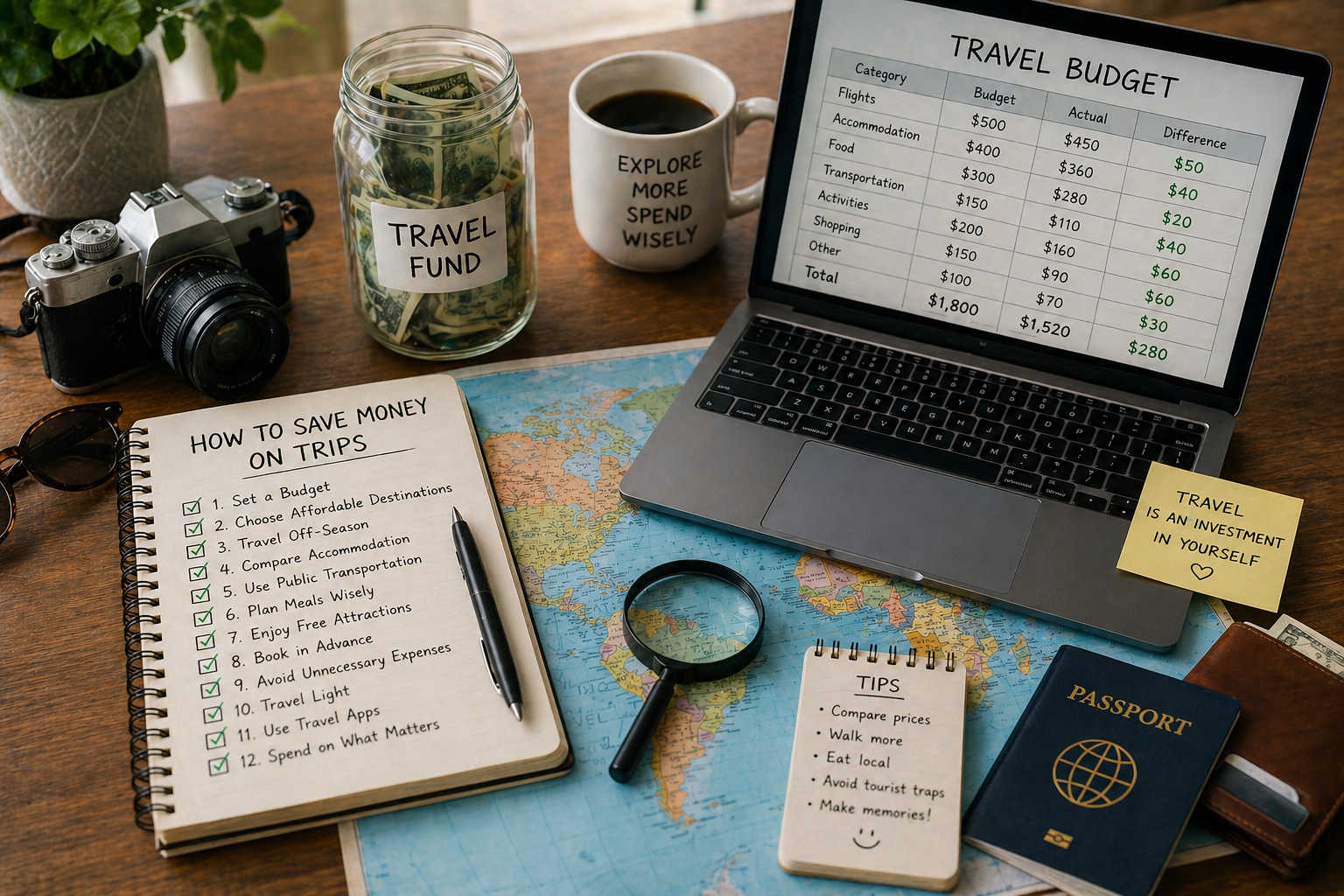
Traveling does not have to be extremely expensive to be enjoyable. Many people imagine that saving money means accepting uncomfortable accommodation, bad transportation, poor meals, or a rushed experience. In reality, smart travel savings are not about removing comfort from the trip. They are about making better choices.
A comfortable trip depends more on planning than on luxury. When you understand where your money goes, compare options calmly, and avoid unnecessary expenses, you can travel well without spending more than you need.
Saving money on a trip is not the same as choosing the cheapest option every time. The cheapest choice can sometimes create stress, waste time, or reduce the quality of the experience. The goal is to find balance: spend where it matters, save where it makes sense, and enjoy the destination with peace of mind.
Start With a Clear Travel Budget
The first step to saving money is knowing how much you can spend. Without a budget, it is easy to make decisions based only on excitement and later feel worried about the final cost.
Create a simple travel budget before booking anything. Include transportation, accommodation, food, tours, local transportation, travel insurance, shopping, and an emergency reserve.
Many travelers make the mistake of calculating only flights and hotels. But daily expenses can be just as important. A snack at the airport, a short taxi ride, entrance tickets, tips, bottled water, or luggage storage may seem small individually, but together they can affect the total cost.
Your budget does not need to be complicated. It just needs to be realistic. When you know your limit, you can make smarter choices and avoid spending money without noticing.
Choose the Right Destination for Your Budget
Some destinations are naturally more expensive than others. Choosing a place that matches your budget is one of the easiest ways to travel comfortably without financial pressure.
A destination with affordable food, good public transportation, reasonable accommodation, and free attractions can offer an excellent experience for less money. On the other hand, a place with high daily costs may require more careful planning.
Do not judge a destination only by the price of getting there. Sometimes a cheap flight leads to an expensive city. In other cases, a slightly more expensive ticket may take you to a destination where accommodation and food are much more affordable.
Before deciding, research the average cost of meals, transportation, attractions, and accommodation. This gives you a better idea of the real price of the trip.
Choosing a destination that fits your financial reality allows you to relax and enjoy the journey more.
Travel During Less Expensive Periods
Travel dates can greatly affect prices. High season usually brings higher costs for flights, hotels, tours, and even restaurants in tourist areas.
If your schedule is flexible, consider traveling during the shoulder season. This is the period between high and low season. It often offers pleasant weather, fewer crowds, and better prices.
Low season can also be a good option, especially for travelers who enjoy quieter destinations. However, it is important to check the weather and attraction schedules. Some places may have heavy rain, very cold temperatures, or reduced services during certain months.
Even changing your trip by a few days can make a difference. Weekday flights or hotel stays may cost less than weekends, depending on the destination.
Being flexible with dates is one of the most effective ways to save money without reducing comfort.
Compare Accommodation Carefully
Accommodation is one of the biggest travel expenses, but saving money on it does not mean staying somewhere uncomfortable.
Look for places that offer good value, not just low prices. A well-located, clean, simple hotel may be better than a cheaper place far from everything. If you save on the room but spend more on transportation, the deal may not be worth it.
Before booking, check the location on a map. See how far it is from public transportation, restaurants, markets, and the attractions you want to visit.
Read recent reviews. Pay attention to comments about cleanliness, noise, safety, staff, internet, and comfort. Photos can be helpful, but reviews often reveal details that official descriptions do not show.
Also consider apartments, guesthouses, small inns, or family-run accommodations. These options can sometimes offer more space, a kitchen, or a better location for a lower price than traditional hotels.
Comfort is not always about luxury. It is about choosing a place that supports the kind of trip you want to have.
Use Public Transportation When It Makes Sense
Transportation inside the destination can become expensive if you rely only on taxis or private rides. Public transportation is often cheaper and can also help you experience the city more like a local.
Before your trip, research metro lines, buses, trains, trams, and local transportation cards. Many cities offer daily or weekly passes that reduce costs for travelers who plan to move around often.
However, public transportation is not always the best choice. If you are carrying heavy luggage, arriving late at night, traveling with children, or staying far from stations, a taxi or transfer may be more comfortable and safer.
The smart approach is to mix options. Use public transportation for simple routes and choose private transport when comfort, time, or safety matters more.
Saving money should not mean making every movement difficult. Choose transportation based on the situation.
Plan Meals With Balance
Food is one of the most enjoyable parts of travel, but it can also become a major expense. The solution is not to avoid restaurants completely. It is to balance special meals with simple ones.
You can choose a few restaurants you really want to try and keep other meals more casual. Local bakeries, markets, food courts, small family restaurants, and simple cafés often offer good food at lower prices.
If your accommodation includes breakfast, take advantage of it. If you have access to a kitchen, preparing a few simple meals can reduce costs.
Another useful tip is to eat main meals away from the most touristy streets. Restaurants next to famous attractions often charge more. Walking a few blocks away may lead to better prices and more authentic options.
Food should be part of the travel experience, not a source of financial stress. Spend intentionally on meals that matter to you.
Look for Free and Low-Cost Attractions
Many destinations offer excellent experiences that cost little or nothing. Parks, beaches, viewpoints, historic neighborhoods, local markets, public squares, walking routes, cultural centers, and free museums can make a trip memorable.
Before traveling, research free attractions in the destination. Some museums have free entry days or discounted hours. Some cities offer free walking tours, where you can contribute with a tip if you enjoyed the experience.
Nature-based activities can also be affordable and rewarding. A scenic walk, sunset viewpoint, public garden, or beach day may become one of the best memories of the trip.
Paid attractions can be worth it, but you do not need to fill every day with expensive tours. A mix of free, low-cost, and paid experiences creates a more balanced itinerary.
Book Important Things in Advance
Booking in advance can help you save money and avoid stress, especially for flights, popular accommodations, and high-demand attractions.
Last-minute prices are not always cheaper. In many cases, they are higher because availability is limited. Planning early gives you more options and more time to compare.
For popular tours or attractions, advance booking can also prevent disappointment. Some places limit daily visitors or require scheduled entry.
However, avoid booking every single detail too early if your plans may change. Flexible reservations can be valuable. Sometimes paying slightly more for free cancellation is worth it because it gives you peace of mind.
Advance planning works best when you combine savings with flexibility.
Avoid Paying for Convenience You Do Not Need
Travel often includes many small convenience costs. Some are useful. Others are unnecessary.
For example, airport food is usually more expensive than food bought before arriving. Hotel laundry may cost much more than a local laundromat. A convenience store near a tourist attraction may charge more than a supermarket a few streets away.
You can save money by preparing simple things in advance. Bring a reusable water bottle when appropriate, pack snacks for long travel days, download offline maps, and organize your documents before leaving.
These small actions reduce impulse spending.
At the same time, do not avoid all convenience. Sometimes paying for convenience is worth it, especially if it saves time, improves safety, or reduces exhaustion. The key is choosing consciously.
Travel Light to Avoid Extra Costs
Luggage can create hidden expenses. Extra baggage fees, luggage storage, taxis because bags are too heavy, and difficulty moving around can all affect your trip.
Packing light helps you save money and travel more comfortably. A smaller suitcase is easier to carry on public transportation, store in small rooms, and move between cities.
Before packing, check airline baggage rules carefully. Fees can vary depending on ticket type, route, and luggage size.
Choose versatile clothes, comfortable shoes, and only the items you truly need. If your trip is longer, consider doing laundry instead of packing too much.
Traveling light gives you more freedom and fewer costs.
Use Technology to Compare and Organize
Travel apps and websites can help you compare prices, organize reservations, find routes, and discover affordable activities.
Use maps to understand distances before booking accommodation. Use comparison tools for flights and hotels. Save important places offline. Keep reservation confirmations in one folder on your phone.
Technology can also help you avoid unnecessary spending. For example, checking public transportation routes before taking a taxi may save money. Reading restaurant reviews can help you avoid overpriced places with poor quality.
However, do not rely only on apps. Use them as tools, but make decisions based on your own priorities.
Good organization often leads to better savings.
Know When Spending More Is Worth It
Saving money does not mean choosing the cheapest option every time. Sometimes spending a little more improves the entire trip.
A better-located hotel may save transportation time. A direct flight may reduce exhaustion. A guided tour may help you understand a historical place more deeply. A comfortable transfer may be worth it after a long flight.
The important question is not “What is cheapest?” The better question is “What gives me the best value?”
Value includes comfort, safety, time, convenience, and enjoyment. A cheap option that creates stress may not be a good deal.
Spend more on what truly matters to you, and save on what does not.
Enjoy More While Spending Better
Saving money on trips without giving up comfort is possible when you plan with intention. Start with a realistic budget, choose a destination that fits your financial situation, compare accommodation carefully, travel during better-priced periods, and balance meals, transportation, and attractions.
Comfort does not always come from luxury. It comes from feeling prepared, rested, safe, and free to enjoy the destination.
A smart traveler does not simply spend less. A smart traveler spends better.
When you understand your priorities and avoid unnecessary expenses, you can create a trip that is both affordable and enjoyable. That balance is what makes travel not only possible, but truly rewarding.