
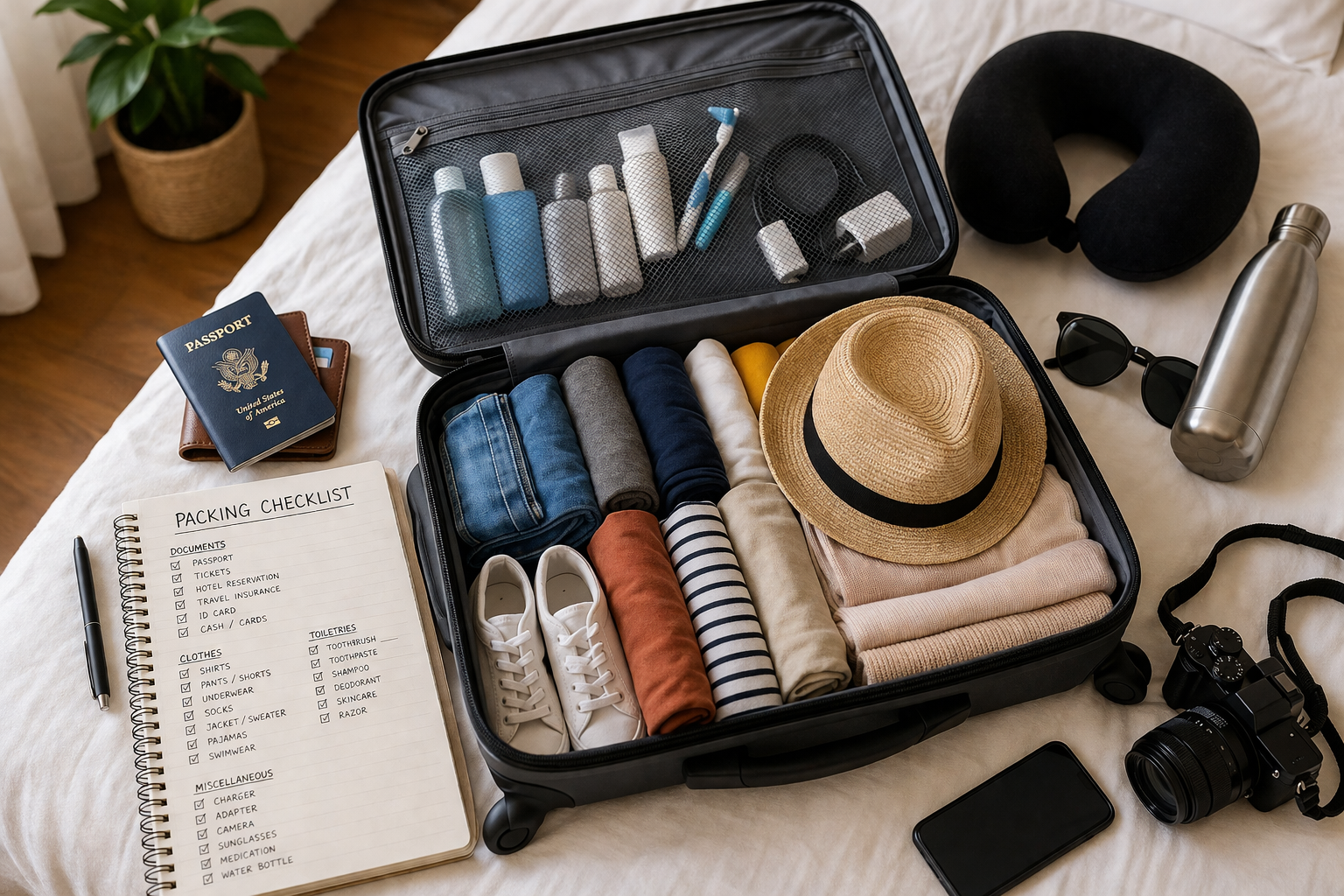
Packing is one of the most important parts of travel preparation. A well-packed bag can make your trip easier, lighter, and more enjoyable. On the other hand, forgetting essential items or carrying too much luggage can create stress before you even arrive at your destination.
Many travelers believe packing is simply about putting clothes in a suitcase. In reality, packing well means thinking about comfort, practicality, weather, transportation, activities, and unexpected situations. The goal is not to carry everything you own. The goal is to bring what you truly need.
A peaceful trip often begins with a smart suitcase.
Start With the Type of Trip
Before choosing what to pack, think about the kind of trip you are taking. A beach vacation, a city break, a mountain getaway, a business trip, and a family vacation all require different items.
Ask yourself where you are going, how long you will stay, what the weather will be like, and what activities you plan to do. A traveler going hiking will need different shoes and clothes from someone spending the weekend in a historic city.
Also consider how often you will move. If you are staying in one hotel for the whole trip, a larger suitcase may not be a problem. If you will change cities, take buses, climb stairs, or walk with your luggage, packing light becomes much more important.
Your suitcase should match the reality of your trip, not imaginary situations that are unlikely to happen.
Check the Weather Before Packing
Weather can completely change what you need to bring. Checking the forecast before packing helps you avoid unnecessary items and prepare for real conditions.
Do not rely only on general ideas about the destination. Some places are known for being warm but may have cool evenings. Others may be sunny during the day and rainy in the afternoon.
If the weather is unpredictable, choose layers. A light jacket, comfortable sweater, or raincoat can be more useful than several heavy pieces.
For warm destinations, pack breathable clothes, sunglasses, sunscreen, and comfortable sandals. For cold places, prioritize warm layers, closed shoes, socks, and accessories such as scarves or gloves if needed.
Packing according to the weather makes the trip more comfortable and prevents last-minute purchases.
Choose Versatile Clothes
One of the best ways to pack well is to choose clothes that combine easily. Instead of packing random pieces, think in outfits.
Neutral colors and simple items can be mixed and matched, creating different looks with fewer clothes. This helps reduce luggage weight without limiting your options.
For example, a pair of comfortable pants can work for walking during the day and also for a casual dinner. A simple shirt can be worn with shorts, jeans, or a skirt. A light jacket can be useful for airports, restaurants, and cooler evenings.
Avoid packing too many “just in case” outfits. Most travelers use the same comfortable pieces repeatedly and return home with unused clothes.
Versatility is more useful than quantity.
Bring Comfortable Shoes
Shoes can make or break a trip. Even if your destination does not involve hiking, you will probably walk more than usual. Airports, streets, museums, parks, markets, and attractions can require many steps.
Choose shoes that you have already worn before. New shoes may look nice, but they can cause discomfort, blisters, or pain.
For most trips, one pair of comfortable walking shoes and one extra pair suitable for the destination are enough. For beach trips, sandals or flip-flops may be useful. For colder places, closed and warm shoes are better. For special dinners or events, a simple dressier option may be enough.
Shoes take up a lot of space, so choose carefully. Comfort should always come before appearance.
Keep Documents Easy to Access
Documents should never be packed carelessly. They need to be safe, organized, and easy to access when needed.
Keep your identification, passport, tickets, accommodation confirmations, travel insurance details, and important reservations in one place. A small document organizer, travel wallet, or secure pocket can help.
It is also useful to keep digital copies on your phone and in cloud storage. Printed copies of essential information can help if your battery dies or if internet access is limited.
For international trips, check passport validity, visa requirements, entry documents, and any specific destination rules before leaving home.
Having your documents organized avoids stress at airports, hotels, and transportation terminals.
Pack Basic Toiletries
Toiletries are essential, but they can easily take up too much space. Focus on what you use daily.
Basic items may include toothbrush, toothpaste, deodorant, shampoo, conditioner, soap, hairbrush, skincare products, razor, and any personal hygiene products you need.
If you are flying with carry-on luggage, check liquid limits and use travel-size containers. Make sure bottles are well closed to avoid leaks.
Some accommodations provide shampoo, soap, towels, or hairdryers. Check this before packing. There is no need to carry items that will already be available.
A small toiletry bag keeps everything organized and makes it easier to find what you need.
Do Not Forget Medicine and Health Items
Health-related items should always be packed with care. Bring any medicine you take regularly, enough for the entire trip, plus a small extra amount if possible.
Keep medicine in its original packaging when appropriate, especially for international travel. If you need prescription medication, consider carrying a copy of the prescription.
A basic personal kit can include pain relievers, allergy medicine, bandages, motion sickness tablets, hand sanitizer, and any other items you normally use.
This does not mean you need to carry a full pharmacy. The idea is to have basic support for small discomforts and avoid searching for simple items in an unfamiliar place.
If you have specific health needs, plan more carefully and check destination conditions in advance.
Organize Electronics and Chargers
Electronics are part of modern travel. Phones, cameras, headphones, laptops, tablets, and e-readers can be useful, but they also require organization.
Pack the chargers you need and consider bringing a portable charger. This is especially helpful during long travel days, sightseeing, or flights.
For international trips, check if you need a plug adapter. Some destinations use different outlets and voltage standards.
Keep cables in a small pouch to avoid tangles. If you are carrying valuable electronics, keep them in your personal bag instead of checked luggage.
Also download important information before the trip, such as maps, reservations, tickets, and travel apps. This helps if internet access is weak or unavailable.
Use Packing Cubes or Small Bags
Packing cubes, fabric bags, or simple organizers can make your suitcase much easier to manage. They help separate clothes, underwear, accessories, laundry, toiletries, and electronics.
This is especially useful if you will move between hotels or cities. Instead of unpacking everything, you can remove only the section you need.
You can also use separate bags for clean and dirty clothes. This keeps your luggage organized throughout the trip.
Good organization saves time and reduces stress. You do not need expensive accessories; even simple pouches can make a big difference.
Prepare a Small Personal Bag
Your personal bag is the one you keep close during the journey. It should include the items you may need before reaching your accommodation.
Useful items include documents, phone, wallet, charger, medicine, headphones, snacks, water bottle, tissues, hand sanitizer, a light jacket, and any valuables.
If you are flying, include essentials in case your checked luggage is delayed. A change of clothes, basic toiletries, and important medicine can be very helpful.
Avoid making your personal bag too heavy. It should be practical and comfortable to carry.
A well-prepared personal bag can make airports, bus stations, road trips, and long travel days much smoother.
Pack According to Activities
Your activities should guide your packing list. Do not pack only based on the destination’s appearance. Think about what you will actually do there.
If you plan to visit museums and restaurants, comfortable casual clothes may be enough. If you will hike, swim, attend events, or take guided tours, pack specific items for those plans.
For beach trips, consider swimwear, sunscreen, hat, sunglasses, light clothes, and a beach bag. For nature trips, think about comfortable shoes, insect repellent, reusable water bottle, and suitable clothing.
For city trips, prioritize walking shoes, a secure bag, and clothes that work for different situations.
Packing according to activities helps you avoid both excess and missing essentials.
Leave Space in Your Luggage
Many travelers fill their suitcase completely before leaving home. This can become a problem later, especially if they buy souvenirs, clothes, gifts, or local products during the trip.
Leave some extra space if possible. This makes packing for the return easier and avoids forcing items into an already full bag.
You can also bring a foldable tote bag or small extra bag for temporary use. It can help with shopping, laundry, beach items, or day trips.
A little empty space gives you more flexibility and less stress.
Avoid Overpacking
Overpacking is one of the most common travel mistakes. It usually happens because travelers imagine too many possible situations.
The problem is that extra luggage makes everything harder. It can increase costs, slow you down, make transportation more difficult, and create unnecessary physical effort.
Before closing your suitcase, review everything. Remove items that do not match the weather, activities, or realistic needs of the trip.
Ask yourself: “Will I really use this?” If the answer is uncertain, you may not need it.
Packing lighter does not mean being unprepared. It means choosing wisely.
Travel Lighter, Travel Better
Packing for a peaceful trip is about balance. You need enough items to feel comfortable, but not so many that your luggage becomes a burden.
Start with the type of trip, check the weather, choose versatile clothes, bring comfortable shoes, organize documents, pack basic toiletries, prepare medicine, and keep electronics under control. Use small organizers and keep your personal bag practical.
A good suitcase supports your trip instead of complicating it. When you pack with intention, you move more easily, find things faster, and feel more prepared for each day.
Travel becomes more enjoyable when your luggage works with you, not against you.